Spermidine for youth: the science of staying young
Spermidine triggers cellular autophagy, the body's self-cleaning system. Learn how this natural compound supports youthful aging, brain health, and longevity.
Your cells are getting cluttered. Every year you age, damaged proteins, dysfunctional organelles, and cellular debris accumulate inside your cells. Your body has a system to clean this up. It's called autophagy. And one of the most powerful natural triggers for that system is a molecule you've probably never heard of: spermidine.
Spermidine isn't new. It's been in your cells since before you were born. But researchers are increasingly interested in it as one of the most compelling longevity compounds available, and for good reason. The evidence connecting spermidine to extended healthspan, sharper cognition, better cardiovascular function, and youthful-looking skin is building steadily.
This is a full breakdown of what spermidine is, how it works, what the research actually says, and how to use it intelligently as part of a longevity protocol.
What is spermidine?
Spermidine is a polyamine. That's a class of small positively charged molecules found in every living cell. It belongs to a family that includes putrescine and spermine, and your body synthesizes it naturally from the amino acid ornithine.
The name comes from where it was first isolated: semen. But don't let that put you off. It's found throughout your body and in virtually all foods. Some foods have it in remarkable concentrations.
The critical problem with aging is this: your intracellular spermidine levels decline progressively as you get older. Researchers believe this decline is one of the actual drivers of the aging phenotype, not just a side effect of it. When cells lose access to sufficient spermidine, autophagy slows. Cellular debris accumulates. Mitochondria degrade. Inflammation climbs.
Restoring spermidine, whether through diet or supplementation, may partially reverse this process. That's the core hypothesis driving the research.
How spermidine keeps you young
The autophagy connection
Autophagy is the cellular self-cleaning program that breaks down and recycles damaged proteins and worn-out organelles. Think of it as your cells' quality control system. When it works well, damaged material gets broken down and the raw materials get reused. When it slows down, the debris piles up and cell function degrades.
Spermidine triggers autophagy through a specific mechanism: it inhibits an enzyme called EP300, an acetyltransferase. This deactivation triggers deacetylation of multiple autophagy-related proteins, effectively switching on the cleanup program. It's a direct, specific mechanism, not a vague "supports cellular health" claim.
A landmark 2024 Nature Cell Biology study found something even more interesting. When animals fasted, their bodies produced a surge of endogenous spermidine. That surge then activated autophagy and extended lifespan across multiple species. The researchers blocked spermidine synthesis in fasting animals and the autophagy benefits disappeared entirely.
This means spermidine may be the actual downstream mediator of fasting's longevity effects. Not just a related compound. The mechanism.
A companion 2024 paper found the same relationship with rapamycin, the most studied longevity drug. Rapamycin's autophagy induction depends on an endogenous spermidine surge. Block the spermidine, and rapamycin stops working. This changes how we think about where spermidine sits in the longevity hierarchy.
Mitochondrial protection
Spermidine does something else that matters enormously as you age: it protects and regenerates mitochondria.
In aged rats, six weeks of spermidine supplementation restored cardiac polyamine levels, preserved heart muscle ultrastructure, and reversed age-induced declines in mitochondrial respiratory function, specifically complex I activity. Heart tissue from treated older animals showed increased expression of SIRT1, PGC-1α, NRF1, NRF2, and TFAM. These are the master regulators of mitochondrial biogenesis, the process by which cells create new mitochondria.
A 2023 Journal of Anatomy study found that spermidine significantly increased mitochondrial number in aged mouse hearts and reduced pathological structural changes. The animals looked, at the cellular level, younger than their untreated counterparts.
This matters because mitochondrial decline is one of the central features of biological aging. When mitochondria fail, energy production drops, oxidative stress rises, and cells struggle to function. Spermidine directly addresses this pathway.

Anti-inflammatory and epigenetic effects
Chronic low-grade inflammation, sometimes called "inflammaging," is a hallmark of biological aging. Spermidine suppresses NF-κB, the master inflammatory signaling pathway, and reduces the senescence-associated secretory phenotype (SASP), which is the inflammatory signaling released by senescent "zombie cells" that accumulate with age.
It also modulates epigenetic marks. As a histone deacetylation promoter, spermidine broadly influences gene expression in ways that favor youthful cellular states. This is one reason researchers believe it touches so many aspects of aging simultaneously. A Rescence analysis found evidence that spermidine addresses all 12 hallmarks of aging, including genomic instability, epigenetic alterations, mitochondrial dysfunction, cellular senescence, and stem cell exhaustion. Few single compounds can claim that.
A GeroScience study also found preserved telomere length in spermidine-supplemented aged mice, adding yet another mechanism to the list.
What the human research shows
Animal models are compelling. But humans are different. Here's what controlled studies in people actually found.
Cognition and memory
The most rigorous human trial to date was the Schwarz et al. 2022 study published in JAMA Network Open. It enrolled 100 older adults with subjective cognitive decline and gave half of them spermidine supplements for 12 months. The primary endpoint, memory performance, did not show a statistically significant improvement over placebo.
That's important to state honestly. The largest, most rigorous human trial did not hit its primary endpoint.
Earlier, smaller studies were more positive. Wirth et al. 2018 (n=30) and Pekar et al. 2021 (n=85) both found improvements in memory performance after three months of spermidine supplementation. But smaller studies with shorter durations are inherently less definitive.
The honest read: the cognitive evidence is promising but not conclusive. Spermidine probably does something useful for brain health, but the magnitude and reliability of the effect in humans remains to be established with larger, longer trials.
Cardiovascular health
The cardiovascular evidence is stronger. Epidemiological data consistently shows that people with higher dietary spermidine intake have lower rates of cardiovascular disease mortality. This is correlation, not causation, but the signal is consistent across multiple populations.
Animal studies extend this: spermidine extended lifespan and reversed aging-associated cardiac dysfunction in mice through autophagy induction, published in Circulation Research. The cardiac mitochondria and structural data from aged animal hearts is particularly compelling.
Hair growth
A 90-day human study with 100 participants found that the spermidine group had significantly more hair follicles in the anagen (active growth) phase compared to placebo. Hair bulb cell apoptosis was lower. Pull test results were meaningfully better. This is one of the more convincing small human trials in the spermidine literature.
Safety
Multiple clinical trials confirm spermidine's safety. A phase II trial at 1.2 mg/day for three months found no differences in vital signs, weight, blood chemistry, or hematological parameters vs. placebo, with compliance above 85%. A 2024 study gave healthy older men 40 mg/day for 28 days and found it safe and well-tolerated with no serious adverse events.
One notable finding from high-dose studies: oral spermidine supplementation does not reliably increase blood spermidine levels proportionally. Gut bacteria metabolize a significant portion before it reaches systemic circulation. This creates genuine uncertainty about the relationship between oral dose and intracellular effect, and it's something the field is actively working to understand.
Spermidine food sources
You're already getting spermidine from food. The question is how much. These are the richest natural sources:

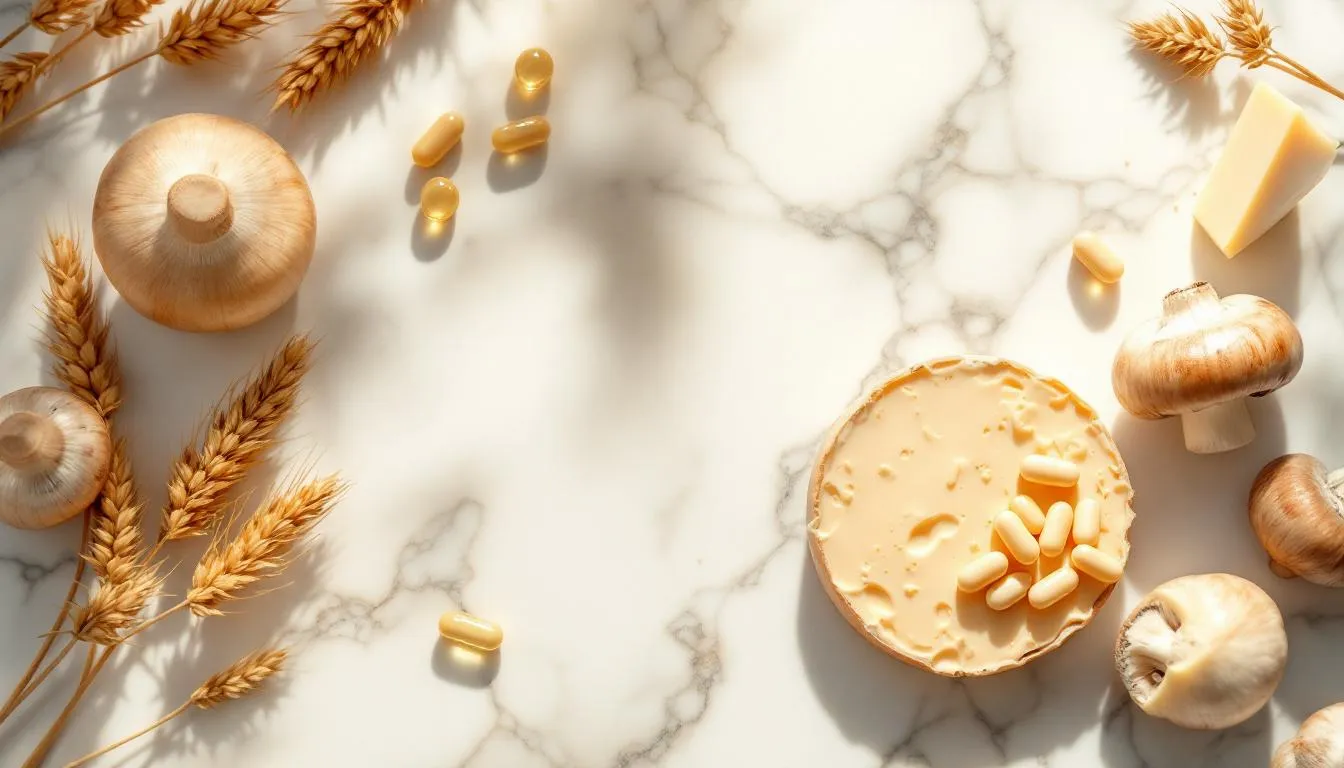
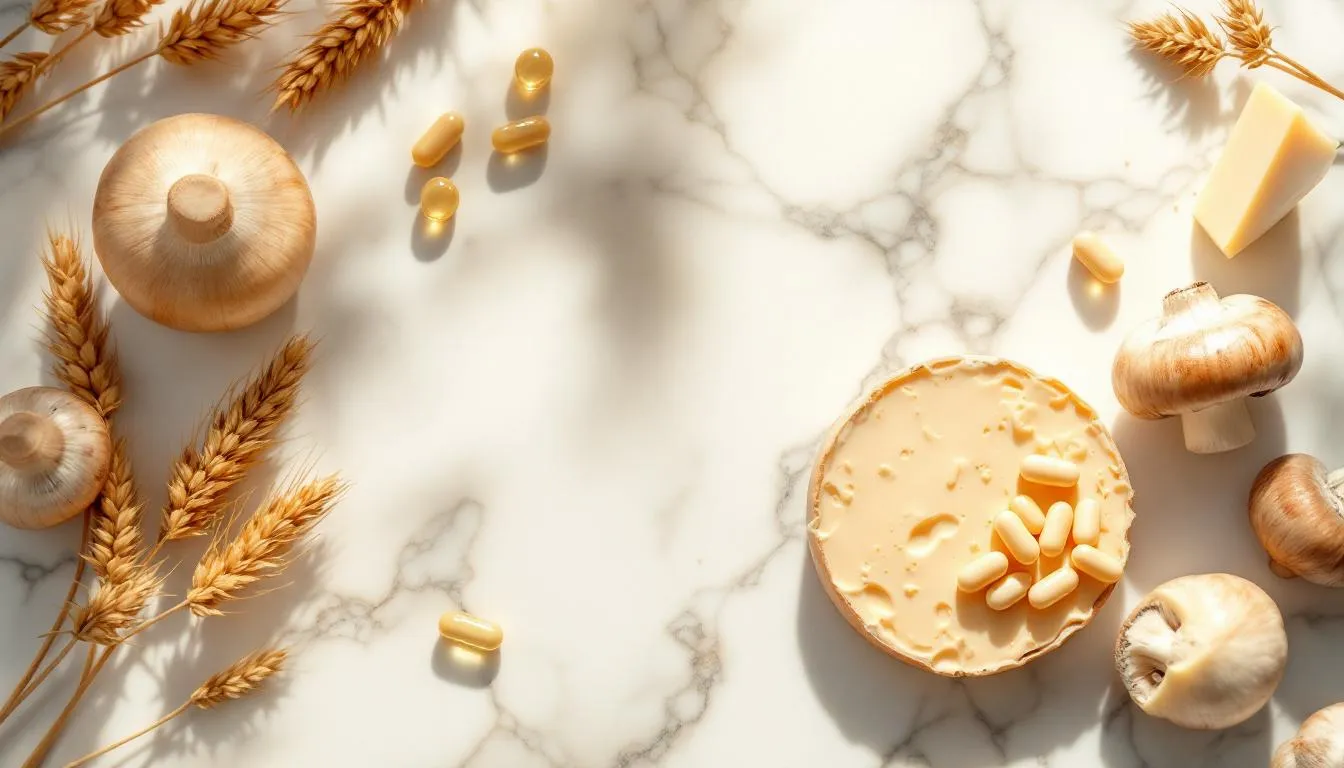
Wheat germ leads by a wide margin, containing 243-350 mg/kg. A tablespoon or two daily delivers a meaningful dose. This is why most spermidine supplements are wheat germ extract-based.
Soybeans and soy products come in close with 167-207 mg/kg. Natto (fermented soybeans) is particularly high due to fermentation increasing polyamine concentrations.
Aged cheese is often overlooked but delivers about 200 mg/kg (roughly 20 mg per 100g serving). The aging and fermentation process builds polyamine content significantly.
Mushrooms provide approximately 88 mg/kg. Shiitake and oyster varieties are particularly rich. Adding a serving of mushrooms daily is a real contribution to your spermidine intake.
Peas and legumes deliver around 65 mg/kg. Green peas, lentils, and chickpeas all contribute.
Broccoli and cauliflower come in around 25 mg/kg. Good additions to an already-healthy diet.
The Mediterranean diet, with its emphasis on legumes, whole grains, mushrooms, and fermented foods, delivers some of the highest estimated dietary spermidine intakes of any eating pattern. This partly explains the consistent longevity associations with Mediterranean-style eating.
Western dietary intake is estimated at 7-25 mg/day from food alone. Most clinical trials use supplemental doses of 1.2-5 mg/day on top of baseline dietary intake. You may already be getting a meaningful amount without realizing it.
Spermidine vs. NMN vs. resveratrol
If you're building a longevity stack, you need to understand how these compounds relate to each other. They don't all do the same thing.
NMN works primarily by boosting NAD+ levels. Higher NAD+ fuels sirtuin activity, improves mitochondrial energy production, and supports DNA repair. It's an energy and repair compound. You can read more in our guide to resveratrol vs. NMN for a detailed comparison.
Resveratrol activates SIRT1 directly and provides antioxidant protection. It works on the sirtuin axis, partially overlapping with NMN's mechanism.
Spermidine operates through a different primary pathway: autophagy via EP300 inhibition. It clears the cellular debris that NMN's repair machinery then has more space to work on. Think of it as cellular housekeeping that makes everything else more effective.
The 2024 research suggests spermidine may actually be downstream of both fasting and rapamycin. If that holds up, it positions spermidine as something close to a central node in the longevity pathway network, one that other interventions route through.
Combining spermidine with NMN is a sensible approach for this reason: NMN provides the fuel and repair capacity, spermidine maintains the cellular environment in which that repair happens. They're complementary, not redundant. Use our supplement interaction checker to verify how these fit with your full stack.
Not sure how to build your personal longevity protocol? WinAging's AI protocol builder creates a customized supplement stack based on your age, goals, and health profile.
Spermidine for skin and hair
Spermidine's effects on visible aging are increasingly well-documented. Skin and hair are tissues that visibly reflect cellular aging, and spermidine acts on both through its autophagy and cellular renewal mechanisms.
Skin
In aged skin cells, spermidine supports synthesis of collagen, elastin, and lipids that maintain structural integrity and barrier function. Its autophagy activation clears damaged cellular components in dermal and epidermal cells, promoting cellular renewal at the tissue level. The epigenetic effects include modulating histone acetylation in skin cells, potentially reversing some age-related changes in gene expression.
Brands like Young Goose have built skincare lines around topical spermidine application, citing autophagy activation in skin cells specifically. If you're interested in that angle, check out our deeper look at spermidine skincare for the topical research.
Spermidine also pairs interestingly with glycine. Both support structural proteins in skin. If skin is a priority, you might find our post on glycine benefits for skin worth reading alongside this one.
Hair
The 90-day human trial showing more follicles in the anagen phase, reduced bulb cell apoptosis, and better pull test results is the most direct human evidence. Mouse studies lasting six months showed spermidine attenuated age-induced hair loss. Some people also report reversed hair greying, but no controlled human trial has confirmed this, and it remains anecdotal.
What's established: spermidine supports the hair growth cycle at the cellular level, and the human data, though limited, is positive.
Popular spermidine supplements
If you're going to supplement, here are the main products the longevity community uses.
Primeadine (Oxford Healthspan) is the premium option. It uses whole-food derived spermidine from Japanese wheat germ and includes the full polyamine complex: spermidine, spermine, and putrescine together. It also contains prebiotics to support your gut bacteria's endogenous production of polyamines. The founder, Leslie Kenny, is a well-known longevity researcher. Price is around $76/month. Best for people who want the whole-food philosophy and the full polyamine spectrum.
Omre takes a more clinical approach. It uses standardized wheat germ extract guaranteed to deliver exactly 10 mg spermidine per serving. It's third-party tested and more affordable than Primeadine. Founded by a physician. Best for people who want a precise, standardized dose with verified purity.
Spermidine Life (spermidineLIFE) is the Austrian brand that's been around the longest. Multiple published human trials used their formulation. If clinical research backing of the specific product matters to you, this is the strongest option.
One important note: nearly all commercial spermidine supplements are wheat germ extract-based. If you have celiac disease or a wheat allergy, you need synthetic spermidine trihydrochloride or you need to skip this supplement entirely.
Dosage and how to take it
The published research has used doses ranging from 1.2 mg/day (phase II safety trial) up to 40 mg/day (high-dose pharmacokinetic study). Most clinical trials fall in the 1.2-5 mg/day range.
The European Food Safety Authority lists 6 mg/day as a safe daily upper limit. Most commercial supplements deliver somewhere in the 1-10 mg range per serving.
There are a few timing strategies worth considering. Fasting and spermidine both activate autophagy. If you're doing intermittent fasting, taking spermidine during your fast may amplify the effect, since fasting itself triggers endogenous spermidine synthesis. Practically, this means taking it first thing in the morning before eating.
For how much spermidine per day and a more detailed dosing breakdown, we have a dedicated post covering that specifically.
The bioavailability caveat is real. High-dose studies found that oral supplementation doesn't linearly increase blood spermidine levels. Gut bacteria metabolize a significant fraction. This is a known limitation, and it's why some researchers favor a dietary-first approach, building up spermidine-rich foods as the foundation before layering in a supplement on top.
Who should consider spermidine
Good candidates:
People 35 and older who are noticing any of the early signs of biological aging, declining energy, cognitive fogginess, skin changes, or hair thinning. The earlier you begin autophagy support, the more you're working with rather than against your biology.
People who already practice intermittent fasting. If fasting's longevity benefit runs through a spermidine surge, supplementing may amplify what fasting is already doing.
Anyone on a rapamycin protocol. The 2024 data suggests spermidine and rapamycin work through an interconnected mechanism. If you're taking rapamycin for longevity, maintaining adequate spermidine levels makes mechanistic sense.
People with lower dietary spermidine intake, meaning those who don't regularly eat wheat germ, legumes, mushrooms, aged cheeses, or fermented foods.
Exercise caution or consult a doctor first:
Active cancer patients. Polyamines support cell proliferation, and while dietary spermidine has not been shown to increase cancer risk in healthy people, the theoretical concern is real for those with existing polyamine-sensitive tumors. Discuss with your oncologist first.
Anyone with celiac disease or a wheat allergy. Choose synthetic trihydrochloride forms specifically.
Pregnant or breastfeeding women. Insufficient safety data for this population.
WinAging covers all of the major longevity compounds in this depth. If you're building a comprehensive protocol and want help knowing what to combine with spermidine, the supplement interaction checker and biological age calculator are useful places to start.
Frequently asked questions
What does spermidine actually do for aging?
Spermidine's primary anti-aging mechanism is autophagy induction. It inhibits the EP300 enzyme, which triggers a cascade that activates the cell's self-cleaning system. This clears damaged proteins and dysfunctional organelles that accumulate with age. It also protects mitochondria, reduces inflammation, preserves telomere length, and modulates epigenetic marks that shift toward youthful gene expression.
Is spermidine the same as spermine or putrescine?
No, they're related but distinct. All three are polyamines, and they work together in the body. Spermidine can be converted to spermine. Some supplements, like Primeadine, include the full polyamine complex rather than spermidine alone. Whether the full complex is superior to spermidine alone hasn't been conclusively established in human trials.
Can you get enough spermidine from food alone?
Possibly. Western dietary intake is estimated at 7-25 mg/day from food. The clinical trials use supplemental doses of 1.2-5 mg/day on top of dietary intake. A diet rich in wheat germ, natto, aged cheese, mushrooms, and legumes may deliver clinically meaningful amounts without supplementation. The supplement is a top-up strategy, not a replacement for dietary sources.
Does spermidine work better with fasting?
The 2024 Nature Cell Biology research suggests yes. Fasting triggers an endogenous spermidine surge, which then activates autophagy. Supplemental spermidine taken during a fast could amplify this effect. The mechanistic rationale is solid, though a controlled human study specifically testing this combination hasn't been done.
How long does it take to feel the effects of spermidine?
The hair growth trial showed significant differences at 90 days. Most clinical trials run for three to twelve months. Autophagy and cellular renewal are slow processes at the tissue level. Expect meaningful timelines of 3-6 months before evaluating effects, and track objective markers like biomarkers rather than relying on subjective feeling.
Can you stack spermidine with NMN?
Yes, and there's a reasonable scientific rationale for doing so. NMN boosts NAD+ levels and fuels cellular repair. Spermidine activates autophagy to clear the cellular debris that repair machinery needs space to work on. They operate through adjacent but non-overlapping pathways. Multiple researchers have proposed this combination specifically for elderly populations. Run the combination through our supplement interaction checker to confirm compatibility with any other compounds you're taking.
Is spermidine safe long-term?
Clinical trials at doses up to 40 mg/day for 28 days showed no safety issues. The phase II trial at 1.2 mg/day for three months found no differences from placebo in vital signs, blood chemistry, or hematological markers. Long-term human safety data beyond 12 months doesn't yet exist in published form, though spermidine is a naturally occurring compound consumed in food throughout life without apparent harm.
Related guides
- How much spermidine per day: dosing guide
- Spermidine-rich foods: complete food source guide
- Spermidine skincare: topical anti-aging research
- Spermidine benefits for women
- Resveratrol or NMN: which one to choose
Sources
- Spermidine is essential for fasting-mediated autophagy and longevity - Nature Cell Biology
- Spermidine in health and disease - Science
- Effects of Spermidine Supplementation on Cognition - JAMA Network Open
The evidence for spermidine isn't perfect. No single human trial has produced a definitive, large-scale confirmation of all its claimed benefits. But the mechanistic data is unusually deep, the safety profile is clean, and the connection to foundational longevity pathways, including autophagy, mitochondrial biogenesis, and anti-inflammation, is genuine.
For anyone serious about longevity, spermidine belongs in the conversation. Start with food sources. Add a supplement if your diet doesn't cover wheat germ, legumes, and mushrooms consistently. Track your biomarkers. And combine it with a broader protocol built around your specific goals.
WinAging's AI protocol builder can build that broader protocol for you, based on your age, goals, and current regimen. Or start with the free longevity tools to assess where you stand.