How Much Spermidine Per Day: Your Complete Dosage Guide
How much spermidine per day? Research-backed dosage ranges by age, food sources with exact amounts, supplement timing, and safety data from clinical trials.
Centenarians have something in common beyond good genes. Their spermidine levels. Specifically, the spermidine in their blood looks closer to what you'd find in a 45-year-old than a 75-year-old. Researchers first noticed this pattern and started asking an obvious question: is high spermidine just a marker of exceptional aging, or is it actively contributing to it?
The evidence is pointing more and more toward the latter. And that raises the practical question most people get stuck on: how much spermidine per day do you actually need to make a difference?
This guide answers that directly. You'll get clinical dosage ranges, age-based recommendations, a breakdown of food versus supplements, timing guidance, and the safety data from actual trials. No vague deflection. Just what the research shows.

Why your spermidine levels matter more than you think
Spermidine is a polyamine, a small positively charged molecule your body makes from the amino acid ornithine. It's found in every living cell, from bacteria to plants to humans. Your gut bacteria synthesize it. The foods you eat deliver it. And your body's own production keeps going, at least until your late 30s and early 40s, when it starts to fall.
That decline is significant. In research on aging populations, spermidine concentrations in tissues and blood drop consistently over time. The practical consequence is reduced autophagy. That's your cells' built-in recycling system, the process that breaks down damaged proteins, clears dysfunctional organelles, and removes molecular debris before it accumulates. When autophagy slows, cellular quality control suffers. And that's thought to be one of the upstream drivers of age-related disease, everything from cardiovascular dysfunction to cognitive decline.
Spermidine's primary mechanism is direct and well-characterized. It inhibits an enzyme called EP300, an acetyltransferase that normally suppresses autophagy. When spermidine blocks EP300, the autophagy machinery activates. Cells start cleaning house. Damaged components get recycled. And that process, run consistently over years, appears to translate into meaningful differences in healthspan.
Here's the centenarian observation again, because it's worth sitting with. People who age exceptionally well don't just happen to be healthy. They retain higher spermidine concentrations than you'd expect for their chronological age. That correlation keeps appearing across multiple countries and study designs. It's not definitive, but it's consistent enough to take seriously.
There's also a newer piece of research that changes how we think about spermidine. A 2024 paper in Nature Cell Biology found that the surge in endogenous spermidine during fasting is actually one of the key signals that triggers autophagy and longevity benefits during fasted states. Spermidine isn't just a supplemental compound you add to a stack. It's part of the body's own aging-response machinery. The question is whether you can keep that machinery running as decades pass.
Use the WinAging biological age calculator to get a sense of how your current aging markers compare to your chronological age. Understanding that baseline helps you calibrate whether active supplementation is actually warranted.
How much spermidine per day: what clinical trials show
Let's start with the trials. That's the most honest place to anchor a dosage recommendation. Spermidine research in humans is still younger than the research on some other longevity compounds. But there are now several well-designed human studies that give us real numbers.
The 1.2 mg/day cognitive trials
The most frequently cited studies used 1.2 mg per day in adults with subjective cognitive decline. The Wirth 2018 pilot study (30 participants, three months) and the Pekar 2021 study (85 participants, three months) both showed cognitive improvements compared to placebo, measured on validated memory tests. These were randomized, double-blind, placebo-controlled designs, the gold standard for supplement research.
So 1.2 mg/day produced measurable benefits in cognitive aging. That's a relatively modest dose, one that's achievable through diet alone if you eat wheat germ consistently.
There's a nuance worth knowing. A 2022 study by Schwarz et al. with 100 participants over 12 months did not find a significant improvement in memory performance at a similar dose. The evidence isn't settled. But across the trial literature, 1.2 mg/day appears to be a reasonable starting point with an established safety record and some positive outcomes.
The 3.3 mg/day food-based trial
A longer-term study delivered spermidine through diet at 3.3 mg/day for a full year in older adults and measured cognitive outcomes with the Mini Mental State Exam. Results showed significantly higher scores in the intervention group after 12 months. This is important because it suggests consistent dietary intake, not just supplements, can maintain spermidine levels well enough to produce measurable effects.
It also tells you something about the dose-response relationship. 3.3 mg/day appears to perform better than 1.2 mg/day in at least some studies. That's not a surprise given what we know about declining endogenous production with age.
The 40 mg/day safety trial
At the opposite end of the spectrum, a 2024 randomized controlled trial published in a peer-reviewed journal tested what happens when healthy older men take 40 mg/day for up to 28 days. The result: safe and well-tolerated, with no serious adverse events.
Interestingly, this study found that even this very high dose didn't substantially increase circulating spermidine levels in the blood. That's a critical finding. It suggests oral bioavailability is more complex than simply ingesting more and absorbing more. The gut and liver appear to process spermidine before it reaches systemic circulation, and much of the biological effect may happen at the gut epithelial level or through microbiome modulation rather than through elevated blood concentrations.
Keep that in mind when evaluating supplement products claiming dramatic blood-level increases.
The EFSA position
The European Food Safety Authority reviewed spermidine safety in food supplements and set a safe daily intake of 6 mg from supplemental sources. This is a conservative threshold for regular use. For context, traditional Japanese diets rich in natto can deliver 20 mg or more per day without any reported harm. The EFSA limit applies specifically to concentrated supplement forms, not to dietary spermidine from natural food sources.
Before stacking spermidine with other compounds, use the supplement interaction checker to flag any potential interactions with your current regimen.

Dosage by age and goal
The clinical evidence doesn't give us perfectly defined age-based dosing protocols. But combining trial data with what we know about age-related spermidine decline, a practical framework looks like this.
Ages 30-45: maintenance phase
Your body's own spermidine production is still relatively robust in this range. Dietary intake is more important as a maintenance strategy than as emergency supplementation. Targeting 1-2 mg/day through food alone is realistic and usually sufficient. Regular consumption of wheat germ, mushrooms, and fermented foods gets most people there.
If you're building a longevity stack early and want to add a supplement, 1-2 mg/day from a standardized product on top of dietary intake is a reasonable and well-tolerated addition. Total combined target: 2-4 mg/day from all sources.
Ages 45-60: active supplementation phase
This is the range where spermidine levels start declining meaningfully in most people. If you've been coasting on dietary intake alone, your late 40s and 50s are when more active support starts to matter. The 1.2 mg/day trial doses still apply here, but many longevity practitioners would target 2-3 mg/day total (food plus supplement) as a more active maintenance strategy.
This is also the phase where autophagy enhancement really starts paying dividends. Cellular cleanup becomes more valuable as damage accumulates over decades. If you're tracking biomarkers, consider running a biological age test now to get a baseline. WinAging's biological age calculator explains the most reliable testing options and how to interpret them.
Ages 60+: higher intake is warranted
Older adults showed the most consistent benefits across the trial literature, particularly for cognitive function and cardiovascular markers. The 3.3 mg/day dietary intake trial showed significant cognitive improvements specifically in this age group. Supplemental doses of 3-5 mg/day on top of dietary spermidine are within the EFSA safety range and have the most supporting evidence for people in this bracket.
Some researchers and longevity clinicians suggest targeting up to 6 mg/day from supplements in this group, particularly for individuals with a family history of cognitive decline or cardiovascular disease. The 40 mg/day safety data provides comfort about the upper ceiling, even if higher doses don't reliably raise blood spermidine.
If you want a protocol built around your specific age, goals, and health history, the WinAging AI protocol builder designs personalized longevity stacks from 30+ data points including age, biomarkers, and health objectives.
Getting spermidine from food vs. supplements
Here's the tension in spermidine research: the best human evidence for longevity benefits comes from dietary spermidine, not supplements. A 20-year Austrian study of over 800 people found that those with the highest dietary spermidine intake had a 26% lower risk of all-cause mortality, equivalent to roughly five to six years of biological age difference. That's a powerful effect. And it came from food.
Can you hit therapeutic doses through food alone? For some people, yes, easily. For others, it takes more planning.
What the food numbers actually look like
The richest dietary sources of spermidine break down as follows:
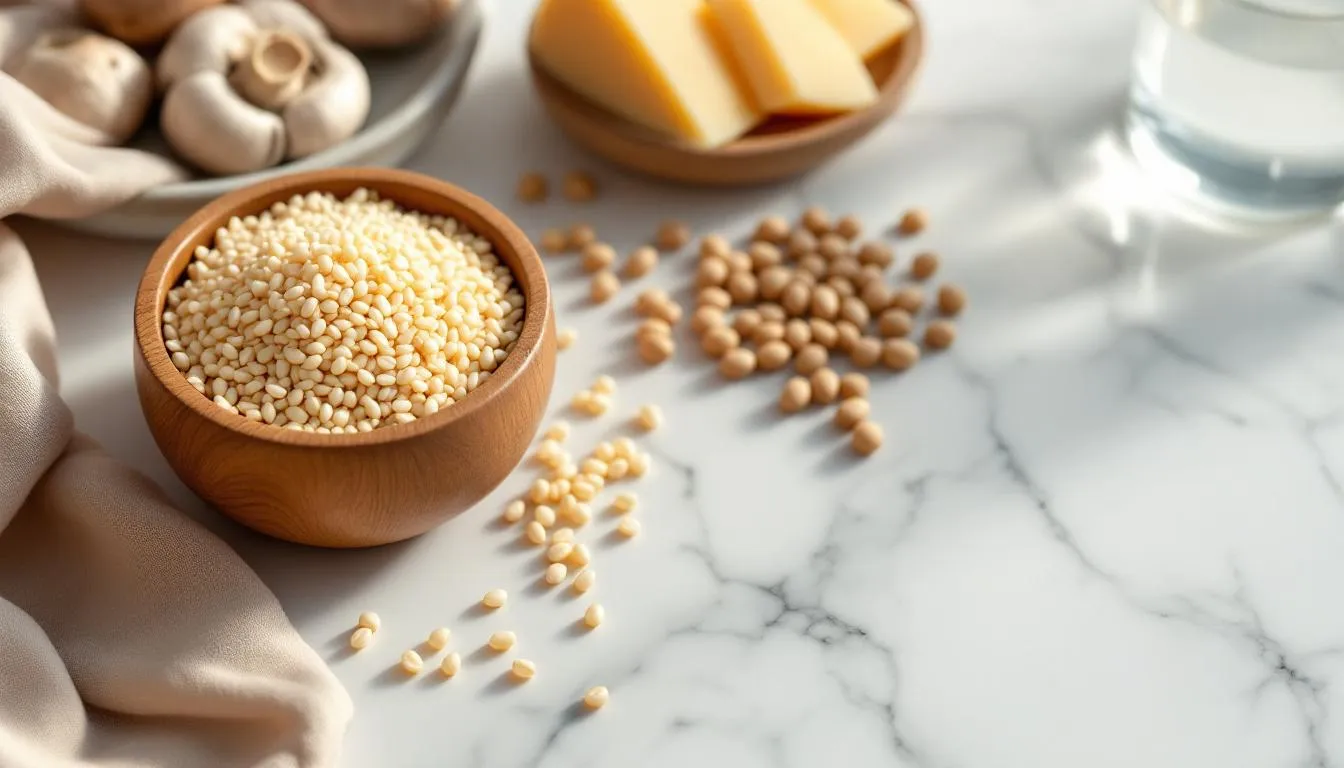
Wheat germ: The clear frontrunner. About 1.2-1.5 mg of spermidine per tablespoon. A standard 30g serving delivers roughly 3.5-4 mg. This single food can get many people to or past a therapeutic daily dose on its own. It's cheap, widely available, and mixes easily into oatmeal, smoothies, or yogurt.
Natto: Fermented soybeans, a staple in Japanese cuisine. Up to 20 mg per 100g, though typical serving sizes are 30-50g, delivering 3-10 mg per serving. This is one of the most concentrated sources you'll find anywhere. The catch: it's an acquired taste that many Westerners struggle with initially.
Aged cheeses: Up to 20 mg per 100g for well-aged varieties. Cheddar, parmesan, blue cheese, and similarly aged products. The aging and fermentation process concentrates polyamines significantly. A modest cheese portion at dinner can add 1-3 mg to your daily intake.
Shiitake mushrooms: Up to 16 mg per 100g dry weight, considerably less when fresh but still meaningful. Dried shiitake mixed into cooking is a practical way to add spermidine to regular meals.
Soybeans and tempeh: A reliable plant source at 165-290 mg/kg. When soy is a dietary staple, it adds meaningfully to daily polyamine intake. Tempeh may be even more concentrated due to fermentation.
Peas and lentils: Good sources for people who avoid dairy and soy. Around 3-8 mg per 100g depending on the variety. Consistent legume consumption adds up over time.
If you eat wheat germ daily, moderate amounts of mushrooms, and some fermented food, you can hit 3-5 mg/day without any supplement at all. The WinAging spermidine-rich foods guide covers this in full detail, including how cooking methods affect spermidine content and which forms of each food preserve the most.
When supplements make sense
Three situations make supplements the practical choice. First, you can't eat the spermidine-rich foods reliably because of dietary restrictions, taste preferences, travel, or inconsistent access. Second, you're in the 60+ age group and want to ensure daily intake above what diet typically delivers. Third, you're running a structured longevity protocol where precise dosing matters.
There's an important bioavailability nuance worth knowing. The 2024 high-dose safety trial found that even 40 mg/day of supplemental spermidine didn't reliably raise blood spermidine concentrations. Researchers think the gut microbiome processes spermidine differently from food-based sources, and much of the activity may occur at the gut level or through spermidine's conversion to spermine before systemic absorption. This mirrors a similar puzzle in resveratrol research, where blood levels often don't reflect the biological effects seen in tissues.
The practical implication: food-based spermidine and supplemental spermidine may work through related but not identical mechanisms. Using both, or prioritizing food with targeted supplementation to fill gaps, is likely the most robust approach.

Supplement forms: what to look for
If you go the supplement route, form matters considerably.
Spermidine trihydrochloride: The form used in most clinical trials. Synthetic, highly pure, and water-soluble. This is what you want in a supplement if you're prioritizing research alignment. When you see a product in a clinical trial context, it's almost always this form.
Wheat germ extract: A natural concentrate derived from wheat. Often associated with the large population mortality studies, since those tracked dietary spermidine specifically. If you prefer natural-derived compounds, this is a reasonable alternative. Important caveat: wheat germ extract contains gluten, making it unsuitable for anyone with celiac disease.
Plant-derived polyamine complexes: Some products combine spermidine with putrescine and spermine as a full polyamine complex. The clinical research is primarily on spermidine specifically. The combination approach has less direct human evidence, though it mimics what you'd get from natural food sources.
What to avoid: Supplements that list "wheat germ extract" on the label without specifying the standardized spermidine content in milligrams. A product listing 100 mg of wheat germ extract tells you almost nothing about how much actual spermidine it delivers. Look for products that clearly state the spermidine content per serving.
When evaluating new products or combinations, the supplement interaction checker is a useful first step for flagging anything that might interact with medications or other supplements in your stack.
When and how to take spermidine
Timing isn't as critical for spermidine as it is for some compounds, but a few practical considerations are worth knowing.
With food is the standard recommendation from most human studies. The primary reason is GI tolerance. Some people experience mild nausea or bloating when taking spermidine on an empty stomach. Taking it with a meal generally eliminates this issue without affecting effectiveness.
Morning with breakfast works well for most people. It builds a consistent habit, pairs naturally with wheat germ in oatmeal or a smoothie if you're combining food and supplement sources, and aligns with the circadian patterns of cellular activity.
Fasting and spermidine: There's interesting research worth knowing here. Fasting promotes endogenous spermidine synthesis, and that spermidine surge is now understood to be one of the primary signals triggering autophagy during fasted states. If you practice intermittent fasting, you're periodically boosting your own spermidine production during the fasted window. Supplementing consistently on eating days helps maintain elevated levels across the whole week, not just during fasting periods.
Consistency over timing precision: Like most longevity supplements, what matters most is showing up every day, not the exact hour. Pick a time you can stick to. The guide to the best time to take glycine navigates this same question for a similar amino-acid-adjacent compound, and the conclusion is the same: consistency beats optimization every time.
Side effects and who should be cautious
Spermidine has one of the cleaner safety profiles among longevity supplements. Here's what the evidence actually shows.
Common side effects (usually mild)
The most frequently reported issues are gastrointestinal: mild nausea, bloating, or stomach discomfort, particularly at higher doses or when taken on an empty stomach. These typically resolve within a few days as your body adjusts. Starting at 1 mg/day and increasing gradually over two to four weeks minimizes the likelihood of these effects.
Headaches are occasionally reported, usually dose-dependent, and tend to resolve with dose reduction or adjustment.
Wheat germ extract products carry a gluten risk. Always check the source material. Synthetic spermidine trihydrochloride is gluten-free.
Who should think carefully before starting
People with active cancer should discuss spermidine with their oncologist before supplementing. Polyamines are involved in cell growth as part of their normal function, and some cancer treatments specifically target polyamine metabolism pathways. It's not that spermidine is thought to drive cancer progression, but the conversation is worth having with a physician who knows your situation.
People on immunosuppressant therapy: Spermidine has immune-modulating properties. If you're on medications like rapamycin, cyclosporine, or similar agents, run the combination by your prescribing physician. The supplement interaction checker can flag potential concerns as a starting point.
Pregnancy and breastfeeding: Spermidine is naturally present in breast milk and in human tissue throughout development, so it's not an exotic compound. But there are no clinical trial data on supplementation during pregnancy. Standard caution applies, meaning no supplementation above normal dietary intake without physician guidance.
For the vast majority of healthy adults, spermidine at 1-5 mg/day has an excellent safety record across all the studies conducted to date.
Stacking spermidine with other longevity compounds
Spermidine doesn't exist in isolation in a well-designed longevity protocol. Understanding how it interacts with other compounds helps you build a stack that's coherent rather than just a collection of individual supplements.
Spermidine and fasting
This synergy is the strongest one in the stack. Fasting promotes endogenous spermidine synthesis. Spermidine is then one of the primary signals that kicks off autophagy during the fasted period. If you fast regularly, you're already working this pathway. Supplementing on eating days, or with your first meal when breaking a fast, helps maintain elevated levels throughout the entire week rather than just during fasting windows.
The 2024 Nature Cell Biology paper added another dimension: the surge in endogenous spermidine during fasting appears to be essential for the autophagy and longevity benefits of rapamycin in model organisms. This connects spermidine mechanistically to the mTOR pathway in a way that wasn't clear before.
Spermidine and glycine
Glycine supports cellular longevity through different mechanisms, including collagen synthesis, methylation support, and mitochondrial function. The combination of spermidine (autophagy activation) and glycine (structural cellular repair) targets aging from complementary angles. Some longevity researchers specifically pair these compounds for this reason, and both have strong safety profiles.
Spermidine and taurine
Taurine supports mitochondrial function, cellular osmolyte balance, and has been independently linked to age-related decline. Taurine levels fall with aging in animal models, and supplementation may restore levels that naturally diminish over decades. Like spermidine, taurine is a compound your body makes but produces less of as you age. These aren't competing mechanisms. They support different aspects of cellular aging and work well alongside each other.
Spermidine and NAD+ precursors
NAD+ precursors address a different aging axis: the sirtuin and PARP pathway involved in DNA repair and energy metabolism. Spermidine's mechanism is primarily autophagy via EP300 inhibition. These pathways are largely complementary, not overlapping. Many longevity researchers specifically pair them: spermidine activates cellular cleanup while NAD+ precursors maintain energy metabolism and DNA repair capacity. You're targeting aging from two distinct but mutually supporting angles.
Spermidine and berberine
Berberine activates AMPK, which has documented crosstalk with autophagy signaling. Some animal research suggests AMPK activation can increase endogenous spermidine synthesis. Whether that translates to meaningful synergy in humans isn't established yet, but both compounds support cellular metabolic health through related mechanisms and stack cleanly from a safety perspective.
Not sure which combination is right for your age, goals, and current health status? The WinAging AI protocol builder designs personalized stacks that integrate spermidine with the compounds that make the most sense for your specific situation. It accounts for age, existing medications, budget, and health objectives.
Before combining multiple autophagy-promoting compounds, run your full stack through the supplement interaction checker to catch anything worth flagging.
How to know if spermidine is working
The challenge with longevity supplements is that you're not trying to feel different next week. You're trying to age differently over the next decade. That makes subjective feedback unreliable and traditional symptom-tracking useless. So what can you actually monitor?
Hair density and shedding
The clearest short-term measurable signal. A well-designed 90-day placebo-controlled trial found that spermidine extended the anagen (active growth) phase of hair follicles in humans, with effects still measurable three months after stopping supplementation. If your hair shedding decreases or density improves over 3-6 months, that's an early observable indicator that something is happening.
This isn't just cosmetic. Hair follicle cycling is one of the few fast-turnover cell populations where autophagy effects can be observed without invasive testing. It's an accessible proxy signal.
Cognitive performance over time
Several apps allow you to track memory and cognitive performance over months. Not a clinical tool, but useful for noticing trends over a year or more. Set a baseline in the first week of supplementation, then retest quarterly.
Biological age testing
Blood-based biological age tests like GlycanAge, TruAge, or Levine's PhenoAge give you an actual readout of biological age before and after a period of consistent supplementation. A 12-month window is probably the minimum meaningful timeframe. That's the most objective signal available outside of a clinical trial enrollment.
The WinAging biological age calculator walks through which test types are worth using and how to interpret the results in the context of your longevity protocol.
Cardiovascular markers
The population data linking higher dietary spermidine to reduced heart failure risk (roughly 40% lower in high-intake groups) suggests that cardiovascular effects are real over the long term. Tracking basic cardiovascular markers like blood pressure, resting heart rate, and available heart rate variability data gives you signal that's measurable in ordinary checkups.
If you're also interested in how spermidine affects skin aging and collagen, the spermidine skincare guide covers the topical and systemic effects in detail, including the collagen and elasticity findings from clinical research. Skin elasticity is another trackable proxy marker for cellular renewal.
A practical weekly protocol
Here's what a simple, food-forward spermidine approach looks like in real life.
Daily baseline for anyone (30-60)
One tablespoon of raw wheat germ stirred into morning oatmeal, a smoothie, or yogurt. This alone delivers 1.2-1.5 mg of spermidine and takes about 10 seconds to add to your routine. If you already eat natto, fermented cheese, or dried mushrooms regularly, you may already be hitting 3-5 mg/day without any supplement.
Active supplementation protocol (45+)
Add 1-2 mg/day from a standardized spermidine trihydrochloride supplement on top of food sources. Take it with your first meal. Total daily target from all sources: 3-4 mg. Give yourself 4-6 weeks at a starting dose of 1 mg before increasing.
Intensive protocol (60+)
Target 4-5 mg/day total from combined food and supplement. Consider pairing with intermittent fasting (even a simple 16:8 window) to maximize autophagy signaling. Stack with glycine at 3-5g/day for complementary cellular repair support, and consider a NAD+ precursor on a separate track. Consistency over months matters more than the precise milligram on any given day.
Frequently asked questions
How much spermidine per day is considered optimal?
Based on current evidence, 1-2 mg/day is a reasonable starting dose with documented safety and some positive cognitive outcomes in trials. Many longevity practitioners target 3-5 mg/day combined from food and supplements, particularly in adults over 50. The EFSA considers up to 6 mg/day from supplements to be within the safe range based on current evidence.
Can I get enough spermidine from food alone?
Yes, if you eat wheat germ and/or natto consistently. One tablespoon of wheat germ delivers about 1.2-1.5 mg. A typical 50g serving of natto provides 3-5 mg. Regular mushrooms and aged cheeses add more. If these foods are practical for your diet, hitting 3-5 mg/day without any supplement is entirely achievable. The spermidine-rich foods guide breaks down every major source with serving sizes and preparation tips.
Is it better to take spermidine in the morning or at night?
Most studies administered spermidine with meals without specifying morning or evening. Morning with breakfast is the practical recommendation because it builds a consistent daily habit and the food reduces GI effects. There's no strong evidence that timing within the day significantly affects outcomes.
How long does spermidine take to work?
Hair growth effects were measurable within 90 days in the clinical trial and persisted months after stopping. Cognitive effects appeared over 3-12 months across different studies. Long-term healthspan effects from autophagy take years to manifest at a population level. Think of spermidine as a long-game strategy, not something you feel within days.
Does cooking destroy spermidine?
Heat reduces spermidine content. Boiling causes significant losses, sometimes 30-50% in some measurements. Fermentation, on the other hand, can increase spermidine content. Raw wheat germ, natto, and aged cheeses preserve or concentrate spermidine. If you're cooking mushrooms, light steaming or brief sautéing is better than boiling. The fermented and raw preparations of high-spermidine foods are generally your best bet.
Can you take too much spermidine?
The 40 mg/day safety trial found no serious adverse effects over 28 days in older men. But higher doses don't appear to increase blood spermidine and may increase GI discomfort. There's no compelling reason to take more than 5-6 mg/day from supplements. Dietary spermidine from traditional foods like natto has been consumed at higher amounts for generations without reported harm.
Is spermidine safe to combine with rapamycin?
Mechanistically, they appear to be synergistic. The 2024 Nature Cell Biology finding showed that spermidine synthesis is essential for rapamycin's autophagy effects in model organisms. That doesn't mean you combine them casually, especially since rapamycin requires physician oversight. But the combination isn't contraindicated from a mechanism standpoint. Use the supplement interaction checker and discuss with whoever prescribes your rapamycin.
Why don't higher supplement doses raise blood spermidine levels?
The gut processes spermidine before it reaches systemic circulation. Much of the activity may happen at the gut epithelial level, or through spermidine's conversion to spermine during absorption. This doesn't mean supplementation is ineffective. It means the mechanism is more local and indirect than simply flooding the bloodstream with spermidine. Food-derived spermidine and supplement-derived spermidine may work through overlapping but distinct pathways. This is an active area of research.
Related guides
- Spermidine-rich foods: top sources for longevity
- Spermidine skincare: what the science actually shows
- Glycine and taurine: complementary cellular repair compounds
- Biological age calculator: how to track and measure aging
- Supplement interaction checker
Sources
- Safety and tolerability of spermidine supplementation in mice and older adults - PMC
- Spermidine is essential for fasting-mediated autophagy and longevity - Nature Cell Biology
- A spermidine-based supplement prolongs the anagen phase of hair follicles - PMC
Spermidine is one of the few longevity compounds where the case for doing something about it is straightforward. Your levels decline with age. The research shows that higher levels correlate with better aging outcomes. You can raise your intake through food, supplements, or both. The safety data is solid. Start with wheat germ in your morning routine and see where your daily intake lands. If you're in your late 40s or beyond, consider adding a standardized supplement to push toward the 3-5 mg/day range where the trial evidence gets more consistent. And if you want to know exactly where spermidine fits in a broader longevity protocol built around your specific situation, the WinAging AI protocol builder handles that personalization based on your age, health markers, and goals.