Primeadine spermidine: is it worth the price?
Primeadine by Oxford Healthspan is the most well-known spermidine supplement. Here's what the science actually says, how it compares, and who should buy it.

Spermidine is one of the most compelling compounds in longevity science right now. It activates autophagy, protects mitochondria, addresses multiple hallmarks of aging at once, and has a body of animal and human evidence behind it that's genuinely difficult to dismiss. If you've spent any time in the longevity space, you've come across it.
And if you've started looking for spermidine supplements, you've almost certainly come across Primeadine.
Oxford Healthspan's flagship product is everywhere in the premium longevity supplement conversation. $90 a month. Wheat germ from Japan. Leslie Kenny's personal story of reclaiming her health through longevity science. A beautiful website. Endorsements from some serious names in aging research.
But does it actually work? Is it worth $90 a month? And how does it compare to what else is out there?
This guide breaks down everything you need to know about Primeadine, the science behind spermidine, and whether this particular product is the right choice for your longevity stack.

What is Primeadine?
Primeadine is a spermidine supplement made by Oxford Healthspan, a UK-based longevity company founded by Leslie Kenny. Kenny is a Harvard-educated entrepreneur who was diagnosed with several autoimmune conditions in her 30s and became deeply invested in the science of cellular renewal. The company is based in Oxford, which adds to its credibility positioning, though the actual manufacturing and sourcing centers on Japanese wheat germ extract.
The concept is simple. As we age, intracellular spermidine levels decline. This decline is closely associated with reduced autophagy, the cellular cleanup process that clears damaged proteins and organelles. Supplementing spermidine from a food-derived source aims to restore what time has taken away.
Primeadine comes in two main formulations:
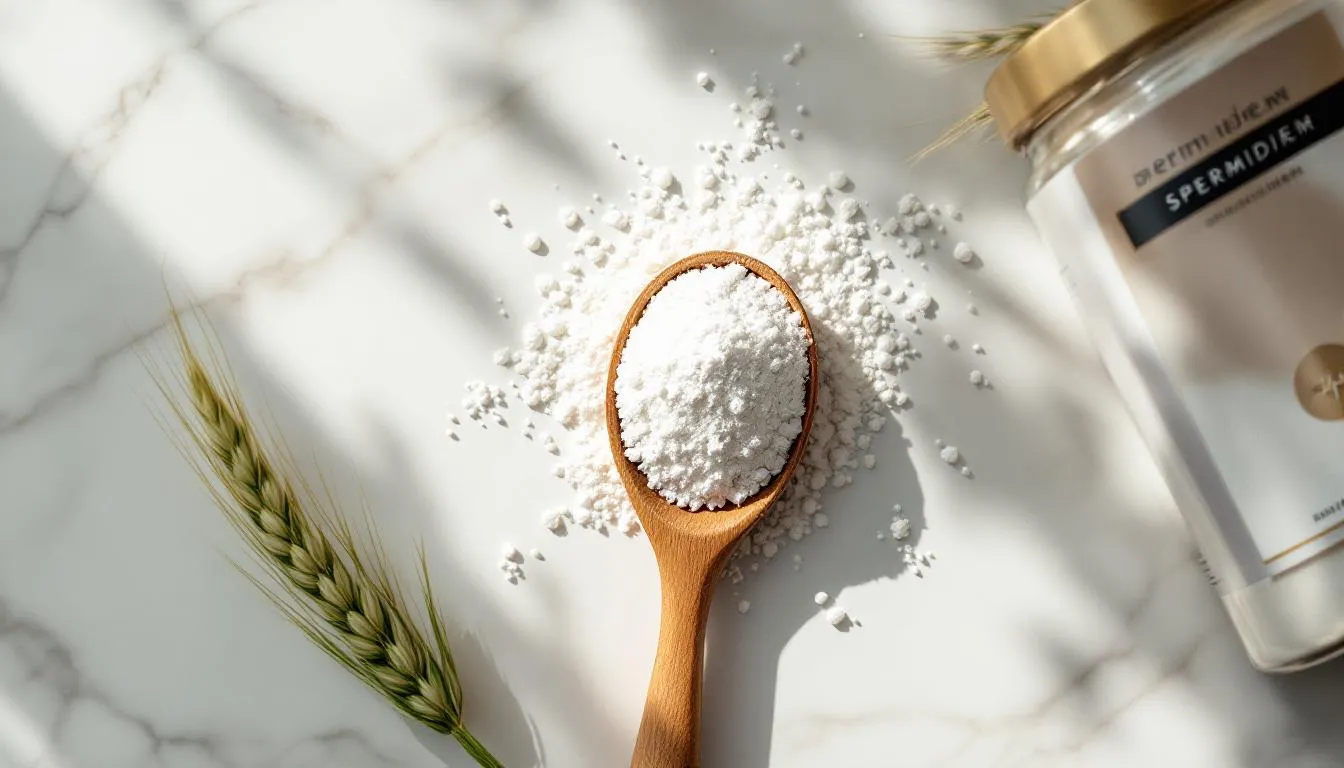
Primeadine Original uses a concentrated, defatted wheat germ extract sourced from Japan. Three capsules daily provide 1 mg of spermidine. The product also contains naturally occurring spermine and putrescine, two related polyamines that the company argues support the body's own spermidine synthesis. Worth noting: the original formula contains approximately 40 mg of gluten per serving, which rules it out for anyone with celiac disease or significant gluten sensitivity.
Primeadine GF is the gluten-free version, recently launched at Erewhon stores in Southern California. Same price point, same dosing philosophy, without the gluten.
Both retail at $90 for a 30-day supply. A powder formulation runs $240 for 90 days.
Oxford Healthspan has received significant press coverage in Forbes, the Financial Times, Marie Claire, Oprah Daily, and Men's Health. The brand has clearly broken through into mainstream wellness, not just the deep longevity niche.
The science behind spermidine
Before evaluating Primeadine specifically, you need to understand what spermidine actually does. Because the science here is genuinely impressive, and it's not marketing.
What spermidine is
Spermidine is a polyamine, a small organic molecule with multiple amino groups. It's present in virtually every living cell. Plants, animals, fungi, bacteria. Your body produces it. You consume it from food. And it plays fundamental roles in cell growth, DNA stability, and protein synthesis.
The name comes from semen, where it was first identified, but don't let that throw you. It's everywhere.
The key issue for aging: spermidine levels decline substantially as we get older. This isn't subtle. Across multiple species, the decline in intracellular polyamines, including spermidine, is one of the most consistent molecular changes associated with aging. And that decline matters a great deal for how our cells function.

How it activates autophagy
Autophagy is the cellular cleanup process. The word means "self-eating," which is appropriately visceral. Cells use it to break down damaged proteins, dysfunctional organelles, and cellular debris. It's how your body recycles molecular garbage.
When autophagy works well, cells stay cleaner and function better. When it declines, the accumulation of cellular junk drives the very processes we associate with aging: inflammation, mitochondrial dysfunction, protein aggregation, and loss of cellular function.
Spermidine activates autophagy through a specific mechanism. It inhibits an enzyme called EP300, a histone acetyltransferase. When EP300 is inhibited, a cascade of autophagy genes get activated. The cells start cleaning themselves out. This mirrors what happens during fasting or caloric restriction, which is why spermidine is sometimes described as an "autophagy mimetic."
Frank Madeo's research group at the University of Graz, which has produced most of the foundational spermidine science, has replicated this mechanism across yeast, worms, flies, and mice. Spermidine extends lifespan in all these model organisms. The mouse data is particularly robust, showing both extended median and maximum lifespan with spermidine supplementation.
The mitochondria connection
Spermidine also protects mitochondria in ways that go beyond autophagy. It stabilizes mitochondrial membranes, improves mitochondrial biogenesis, and reduces the reactive oxygen species that dysfunctional mitochondria produce. Mitochondrial dysfunction is one of the central hallmarks of aging, and spermidine appears to partially reverse the decline.
There's also a less-discussed mechanism called hypusination. Spermidine is the sole substrate for a chemical modification on eukaryotic initiation factor 5A (eIF5A). This modified version of eIF5A is required for translating a specific subset of mRNAs, including those involved in mitochondrial function and stress response. When spermidine levels decline with age, this entire downstream pathway is impaired. You can't get this particular benefit from any other compound.
Anti-inflammatory effects
Spermidine reduces NF-kB activity and decreases production of pro-inflammatory cytokines including TNF-alpha and interleukin-6. This addresses "inflammaging," the chronic low-grade inflammation that drives accelerated aging. It's not the most dramatic benefit, but in the context of a longevity stack, anything that consistently lowers systemic inflammation matters.
The epigenetic angle
Beyond the autophagy mechanism, spermidine's inhibition of histone acetyltransferases influences broader gene expression patterns. This is a field in early stages, but the implication is that spermidine may help maintain more "youthful" gene expression patterns by modulating the epigenetic mechanisms that shift with age.
Oxford Healthspan claims Primeadine addresses 9 of the 12 hallmarks of aging identified by Lopez-Otin's 2023 Cell paper. That's a marketing claim, but it's not entirely without basis in the underlying science.
What the human research actually shows
Animal studies are compelling. Human studies are what you actually need for informed decisions about supplementation.
The key human evidence comes from a research group at the Charité hospital in Berlin, led by Agnes Flöel and colleagues, working with Alzheimer's prevention researcher Miranka Wirth.
The 2018 safety trial enrolled 30 older adults (ages 60-80) with subjective cognitive decline. They received wheat germ-derived spermidine at 1.2 mg/day for three months in a randomized, placebo-controlled design. The finding: safe and well-tolerated, no adverse effects on vital signs, blood chemistry, or hematology. Compliance exceeded 85%. This was a phase II safety study, not an efficacy trial.
The 2022 JAMA Network Open trial was a larger phase 2b study. 100 older adults (mean age 69) with subjective cognitive decline. Randomized, double-masked, placebo-controlled. 0.9 mg/day of spermidine from wheat germ extract for 12 months. The primary outcome was mnemonic discrimination ability (a memory test). Result: no significant improvement (p=0.47). Some exploratory secondary findings suggested possible benefits for verbal memory and inflammatory markers, but these weren't validated on primary endpoints.
This is the clinical reality that the supplement industry doesn't always advertise clearly. The largest human RCT on dietary spermidine supplementation at doses similar to Primeadine's failed to show cognitive improvement in its primary endpoint.
That said, context matters. The researchers have suggested that the dose (0.9 mg/day) may have been insufficient. The cardiovascular and immune evidence is more promising. And the epidemiological data is striking.
The population cohort study followed 829 participants in the Bruneck Study for 20 years, assessing their spermidine intake from diet. People in the top third of spermidine intake had significantly lower all-cause mortality and, specifically, lower cardiovascular mortality. The effect was equivalent to a roughly five-year difference in mortality risk. This isn't a supplementation trial, but it suggests that higher circulating spermidine, from any source, tracks with better longevity outcomes.
The immune response study enrolled 40 older adults receiving COVID-19 vaccination. Some received 6 mg/day of spermidine (much higher than Primeadine's 1 mg). Results suggested improved antibody responses in the supplementation group. This was a small, preliminary study, but it supports the immune resilience angle.
The honest picture: spermidine has very strong mechanistic and animal data, compelling epidemiological associations, a decent safety record in human trials, and one failed cognitive RCT at low doses. The human evidence is promising but not definitive.
How Primeadine specifically works
Understanding why Oxford Healthspan chose wheat germ, and the defatted Japanese extraction specifically, requires a quick look at polyamine biology.
Wheat germ is the single richest food source of spermidine. Roughly 243 mg of spermidine per kilogram of wheat germ. That's why virtually all clinically studied spermidine supplements use wheat germ extract.
But raw wheat germ has a problem. It's high in polyunsaturated fatty acids that oxidize rapidly and can cause inflammation. Primeadine uses a defatted extract, which removes those unstable fats while concentrating the polyamine content. This is a thoughtful formulation choice.
The more contentious claim is the cofactor argument. Primeadine retains naturally occurring spermine and putrescine alongside spermidine in the wheat germ matrix. Oxford Healthspan argues these cofactor polyamines support the body's own spermidine synthesis pathways, making the whole-food matrix superior to synthetic isolated spermidine.
This is plausible biochemistry. Putrescine is a spermidine precursor. Spermine is produced from spermidine. The enzymes involved in polyamine interconversion are present throughout the body. A food matrix that includes all three polyamines might support endogenous production in ways that isolated spermidine doesn't.
But it's plausible, not proven. No head-to-head clinical trial has compared whole-food wheat germ spermidine to synthetic spermidine in humans. The cofactor argument remains theoretical.
Primeadine vs. the competition
At $90 per month, Primeadine is among the most expensive spermidine supplements available. Here's how it stacks up against alternatives.
spermidineLIFE by Longevity Labs
This is the product most closely associated with the Charité clinical trials. It's a wheat germ-derived extract from an Austrian company, similarly positioned as a research-aligned supplement. It provides approximately 1.2 mg/day of spermidine. Price is roughly $55-65 per month depending on where you buy it.
The honest comparison: spermidineLIFE is the brand that academic researchers have actually used in their trials, and it's meaningfully cheaper than Primeadine. If you want the product closest to what's been clinically studied, this is the more direct argument.
DoNotAge pure spermidine
DoNotAge offers synthetic, 99.8% pure spermidine trihydrochloride at dramatically higher doses. Options range from 8 mg to 24 mg per day. At annual subscription pricing, they offer the synthetic version at roughly $2-3 per mg of spermidine, compared to Primeadine's implied $90 per mg.
The trade-off is real. DoNotAge's synthetic product has no naturally occurring cofactors and hasn't been tested as a specific product in clinical trials. But 8 mg/day of highly pure synthetic spermidine may simply be more effective than 1 mg/day from a food matrix, and researchers like Frank Madeo have noted that higher doses may be needed to see the effects observed in animal studies.
Some longevity researchers have moved toward higher doses based on what works in animal models. If dose is what matters, DoNotAge wins on cost-efficiency by a wide margin.
Foods high in spermidine
For people who'd rather not supplement, spermidine-rich foods include wheat germ (by far the richest source), aged cheeses, soybeans, mushrooms, corn, broccoli, and cauliflower. Getting therapeutic amounts from food requires very specific dietary patterns, and most Western diets fall far short of what the epidemiological data suggests is optimal.
The average Western diet provides about 10-30 mg/day of total polyamines from food plus gut microbiome production. The Bruneck cohort's longevity-associated intake was above 80 µmol/day equivalent. The gap is real, though it's also worth noting that gut bacteria produce spermidine, and dietary fiber, especially from wheat and fermented foods, supports this production.
Dosage and how to take Primeadine
The recommended dose is three capsules of Primeadine Original or GF daily, delivering approximately 1 mg of spermidine.
Oxford Healthspan doesn't specify exact timing in their materials, but taking it with a meal is generally advisable for tolerance. Unlike berberine or metformin, spermidine has no significant food-timing interactions from a mechanism standpoint. Consistency matters more than timing.
For the powder formulation, dose and delivery are equivalent, just with more flexibility for mixing into smoothies or food.
Some users and practitioners experiment with higher doses by taking Primeadine alongside spermidine-rich foods. If you're eating aged cheese, wheat germ, and soy regularly, the combined dietary and supplement intake approaches something closer to the population intake associated with longevity benefit in the epidemiological data.
The biological age calculator can give you a baseline before starting any longevity supplement so you have something concrete to track against over time.
Side effects and safety
Spermidine, including Primeadine, has an excellent safety profile in the available human data.
The 2018 phase II trial found no adverse effects on vital signs, blood work, or standard health measures at 1.2 mg/day over three months. The 2022 JAMA trial ran for 12 months with no safety signals. The 40-person COVID vaccination study at 6 mg/day (six times Primeadine's dose) also showed no concerning adverse events.
The most common reported side effect is minor GI upset in some people when starting, similar to what people experience starting any new supplement. This typically resolves.
Specific considerations:
Gluten: The original formula contains roughly 40 mg of gluten per serving. Not suitable for celiac disease. Use the GF formulation if you have gluten sensitivity.
Pregnancy and breastfeeding: No safety data exists for either. Avoid during pregnancy and nursing.
Existing cancer: Spermidine has complex effects on cancer biology in preclinical studies, with some evidence supporting cancer cells as well as opposing effects. Anyone with an active malignancy should discuss spermidine supplementation with their oncologist before starting.
Drug interactions: No well-documented drug interactions with Primeadine at current doses. If you're on immunosuppressants or cancer therapy, check with your doctor. Use the supplement interaction checker to screen your full stack.

Who Primeadine is right for
Primeadine makes the most sense for a specific type of person.
You're already optimizing broadly. Primeadine is not a first-step longevity supplement. If you haven't sorted sleep, exercise, nutrition, and baseline supplements, start there. Spermidine is a meaningful addition to a stack that's already working.
You prefer whole-food-derived supplements. If the food matrix argument resonates with you, and you value cofactor polyamines alongside the primary compound, the Primeadine formulation makes sense. Some people have strong preferences here, and if you're one of them, the product delivers on its promises.
$90 per month is not a significant consideration. This is genuinely premium pricing. If your budget is constrained, there are more cost-effective ways to get spermidine. If budget isn't the constraint, the Oxford Healthspan brand and product quality are legitimately premium.
You're over 45 and focused on cellular health. The age-related decline in spermidine accelerates after around 40. The cardiovascular and cellular health evidence is more compelling than the cognitive evidence, and longevity-focused supplementers in this age range have the strongest argument for supplementation.
Looking specifically at benefits by gender, the spermidine benefits for men and spermidine benefits for women guides break down the research on sex-specific applications in more depth.
Who should probably look elsewhere
You want the most spermidine per dollar. spermidineLIFE provides the product type most closely studied in clinical trials at roughly 40% less. DoNotAge provides dramatically more spermidine per dollar if you're willing to use synthetic. Neither is wrong, and Primeadine's premium is based partly on brand and sourcing rather than proven efficacy superiority.
You need high-dose spermidine. Some longevity researchers have argued that the doses studied in the JAMA cognitive trial (0.9-1.2 mg/day) were too low to see the effects produced in animal models. If you're following that line of thinking and want 8+ mg/day, Primeadine is not cost-effective at its 1 mg/day dose. DoNotAge is the more practical option.
You have celiac disease. The GF formula addresses this, but it's worth confirming with the company that it meets your specific needs. The original formula is not appropriate for celiac.
You're just starting your longevity supplement journey. The evidence base for spermidine, while genuinely interesting, is less definitive than for compounds like berberine, vitamin D3+K2, or creatine. If you're building a first-tier longevity stack, there are compounds with stronger human trial evidence to start with. Spermidine fits better as a second-tier addition.
How spermidine fits into a longevity stack
Spermidine and the compounds most commonly stacked with it work through complementary pathways.
Spermidine and NMN/NAD+ precursors
These are the two most common longevity supplement categories right now. NAD+ precursors address the decline in NAD+ levels, supporting sirtuin activity and mitochondrial function. Spermidine addresses autophagy, polyamine metabolism, and the eIF5A hypusination pathway.
They don't compete. They target different but overlapping aspects of cellular aging. Many serious longevity supplementers take both. The NAD+ vs. NMN comparison is worth reading if you're thinking about how to structure that side of your stack.
Spermidine and rapamycin
Rapamycin is an mTOR inhibitor used off-label for longevity by a growing number of practitioners. mTOR inhibition is one of the most robust longevity interventions in animal models. Spermidine and rapamycin both promote autophagy, but through different mechanisms: rapamycin via mTOR inhibition, spermidine via EP300 inhibition. Some longevity physicians have discussed the potential synergy of combining them. However, rapamycin comes with significant considerations around dose, cycle length, and medical supervision that spermidine simply doesn't.
Spermidine and fasting
Here's something useful to understand. Spermidine's autophagy-inducing effects mimic what happens during fasting. Extended fasting naturally raises intracellular spermidine as part of the body's metabolic response to food deprivation. Taking Primeadine on non-fasting days, or as part of a regular supplement stack, essentially gives you some of the autophagy signal without requiring the fasting state. This is why some practitioners describe spermidine as a "fasting mimetic."
For people who practice intermittent fasting or time-restricted eating, spermidine can complement the practice. For people who don't fast, it provides a pathway to autophagy activation that doesn't require dietary restriction.
Checking your stack for interactions
Use the WinAging supplement interaction checker before adding Primeadine to an existing stack, especially if you're on prescription medications or other anti-aging compounds. Spermidine is generally low-risk for interactions, but it's worth verifying.
Not sure which compounds to prioritize for your specific goals? WinAging's AI protocol builder generates a personalized longevity stack based on your age, goals, health history, and experience level.
What Primeadine customers actually report
The company-hosted reviews are overwhelmingly positive (4.9/5 from 164 reviews), which should be taken with some skepticism since they're curated. More useful is the Trustpilot data, where 25 independent reviews give a more mixed picture.
Consistent positives across both platforms: better sleep (some users report significant improvements in sleep app scores), reduced hair shedding and new hair growth, stronger nails, and increased energy. These are common patterns in spermidine supplementation and align with what we'd expect from its effects on cell renewal and mitochondrial function.
The hair growth connection deserves a mention. Spermidine for youth includes the research on how spermidine affects hair follicle stem cells and prolongs the anagen (growth) phase. The human evidence is preliminary, but multiple customers report it as the most noticeable effect.
Consistent negatives: price is the dominant complaint. Some customer service issues around refunds. No notable safety complaints in the independent reviews.
The sleep improvement reports are interesting because there's no published human data specifically on spermidine and sleep. But spermidine supports autophagy in neurons, reduces neuroinflammation, and improves mitochondrial function in brain tissue. Any or all of these mechanisms could plausibly translate to better sleep quality, even without a dedicated sleep trial.
The honest verdict on Primeadine
Primeadine is a legitimately well-made spermidine supplement from a serious company. The wheat germ sourcing is thoughtful, the defatting process is a real quality consideration, and the brand's investment in science communication is genuine.
The price is the honest stumbling block. $90 per month is a premium most people need to justify, and the current human clinical evidence doesn't support the kind of definitive recommendation that would make $90/month feel obvious. The main cognitive RCT failed its primary endpoint at doses similar to what Primeadine provides. The cardiovascular and immune data is more encouraging, but none of it is specific to Primeadine.
If you're in the market for a food-derived, high-quality spermidine supplement and budget isn't a constraint, Primeadine is a reasonable choice. The brand is credible, the formulation is thoughtful, and the anecdotal customer evidence suggests real-world effects that many people notice.
If you're price-sensitive, spermidineLIFE covers similar ground at lower cost and has been more directly associated with the clinical trial evidence. If you're willing to use synthetic and want significantly higher doses, DoNotAge offers a compelling alternative argument.
Use the biological age calculator to establish a baseline before you start, track your biomarkers over a 90-day period, and let the data guide your decision about whether to continue.
Spermidine is one of the more compelling longevity compounds out there. Whether Primeadine is the right delivery vehicle for it depends on your priorities, your budget, and what the research looks like as it matures.
Frequently asked questions
Is Primeadine worth the money?
It depends on your priorities. At $90 per month for 1 mg/day of spermidine, Primeadine is expensive relative to alternatives. spermidineLIFE offers similar whole-food-derived spermidine for roughly $55-65/month. DoNotAge offers synthetic spermidine at much higher doses for a fraction of the cost. If you specifically want Japanese-sourced, defatted wheat germ with cofactor polyamines, and price isn't a constraint, Primeadine delivers quality. If you're optimizing for value, there are better options.
How much spermidine does Primeadine contain?
Primeadine Original and GF both provide approximately 1 mg of spermidine per daily serving (3 capsules). The product also contains naturally occurring spermine and putrescine, which are related polyamines. The clinical trials that inform spermidine dosing used 0.9-1.2 mg/day from wheat germ extract, so Primeadine's dose falls within the studied range.
Does Primeadine actually work?
It depends on what you mean by "work." Spermidine activates autophagy through a well-characterized mechanism, and Primeadine provides food-derived spermidine that should activate this pathway. The human trial evidence at this dose level is incomplete: the cognitive RCT at 0.9 mg/day failed its primary endpoint, but cardiovascular and immune data is more positive. Many customers report improvements in sleep, hair, and energy. The compound has strong biological plausibility and solid animal data.
Is Primeadine gluten-free?
Primeadine Original contains approximately 40 mg of gluten per serving and is not suitable for people with celiac disease or significant gluten sensitivity. Primeadine GF is the gluten-free formulation designed for this population.
How long does it take for Primeadine to work?
Most users who notice effects report them over weeks to months, not days. Hair changes tend to appear at 3-6 months. Sleep improvements are often noticed sooner, within 2-4 weeks in some customer reports. Cardiovascular and cellular aging benefits would require biomarker tracking over months to objectively assess. Give any spermidine supplement at least 90 days before evaluating.
Can I take Primeadine with other longevity supplements?
Yes. Spermidine works through distinct mechanisms from NAD+ precursors, berberine, resveratrol, and most other longevity compounds. The combinations are generally additive rather than competitive. Always check specific stacks using the supplement interaction checker if you're on prescription medications, particularly immunosuppressants or cancer therapies.
What do spermidine-rich foods contain compared to Primeadine?
Wheat germ is the richest food source at about 243 mg of spermidine per kilogram. But getting meaningful supplemental doses from food alone is difficult. Primeadine's 1 mg/day is equivalent to roughly 4 grams of raw wheat germ, which sounds easy, but consistent daily intake at therapeutic levels requires deliberate dietary effort. Check the spermidine-rich foods guide for a full breakdown of dietary sources and how to integrate them.
How does Primeadine compare to spermidineLIFE?
Both are wheat germ-derived spermidine supplements at similar doses. spermidineLIFE is the product associated more directly with the published clinical trials, is about 30-40% cheaper, and is well-established in the market. Primeadine differentiates on Japanese sourcing, the defatted extraction, brand positioning, and the cofactor argument. Functionally, they're similar products at different price points.
Related guides
- Spermidine-rich foods: how to get more from your diet
- Spermidine benefits for women
- Spermidine benefits for men
- How much spermidine per day: dosage guide
- Supplement interaction checker
Sources
- Spermidine in health and disease (Madeo et al.) — Science, 2018
- Dietary spermidine improves cognitive function (Wirth et al.) — JAMA Network Open, 2022
- Dietary spermidine and mortality risk (Kiechl et al.) — American Journal of Clinical Nutrition, 2018
Spermidine belongs in any serious longevity stack. Whether Primeadine specifically is your vehicle depends on your priorities. Establish your baseline with the free WinAging tools, decide what you're optimizing for, and let the 90-day data tell you whether it's moving your numbers.