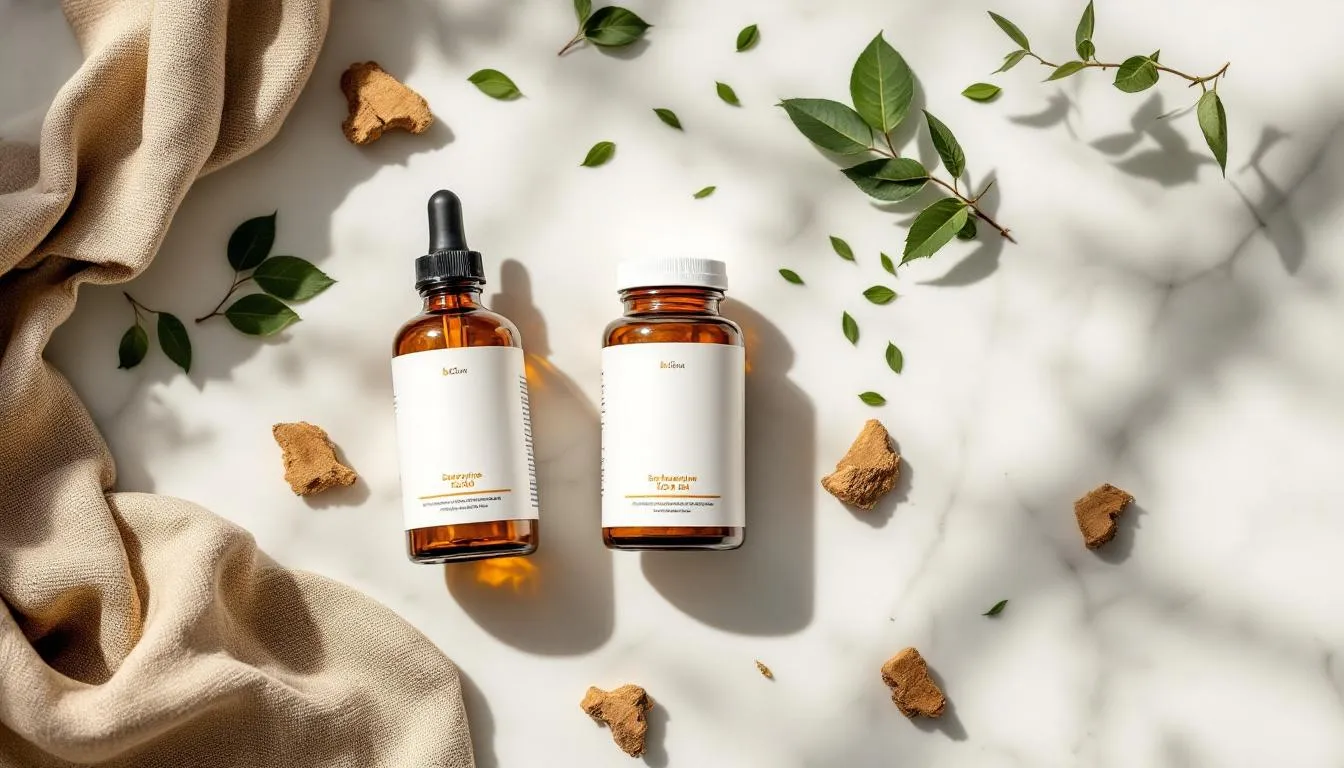
Andrew Lessman berberine: complete ProCaps review
Andrew Lessman's berberine phospholipid complex reviewed: ingredients, dosage, pricing, bioavailability benefits, and how it stacks up against other brands.

Andrew Lessman has been selling supplements on HSN since the early 1990s. More than three decades later, his ProCaps Laboratories remains one of the most recognized names in the direct-to-consumer supplement space, built on a single philosophy: no fillers, no junk, just the active ingredients your body actually needs.
So when Lessman launched a berberine supplement, people paid attention. His Berberine Phospholipid Complex isn't a standard berberine capsule. It uses a phospholipid delivery system that fundamentally changes how your body absorbs the compound. That's either a smart formulation decision or premium pricing dressed up in science language.
This review cuts through both.
We'll cover what's actually in the formula, how the phospholipid delivery system works, what the research says berberine does for your health and longevity, how Lessman's product compares to other berberine brands, and whether the price makes sense. By the end, you'll know exactly whether this is the right berberine for you or whether you should look elsewhere.

Who is Andrew Lessman?
Andrew Lessman founded ProCaps Laboratories in the 1980s and became a fixture on HSN, one of the largest home shopping networks in the US. He's spent decades pushing back against the supplement industry's habit of loading products with excipients, binders, coatings, and fillers that have no nutritional value and exist purely to make manufacturing easier.
His philosophy is simple. Every capsule should contain only what the label says. No stearate lubricants. No silicon dioxide anti-caking agents. No artificial colors. Just the active ingredients in their purest form.
ProCaps manufactures everything in-house at a facility in Henderson, Nevada, powered entirely by solar energy. That's not just a marketing claim. The facility operates on renewable power, and Lessman talks about it regularly because it's core to his brand identity.
His supplements are well-regarded in the community, though they cost more than average. The premium mostly reflects manufacturing quality rather than exotic ingredients. And that's a good thing. You can look at a ProCaps label and trust it. That's not something you can say about every supplement brand selling on Amazon.
When Lessman adds a compound to his lineup, he's generally done the homework. Berberine is no exception.
What is Andrew Lessman's berberine phospholipid complex?
Lessman's berberine supplement is called the Berberine Phospholipid Complex. It's sold through ProCaps Laboratories directly and through HSN in several bottle sizes.
The key difference from a standard berberine supplement is that the berberine isn't delivered as berberine HCL on its own. Instead, it's combined with phospholipids, specifically sunflower lecithin, and pea protein isolate. This creates a complex where the berberine molecule binds to the phospholipid carrier, which dramatically changes how it's absorbed.
Standard berberine HCL has poor bioavailability. It's a compound that gets partially broken down in the gut before it can be absorbed. Phospholipid complexes get around this problem by wrapping the berberine in a lipid structure that mimics your cell membranes, allowing more of it to pass through intact.
The clinical literature backs this up. Berberine phytosome formulations, which use a similar phospholipid delivery mechanism, have been shown to be up to five times more bioavailable than standard berberine HCL in several studies. Lessman's formula uses sunflower lecithin phospholipids as the delivery vehicle rather than soy lecithin, which is worth noting for anyone avoiding soy.
The end result is that you absorb more berberine per milligram of what you swallow. That matters both for effectiveness and tolerability.
If you're already taking standard berberine, you may have experienced the GI side effects that come with it. Nausea, cramping, and loose stools are common with higher doses of berberine HCL because so much of the unabsorbed compound sits in the colon, interacting with gut bacteria in ways that cause discomfort. With a phospholipid complex, less of the berberine reaches the colon unabsorbed. So GI side effects tend to be much milder.
This is actually one of the most consistent themes in customer reviews of Lessman's berberine: people who had GI problems with other brands report tolerating this formula significantly better. We'll get to that in the customer review section.
For a broader look at the category, our guide on berberine phytosome supplements covers how these enhanced forms compare to standard HCL across different brands.
Breaking down the ingredients
Here's what's actually in the two-capsule serving of Andrew Lessman's Berberine Phospholipid Complex.
Berberine phospholipid complex: 1,100 mg per serving
This includes berberine extract from barberry root (Berberis aristata), standardized to 28-34% berberine. Also included are pea protein isolate and sunflower lecithin phospholipids as the delivery vehicle.
Grape seed extract
The formula also includes grape seed extract as a secondary ingredient. Grape seed extract is rich in proanthocyanidins, a class of polyphenols with antioxidant properties. It's a reasonable addition to a metabolic health formula since oxidative stress is closely linked to blood sugar dysregulation and insulin resistance.
No additives, period
Here's where the ProCaps philosophy shows up clearly. The formula contains no milk, soy, yeast, corn, wheat, gluten, sodium, salt, sugar, starch, fat, cholesterol, oil, emulsifiers, waxes, binders, fillers, excipients, lubricants, coatings, diluents, flowing agents, colors, flavors, sweeteners, or preservatives. The capsule itself is vegetarian, made from natural plant cellulose.
If you've ever looked at the "other ingredients" list on a generic supplement and wondered what half of those things are, you'll appreciate the ProCaps approach. The difference between ProCaps and a cheap Amazon brand isn't just about active ingredients. It's about what they don't put in.
A note on actual berberine content
At 28-34% standardization, a 1,100 mg serving delivers roughly 308-374 mg of actual berberine per two-capsule dose. Compare this to a standard berberine supplement that typically delivers 500 mg of berberine HCL per capsule. On paper, Lessman's formula delivers less berberine. But because of enhanced bioavailability, you're likely getting more usable berberine per dose despite the lower milligram count.
This trips people up when comparing labels. Milligrams alone don't tell the full story. Bioavailability does. Keep that in mind throughout this review.
For more context on how different berberine complex formulations compare, including phytosome, HCL, and other delivery formats, that guide breaks it all down.
The phospholipid delivery advantage
Understanding why the phospholipid format matters requires a quick look at how berberine is absorbed in the body.
Berberine HCL is a salt form of berberine. When you swallow a standard berberine capsule, the capsule dissolves in your stomach, the berberine is released, and it has to navigate its way through the intestinal lining into your bloodstream. The problem is that berberine is a large, charged molecule. It doesn't cross lipid membranes particularly well. A significant portion of what you swallow doesn't make it into circulation.
Phospholipids are the molecules that make up cell membranes. They have a water-loving head and a fat-loving tail, which allows them to interact with both the watery environment of the gut and the fatty membranes of intestinal cells. When berberine is complexed with phospholipids, the resulting molecule behaves more like a fat-soluble compound. It slips through intestinal membranes much more easily.
The result is meaningfully higher blood levels of berberine for the same amount consumed.
In practical terms, the 308-374 mg of berberine in Lessman's formula may produce blood levels comparable to 500-1,000 mg of standard berberine HCL. Research on berberine phytosome formulations shows up to 5x greater bioavailability in some studies, though real-world results vary based on individual factors including gut health and what you ate with the supplement.
This also explains the gentler GI profile. When more berberine is absorbed in the small intestine, less reaches the large intestine unabsorbed. And it's the unabsorbed berberine in the colon that causes most of the cramping and loose stools associated with standard berberine supplements.
The sunflower lecithin in ProCaps' formula is worth a special mention. Most berberine phytosome supplements on the market use soy-derived phospholipids. Sunflower lecithin is a cleaner alternative for people avoiding soy or concerned about soy allergies. It achieves a similar delivery effect without the soy.
Before building your full stack, use the supplement interaction checker to verify that berberine combinations are safe for your situation.
What berberine actually does in the body
Berberine is one of the most researched plant compounds in the longevity space. It's a yellow alkaloid found in several plants, most commonly barberry (Berberis aristata), goldenseal, and Oregon grape. Traditional Chinese and Ayurvedic medicine used it for centuries. Modern research has given us a clear picture of why.
The primary mechanism is activation of an enzyme called AMPK, or AMP-activated protein kinase. AMPK is sometimes called the body's energy sensor. When activated, it shifts cells into a fuel-burning mode: increasing glucose uptake, improving insulin sensitivity, reducing fat synthesis, and promoting mitochondrial function.
This is the same mechanism activated by metformin, one of the most widely studied longevity drugs. Several clinical trials have directly compared berberine to metformin and found similar effects on blood sugar control. A landmark study published in Metabolism found berberine reduced HbA1c by 2% in patients with type 2 diabetes, comparable to metformin.
But blood sugar isn't the only lever berberine pulls.
Cholesterol and lipids
Berberine upregulates LDL receptors in the liver, which means your liver clears more LDL cholesterol from circulation. Studies consistently show reductions in total cholesterol, LDL, and triglycerides with berberine supplementation, with some trials showing drops of 20-25% in LDL over 12 weeks.
Gut microbiome
Berberine significantly alters the gut microbiome. It promotes growth of beneficial bacteria including Bifidobacterium and Lactobacillus species while suppressing pathogenic bacteria. This partially explains its historical use for gut infections, but also connects to its metabolic benefits. A healthier gut microbiome improves insulin sensitivity and reduces systemic inflammation.
Anti-inflammatory effects
Chronic low-grade inflammation is one of the recognized hallmarks of aging. Berberine inhibits NF-kB, a key inflammatory signaling pathway, and reduces production of inflammatory cytokines including IL-6, IL-1β, and TNF-alpha. This makes it relevant not just for metabolic health but for longevity more broadly.
Emerging senolytic potential
Research suggests berberine may help clear senescent cells, those so-called zombie cells that accumulate with age and secrete inflammatory signals that accelerate aging in surrounding tissue. The evidence here is preliminary but genuinely interesting. If confirmed in larger human trials, it would make berberine a dual-action compound: both metabolic and senolytic.
SIRT1 and mitochondrial function
Berberine activates SIRT1, one of the sirtuin proteins that depend on NAD+ and regulate mitochondrial health and stress response. This puts berberine in the same general category as NMN and resveratrol for longevity purposes, though through different mechanisms.
You can check your biological age to see where metabolic health markers fit into your overall aging picture. Blood sugar, lipids, and inflammation are all significant inputs into biological aging rate.
WinAging covers the full range of longevity compounds and how they interact. For a deeper look at berberine's place in the overall longevity stack, including how it compares to other metabolic interventions, our best berberine supplement guide covers the category comprehensively.
Dosage and timing
The standard research-backed dose for berberine is 500 mg taken two to three times daily, for a total of 1,000-1,500 mg per day. This dosing protocol emerged from clinical trials showing that splitting doses rather than taking a single large dose maintains more stable blood levels throughout the day.
Andrew Lessman's Berberine Phospholipid Complex recommends two capsules daily with food. At 308-374 mg of actual berberine per serving, this falls below the standard milligram dose used in trials. But again, the enhanced bioavailability changes the math. If the phospholipid complex delivers even 3x the bioavailable berberine of standard HCL, then you're effectively absorbing the equivalent of 900-1,000+ mg of standard berberine HCL. That puts the two-capsule dose squarely in the therapeutic range.
With or without food?
Always take berberine with food. This is particularly important for the phospholipid complex, where the presence of dietary fat in your meal actually enhances absorption of the fat-soluble complex. Beyond absorption, berberine on an empty stomach is more likely to cause GI discomfort.
Our guide on whether to take berberine before or after a meal has more detail on timing strategy. And if you're wondering about taking berberine before bed, the short answer is yes, it's fine, especially if your last meal of the day is substantial.
What about taking it on an empty stomach?
Technically possible, but not recommended. Berberine on an empty stomach increases the likelihood of nausea and cramping. The phospholipid complex is gentler than standard HCL, but taking it with food is still the better protocol. Our guide on taking berberine on an empty stomach covers when this matters and when it doesn't.
Dose escalation for new users
If you're new to berberine, start with one capsule daily for the first week, then move to two. Some people are sensitive to AMPK activation and need a gradual approach. This also lets you gauge your GI tolerance before committing to the full dose.
Andrew Lessman berberine vs. the competition
There are dozens of berberine supplements on the market. Where does Lessman's sit?
Standard berberine HCL (generic)
Most berberine supplements on Amazon contain 500 mg of berberine HCL per capsule and cost $15-25 for 60 capsules. They work, but bioavailability is limited and GI side effects are common. If you can tolerate standard berberine HCL and you're on a tight budget, it's a reasonable starting point. But you'll likely need to take more of it to achieve the same blood levels as a phospholipid complex.
Pure Encapsulations berberine
Pure Encapsulations berberine is a standard berberine HCL formula from a well-regarded brand known for clean manufacturing. It's hypoallergenic and additive-free, similar to ProCaps in its philosophy. Good quality berberine, but without the bioavailability advantage of the phospholipid format. Usually priced around $40-50 for 60 capsules at 500 mg each.
Luma Nutrition berberine
Luma Nutrition berberine is popular on Amazon and offers a straightforward 500 mg berberine HCL formula at a competitive price. It's a solid value pick for standard berberine. Not a phospholipid complex.
Just Ingredients berberine
Just Ingredients berberine emphasizes clean sourcing and minimal additives, similar to ProCaps in philosophy. Standard berberine HCL delivery. Slightly different brand positioning but a comparable clean-label approach.
Ancient Bliss berberine
Ancient Bliss berberine blends berberine with other compounds including cinnamon and chromium. More of a blood sugar synergy formula. Different target audience than the ProCaps single-compound product.
NativePath berberine
NativePath berberine is positioned toward the ancestral eating crowd. Standard HCL delivery at competitive pricing.
Where Andrew Lessman's product actually stands
For a head-to-head comparison, the main advantage of Lessman's formula is the phospholipid delivery system combined with ProCaps' extremely clean formulation philosophy. If you want a berberine supplement with zero additives AND enhanced bioavailability, the ProCaps product is one of the better options available.
The closest comparison is the berberine phytosome formulations from brands like Thorne. Thorne's phytosome uses soy lecithin-based phospholipid delivery, achieving similar bioavailability improvements. ProCaps uses sunflower lecithin instead, which matters for anyone avoiding soy.
If you want to see how multiple berberine brands compare in detail, our best brand of berberine guide covers the top picks with a direct side-by-side breakdown.
Pricing and value analysis
Andrew Lessman's Berberine Phospholipid Complex comes in several sizes:
- 30 capsules: $24.90 (15-day supply at 2 capsules daily)
- 60 capsules: $44.90 (30-day supply)
- 120 capsules: $79.90 (60-day supply)
- 240 capsules: $139.90 (120-day supply)
On a per-month basis, you're looking at roughly $45-55 depending on bottle size. That's significantly more expensive than standard berberine HCL, which typically runs $20-35 per month.
Is the premium justified?
If the phospholipid format genuinely delivers 3-5x better bioavailability, then the effective cost per unit of berberine absorbed is actually competitive with or better than cheaper formulas. You're getting more usable berberine per dollar despite the higher sticker price.
Beyond that, you're paying for ProCaps' manufacturing standards: the facility quality, the additive-free approach, the renewable energy production. These things don't directly add to berberine's effectiveness, but they add to the overall trustworthiness of the product.
If budget is a concern, the 240-capsule bottle represents the best per-dose value at roughly $1.17 per day. The 30-capsule trial size is smart for first-time buyers who want to test tolerance before committing to a larger quantity.
AutoShip subscription is available through ProCaps, which typically offers additional savings on each order.
What customers actually say
Customer reviews are mixed-to-positive. On the ProCaps website, the product holds a 3.6-star average from 17 reviews. On HSN, where Lessman has a much larger and more loyal customer base, reviews trend more positive.
Common positives:
Blood sugar improvements are the most frequent result mentioned. Multiple reviewers report significant drops in fasting blood glucose and A1C levels. One customer reported their A1C dropped from 7.2 to 5.9 over several months of use. Another saw fasting glucose readings fall to the 170s range within days of starting.
Gentler on the stomach. This is the single most consistent theme. Customers who had GI problems with other berberine brands specifically call out that Lessman's phospholipid formula is much more tolerable. Several reviewers describe switching from other brands after digestive issues.
Cholesterol improvement. Multiple reviewers report LDL and total cholesterol reductions within 8-12 weeks. One noted a 30-point drop in total cholesterol after 12 days.
Common criticisms:
The berberine content per capsule is lower than people expect. Customers used to 500 mg per capsule berberine HCL sometimes feel they're not getting enough, without accounting for the bioavailability difference. This is a perception problem more than a real one.
Price. This comes up repeatedly. It costs more than Amazon berberine. Whether that's justified is a personal call.
Availability. The product is primarily sold through HSN and ProCaps directly, not always through the major third-party marketplaces with Prime shipping.
Overall, the customer feedback aligns with what the science predicts: better GI tolerance, meaningful metabolic effects, and a cleaner formula. The people most satisfied are those who made the switch from standard berberine HCL and noticed the difference in how their stomach responded.
Side effects and safety
Berberine is generally safe for most healthy adults at standard doses. But there are some important considerations.
Common side effects
Even with the phospholipid complex, some people experience mild GI discomfort when starting out. Nausea, cramping, and changes in bowel habits are the most common complaints. These usually resolve within one to two weeks as your gut microbiome adjusts to the shift in bacterial populations that berberine causes. Starting with one capsule daily and gradually increasing helps significantly.
Blood sugar lowering
If you're already managing blood sugar through diet, exercise, or medication, berberine's blood sugar lowering effects can be substantial. This is a benefit, but it also means you need to monitor blood glucose closely if you're on medications like metformin, insulin, or sulfonylureas. Combining berberine with these drugs can cause blood sugar to drop too low. Talk to your doctor before adding berberine to an existing diabetes management protocol.
Drug interactions
Berberine inhibits certain liver enzymes involved in drug metabolism, particularly CYP3A4 and CYP2D6. This means it can affect blood levels of medications metabolized by these pathways, including cyclosporine, warfarin, and some statins. Use the supplement interaction checker to flag potential combinations before you start. And consult your prescribing physician if you're on any of these medications.
Pregnancy and breastfeeding
Berberine is not recommended during pregnancy. Animal studies suggest it may affect fetal development, and there's insufficient human data to establish safety. Avoid berberine if pregnant or breastfeeding.
Long-term use
Most berberine research uses 12-week trial periods. Long-term safety data beyond that is limited. Many longevity researchers recommend cycling berberine, perhaps 3 months on, 1 month off, though this is a precautionary approach rather than a hard requirement. Our guide on berberine synergy stacking has more on how to fit berberine into a rotating compound protocol.
Who should take Andrew Lessman's berberine
Good candidates:
People with pre-diabetes or blood sugar in the high-normal range. Berberine is one of the most effective non-pharmaceutical interventions for blood sugar management. If your fasting glucose is creeping above 95-100 mg/dL, berberine is worth considering.
People with elevated LDL or triglycerides. The cholesterol-lowering effects are well-documented and clinically meaningful at the doses used in research.
Anyone who's tried standard berberine HCL and had GI issues. The phospholipid complex is meaningfully gentler. If GI side effects stopped you from staying consistent with berberine before, this format is worth trying.
Longevity stack builders aged 40+. AMPK activation is a core longevity mechanism, directly relevant to metabolic aging and mitochondrial health. Berberine belongs in the same tier as metformin, rapamycin (for those with prescriptions), and NAD+ precursors for metabolic optimization.
People who care about supplement quality. ProCaps' clean manufacturing is among the best in the industry. The additive-free formulation philosophy is genuine, not just marketing.
Less suitable for:
People on a tight supplement budget who can tolerate standard berberine HCL. The standard form works, just less efficiently, at a significantly lower price.
Anyone on cyclosporine, warfarin, diabetes drugs, or certain statins, without medical supervision.
Pregnant or breastfeeding women.
How to stack Andrew Lessman's berberine
Berberine works well within a broader longevity and metabolic health stack. Here are the most evidence-backed combinations.
Berberine and inositol
Berberine and inositol is one of the most popular combinations for women with PCOS and anyone focused on insulin sensitivity. They work through complementary mechanisms: berberine activates AMPK while inositol improves insulin receptor sensitivity. The combination is generally safe and synergistic. If you're deciding which to start with, our berberine vs. inositol guide helps you pick the right starting point.
Berberine and milk thistle
Berberine is processed by the liver, and some people experience elevated liver enzymes at higher doses. Adding berberine with milk thistle provides hepatoprotective support. Silymarin, the active compound in milk thistle, protects liver cells from oxidative stress and may actually enhance berberine's metabolic effects through gut microbiome modulation. It's a well-regarded combination.
Berberine and alpha-lipoic acid
Berberine and alpha-lipoic acid is a combination with additive benefits for blood sugar management. Alpha-lipoic acid improves mitochondrial function and reduces oxidative stress in peripheral tissues, complementing berberine's AMPK activation. That guide covers what to watch for when combining them.
Berberine for sleep quality
Some people notice that berberine improves sleep quality indirectly through blood sugar stabilization. Blood sugar crashes during the night are a common cause of waking at 2-3am. Stable blood sugar means fewer nocturnal disruptions. For more on this connection, see our guide on berberine and sleep.
The broader longevity stack context
Berberine fits naturally into a metabolic optimization stack alongside compounds like glycine, taurine, and NAD+ precursors. Our guide on glycine dosage for anti-aging is a good companion read for anyone building a comprehensive longevity protocol. Taurine 500 mg covers another key metabolic compound that pairs well with berberine for cardiovascular and metabolic support.
Not sure how to build a complete personalized protocol that includes berberine alongside everything else? WinAging's AI protocol builder generates a custom longevity stack based on your specific goals, health profile, experience level, and any existing supplements you're already taking.
Berberine and hair health
One unexpected area: berberine appears to reduce DHT production, which is relevant for people experiencing androgen-related hair thinning. We covered this in detail in the berberine and hair loss guide. It's not a primary reason to take berberine, but worth knowing if this is a concern.
Frequently asked questions
Is Andrew Lessman berberine worth the price?
It depends on your priorities. If you want an additive-free berberine with genuinely enhanced bioavailability and you have the budget for it, yes. The phospholipid delivery system is better than standard berberine HCL for absorption and GI tolerability. If budget is the primary concern, standard berberine HCL from a trusted brand like Pure Encapsulations or Just Ingredients will still work. Just at lower bioavailability.
How much berberine is actually in each dose?
The formula contains 1,100 mg of the berberine phospholipid complex per two-capsule serving, standardized to 28-34% berberine. That means approximately 308-374 mg of actual berberine per two-capsule dose. Due to enhanced bioavailability, this delivers more usable berberine than the numbers suggest compared to standard HCL formulas.
Can I take it with other medications?
Berberine inhibits certain drug-metabolizing enzymes and can significantly lower blood sugar. If you're on diabetes medications, blood thinners, cyclosporine, or certain statins, check with your doctor before starting berberine. Use our supplement interaction checker to identify potential conflicts before you start.
Where can I buy Andrew Lessman berberine?
Directly through ProCaps Laboratories at procapslabs.com or through HSN. It's also available on Amazon through third-party sellers, though buying direct from ProCaps ensures freshness and authenticity. Subscribe and save options are available through the ProCaps website for ongoing orders.
How long before I see results?
Blood sugar benefits typically appear within 1-4 weeks of consistent use. Cholesterol improvements are usually measurable after 8-12 weeks. Longevity mechanisms like AMPK activation, SIRT1 signaling, and anti-inflammatory effects are ongoing and don't produce immediate observable changes, but they're happening at the cellular level.
Can I take berberine before bed?
Yes. Our guide on taking berberine before bed covers this in detail. It's safe and can help with overnight blood sugar stability. Taking one dose with your last meal works well for many people.
Is the phospholipid complex better than regular berberine?
For most people, yes. The phospholipid format improves absorption, reduces GI side effects, and means you need less to achieve the same effect. The main trade-off is cost. For people with sensitive stomachs, or those who haven't responded consistently to standard berberine, the phospholipid complex is a meaningful upgrade worth the additional cost.
How does berberine compare to metformin for longevity?
Berberine and metformin work through similar mechanisms (AMPK activation) and have been directly compared in clinical trials with comparable blood sugar outcomes. Berberine isn't FDA-approved as a drug, so it can't be marketed to treat diabetes. But the research on its metabolic effects is genuinely robust. Many longevity-focused physicians recommend berberine as an over-the-counter alternative for people who want AMPK activation without a prescription.
Related guides
- Best berberine supplement: the complete guide
- Best brand of berberine: top picks compared
- Berberine phytosome supplements: how enhanced forms compare
- Berberine and inositol: should you combine them?
- Supplement interaction checker
Sources
- Berberine vs. Metformin in Type 2 Diabetes, PMC (2008)
- Berberine's impact on health: comprehensive biological and pharmacological perspectives, ScienceDirect (2025)
- Examine.com: Berberine
Metabolic health is one of the most powerful levers in longevity. Blood sugar, insulin sensitivity, cholesterol, and inflammation are the factors that either accelerate aging or slow it down. Berberine pulls on all of them at once. Andrew Lessman's phospholipid formula makes it more absorbable and gentler on your stomach than standard berberine HCL. Whether that justifies the price depends on your budget and how you've responded to berberine in the past.
If you want a personalized recommendation on whether berberine should be in your stack and how to combine it with other longevity compounds, try the WinAging protocol builder. Or start with the free longevity tools to get a baseline on where you stand.