Taurine IV therapy: benefits, dosage, and what to expect
Taurine IV therapy delivers this amino acid directly into your bloodstream. Here's what the research actually shows about benefits, dosage, and when it makes sense.

Taurine is having a moment. A landmark 2023 study published in Science found that taurine deficiency may be a primary driver of aging in mammals, and that restoring levels could extend healthy lifespan. Since then, everyone from biohackers to cardiologists has paid closer attention to this overlooked amino acid.
Most people get their taurine in capsule or powder form. But a growing number of IV clinics and longevity centers now offer taurine intravenously, skipping the gut entirely and delivering it straight to your bloodstream.
Is it worth it? Does IV taurine actually do anything that oral supplementation doesn't? And who should consider it?
This is everything you need to know, based on the actual clinical research.

What is taurine and why does it matter?
Taurine is a sulfur-containing beta-amino acid. It's one of the most abundant amino acids in your body, concentrated in the heart, muscles, brain, and retina. But unlike most amino acids, it doesn't get incorporated into proteins. Instead, it functions as a signaling molecule and cellular protectant, doing quiet but important work across almost every major system in your body.
Your liver produces some taurine from cysteine and methionine, but production is limited and declines with age. You get the rest from diet. Meat, shellfish, and seafood are the richest sources. Vegans and vegetarians typically run lower levels. And even omnivores tend to become more deficient as they get older.
That last point matters a lot. The 2023 Singh et al. study in Science showed taurine levels decline significantly across species with age, including humans. When they reversed that decline in mice and monkeys through supplementation, they saw improvements in muscle function, bone density, metabolic health, and multiple biomarkers of aging. In worms and mice, lifespan actually extended. This is what put taurine on the radar of serious longevity researchers.
Taurine does its work through several mechanisms. It regulates calcium inside cells, which is critical for heart muscle function and neurotransmission. It acts as an antioxidant, neutralizing hypochlorous acid and reducing mitochondrial superoxide production. It conjugates bile acids in the liver, which affects cholesterol metabolism. It modulates gene expression tied to aging pathways. And it's required for post-transcriptional modification of mitochondrial tRNA, meaning your mitochondria actually need it to function properly.
That's a lot of jobs for one molecule. And it's why taurine deficiency has consequences across so many body systems.
What is taurine IV therapy?
Taurine IV therapy is exactly what it sounds like. Pharmaceutical-grade taurine dissolved in saline, infused directly into a vein, typically over 30 to 60 minutes.
The main advantage of IV delivery is 100% bioavailability. When you swallow a taurine capsule, it gets absorbed through the GI tract with some variability depending on your digestive health, gut motility, and what else you've eaten. IV delivery bypasses all of that. Every milligram you infuse reaches your bloodstream.
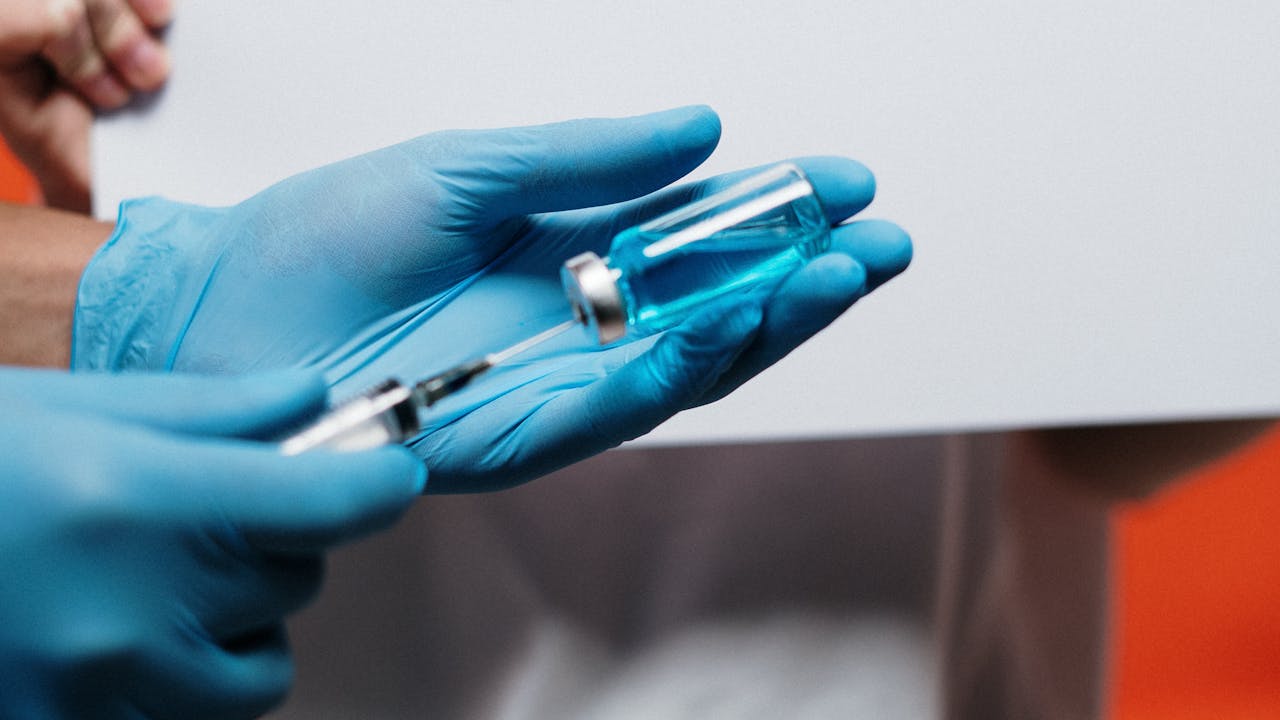
In clinical medicine, IV taurine shows up in a few specific contexts:
- Parenteral nutrition: Hospitalized patients who can't eat get taurine added to their IV nutrition bags to prevent deficiency.
- Short bowel syndrome: Patients with severe GI malabsorption who can't rely on oral delivery.
- Pre-surgical cardiac protection: Patients undergoing coronary bypass surgery sometimes receive a taurine bolus before the procedure.
- Mitochondrial disease (MELAS): Very high-dose taurine (oral or IV) has been used to manage this serious mitochondrial condition.
More recently, wellness and longevity clinics have added taurine to their IV menu alongside things like vitamin C, B vitamins, glutathione, and NAD+. The marketing angle is energy, recovery, and anti-aging. The science behind it is more nuanced than the marketing suggests, but there's real research to draw on.
The cardiovascular evidence: strongest in the database
If you want to understand why researchers take taurine seriously, start with the heart failure data.
A double-blind, randomized, crossover trial by Azuma et al. tested taurine in 14 patients with congestive heart failure over four weeks. The results were significant. NYHA functional class (a measure of how much your heart limits physical activity) improved. Pulmonary crackles decreased. Pre-ejection period, a measure of how efficiently the heart contracts, dropped from 148 ms to 137 ms. The quotient of pre-ejection period to left ventricular ejection time fell from 47% to 42%. Zero adverse effects. Not a single patient got worse during taurine treatment. Four patients did during placebo.
This is why Japan has approved taurine as a treatment for congestive heart failure. The evidence is solid enough that it made it through their regulatory process.
For people without heart failure, the news is also good. A 2016 randomized, double-blind, placebo-controlled trial by Zhang et al. recruited 120 prehypertensive adults and gave them 1.6 grams of taurine daily for 12 weeks. Systolic blood pressure dropped 7.2 mmHg in the taurine group versus 2.6 mmHg in the placebo group. Diastolic dropped 4.7 mmHg versus 1.3 mmHg. The treatment also improved endothelium-dependent vasodilation and raised plasma hydrogen sulfide, a molecule involved in vascular relaxation.
And there's pre-surgical IV evidence worth knowing about. A study by Milei et al. gave patients undergoing coronary bypass surgery 5 grams of taurine intravenously one to three hours before the procedure. When they examined cardiac tissue after reperfusion, the results were striking. Lipid peroxidation, a marker of oxidative damage, surged from around 7,500 to 18,600 counts per minute in placebo patients. In the taurine group, it barely moved. The percentage of severely damaged mitochondria doubled in placebo patients but stayed flat in the taurine group. This is real IV-specific evidence, not extrapolation from oral studies.
If your heart health is a priority, taurine has some of the most compelling evidence of any longevity compound. Want to build a personalized cardiovascular supplement stack? WinAging's AI protocol builder can design one based on your age, goals, and current health picture.
Athletic performance: the meta-analysis is convincing
Sports researchers have put taurine through its paces. A 2018 meta-analysis by Waldron et al. analyzed 10 studies across doses from 1 to 6 grams, both single-dose and multi-week protocols. The overall effect size for performance was Hedges' g = 0.40, which is meaningful in sports science. For time-to-exhaustion specifically, it was 0.43. The conclusion was direct: "Human endurance performance can be improved by orally ingesting a single dose of taurine in varying amounts."
What's useful here is that dose didn't moderate the effect. You don't need 6 grams to see benefits. One gram sixty minutes before exercise appears to work as well as larger amounts. And chronic daily use didn't outperform acute dosing, which means you don't necessarily need to take it every day.

Taurine also helps with muscle recovery. A study by Ra et al. gave untrained men 2 grams of taurine three times daily (combined with BCAAs) for two weeks before and three days after intense eccentric exercise. Compared to placebo, the taurine group showed significantly reduced muscle soreness, less upper arm swelling, lower LDH (an enzyme that rises with muscle damage), and reduced levels of the oxidative stress marker 8-OHdG.
The mechanisms make sense. Taurine concentrates in skeletal muscle and gets depleted during exercise. It buffers calcium transients during muscle contractions. It reduces the reactive oxygen species that mitochondria produce under high-intensity load. It has anti-inflammatory properties that dampen the damage signal after hard training.
For athletes, oral taurine at 1 to 6 grams about an hour before training is well-supported. IV delivery pre-workout is how some elite clinics approach it, though there's no direct head-to-head data comparing IV to oral for performance outcomes. The 100% bioavailability of IV may offer an edge for people with gut issues that impair oral absorption.
Check your supplement stack with the supplement interaction checker before combining taurine with other performance compounds.
Liver health and bile acid metabolism
Your liver depends on taurine more than most people realize. Taurine conjugates bile acids, forming taurocholic acid and taurochenodeoxycholic acid. These conjugated bile acids are more water-soluble than unconjugated ones, which means better fat digestion and more efficient cholesterol metabolism.
Taurine also upregulates CYP7A1, the enzyme that converts cholesterol into bile acids, and downregulates HMG-CoA reductase, the enzyme that makes cholesterol. The same enzyme that statins target, by the way. Taurine's effect is gentler, but the mechanism is real.
In patients on long-term parenteral nutrition (hospital patients getting all their nutrition intravenously), taurine deficiency is a documented problem. Without adequate taurine, these patients develop cholestasis, gallstones, and liver dysfunction. Adding IV taurine at 10 mg/kg per day normalizes plasma levels and prevents these complications.
Emerging research on non-alcoholic fatty liver disease (NAFLD) also points to taurine's role. Animal and early human data suggest taurine supplementation reduces hepatic steatosis by reducing oxidative stress in liver cells. This is an area where more human clinical trials are clearly needed, but the mechanistic foundation is solid.
Taurine has even been studied for the muscle cramps that plague patients with chronic liver disease. A randomized trial published in Alimentary Pharmacology & Therapeutics showed oral taurine significantly reduced the frequency, duration, and intensity of cramps in cirrhotic patients. A small but meaningful quality-of-life benefit.
The aging and longevity angle
This is where things get genuinely exciting, even if the human data is still catching up.
Singh et al. published their taurine aging research in Science in June 2023. Journal prestige matters here. This wasn't a fringe paper in an obscure journal. The findings: taurine levels decline with age across multiple species including humans. Restoring those levels in middle-aged mice extended median lifespan. In monkeys, it improved multiple healthspan markers, including muscle strength, bone density, and metabolic function. Worms on taurine lived significantly longer.
The researchers proposed taurine deficiency as a driver of aging, not just a consequence. That's a meaningful distinction. It means supplementing taurine could address an upstream cause, not just downstream symptoms.
The mechanisms connecting taurine to aging are well-mapped. Taurine activates autophagy, the cellular cleaning process that removes damaged proteins and organelles. It reduces markers of cellular senescence. It supports mitochondrial function through tRNA modification. It reduces DNA damage markers. It's involved in stem cell maintenance.
The most compelling human evidence for mitochondrial benefit comes from MELAS, a severe mitochondrial disease. Case studies show that very high-dose taurine (0.25 g/kg/day) prevented stroke-like episodes in MELAS patients for over nine years. In patient-derived cells, taurine restored oxygen consumption, improved mitochondrial membrane potential, and reduced oxidative stress. This isn't the same as normal aging, but it demonstrates taurine's real role in mitochondrial health.
WinAging tracks the longevity compound research so you don't have to spend hours on PubMed. The site covers the full stack of evidence-backed compounds, from taurine to NMN to rapamycin.
Human clinical trials testing taurine supplementation on aging biomarkers are ongoing. We don't yet have a randomized trial showing taurine extends human lifespan or reverses biological age by X years. But the mechanistic case and the animal data are strong enough that most serious longevity researchers include it in their stacks.
IV vs. oral: when does IV actually matter?
Here's the honest answer: for most healthy adults, oral taurine at 1 to 6 grams per day works well. The research on cardiovascular health, athletic performance, and blood pressure all used oral supplementation. The plasma levels you achieve with oral dosing are adequate for most purposes.
IV taurine makes clearer clinical sense in specific situations:
GI malabsorption. If you have inflammatory bowel disease, short bowel syndrome, celiac disease, or any condition that impairs intestinal absorption, IV delivery guarantees you actually get the taurine. Oral supplements may simply pass through without adequate uptake.
Post-surgical recovery. Many people undergoing major surgery are kept NPO (nothing by mouth) for extended periods. IV nutrition including taurine prevents deficiency during recovery.
Rapid loading before cardiac procedures. The Milei study demonstrated a protective effect from IV taurine infused one to three hours before coronary bypass. That's a specific, time-sensitive use case where oral dosing doesn't fit the protocol.
Very high-dose protocols. For conditions like MELAS that require 0.25 g/kg/day, IV can be useful when oral tolerance is a problem at those doses.
Stacking with other IV nutrients. Many longevity clinics offer taurine as part of a broader IV cocktail. If you're doing a Myers' Cocktail or NAD+ infusion, adding taurine costs little extra and may amplify the overall effect.
For healthy people who absorb normally, the primary advantages of IV are psychological certainty (you know it absorbed) and speed (it peaks in your bloodstream faster). Whether those advantages are worth the cost and inconvenience is a personal call.
One thing worth noting: a 2024 meta-analysis confirmed that taurine significantly improved heart rate in heart failure patients with no significant adverse effects. Safety is well-established across dosing ranges up to 3 grams per day. Adverse effects from energy drinks can't be attributed to taurine alone, since those products also contain caffeine, sugar, and other stimulants.
Dosage: what the research uses
Here's a practical breakdown:
For cardiovascular health: 1.5 to 6 grams daily in divided doses is what the clinical trials used. The Zhang hypertension study used 1.6 g/day (three doses of approximately 0.5 g). Japanese heart failure protocols often run in this range too.
For athletic performance: 1 to 6 grams as a single dose, 60 to 120 minutes before training. Bigger isn't consistently better here. The meta-analysis found 1 gram works as well as 6.
For general longevity support: 1 to 3 grams per day is commonly used in biohacker stacks. The established safe level (OSL) is 3 grams per day based on comprehensive human safety data.
For IV wellness infusions: Clinical wellness clinics typically use 1 to 5 grams of taurine in a saline infusion over 30 to 60 minutes. This falls well within the documented IV doses from parenteral nutrition research.
For MELAS or mitochondrial disease: Much higher doses are used under physician supervision, sometimes 0.25 g/kg/day or more.
Taurine has one of the cleanest safety profiles in the supplement world. The 2008 safety review by Shao and Hathcock concluded there were no adverse effects at studied doses and established 3 grams per day as the conservatively documented safe level. They noted the actual upper limit is probably higher, it just hasn't been formally studied.
Side effects and safety
Short answer: taurine is remarkably safe.
No serious adverse effects have been documented in human trials across any of the research covered here. Oral taurine at up to 3 grams per day has been studied for months and years without safety signals. IV taurine at 10 mg/kg per day for up to 24 months in parenteral nutrition patients was well tolerated. The 5-gram pre-surgical IV bolus caused no reported problems.
Animal studies with very large rapid IV boluses did find transient hypotension and tachycardia, likely mediated through the central nervous system. But clinical infusions are given slowly over 30 to 60 minutes, which avoids the rapid concentration spike that causes those effects in animal models.
People sometimes worry about interactions with medications. Taurine at 500 mg twice daily showed no meaningful effect on CYP3A4 activity (the main liver enzyme that metabolizes many drugs) in a study of healthy volunteers. Always mention supplements to prescribing physicians, but the drug interaction concern for taurine is low.
Pregnant women, very young children, and people with severe kidney disease should check with a physician before high-dose taurine supplementation, since these populations weren't well-represented in the safety trials.

What to expect from a taurine IV session
If you're considering IV taurine at a wellness clinic, here's what the experience looks like.
You'll typically sit in a comfortable recliner for 30 to 60 minutes. A nurse or physician assistant places an IV catheter, usually in a forearm or hand vein. The taurine solution, typically 1 to 5 grams in saline, drips in slowly. Most people feel nothing unusual during the infusion. Some report a mild warmth or relaxed feeling. You're usually in and out in under an hour.
Cost varies significantly by location and clinic type. Taurine as a standalone infusion typically runs $50 to $150. As an add-on to a base IV package (NAD+, Myers' Cocktail, or similar), it's usually $25 to $75 extra. Multi-nutrient longevity packages can run $150 to $400 or more depending on what's included.
A licensed medical professional must supervise IV therapy in most US states. Reputable clinics will do a health intake before your first infusion. Red flags: no health screening, no licensed provider on site, prices that seem far too low for what's included.
Search "IV therapy clinic" or "longevity IV infusion" along with your city to find providers. Many functional medicine and integrative medicine practices also offer IV nutrition.
If you want to map IV taurine into a broader longevity protocol, the WinAging protocol builder can help you design a comprehensive stack that accounts for your goals, biomarkers, and current supplements.
Who should consider taurine IV therapy?
It makes the most sense for:
- People with documented GI absorption issues who want reliable taurine delivery
- Those already doing IV infusions (NAD+, glutathione, etc.) who want to add taurine cost-effectively
- Patients pre-surgery who can discuss it with their cardiac team
- Anyone with very low taurine levels on a blood panel who wants rapid repletion
- Serious longevity optimizers who want guaranteed delivery as part of a comprehensive protocol
Oral supplementation is probably sufficient for:
- Healthy adults with normal GI function
- Athletes looking for performance benefits (oral works in the trials)
- People managing blood pressure or cardiovascular risk factors
- Most general longevity use cases
The honest framing is this: IV taurine is a convenient upgrade for people who want certainty of delivery and are already interfacing with IV clinics for other compounds. It's not a requirement for getting taurine's benefits. The oral research is solid.
Frequently asked questions
What does taurine IV therapy actually do?
Taurine IV delivers this amino acid directly into your bloodstream at 100% bioavailability, bypassing the GI tract. Research shows benefits for cardiovascular function, athletic recovery, liver health, and mitochondrial support. The 2023 Science paper linked taurine deficiency to accelerated aging across multiple species.
Is taurine IV better than oral supplements?
For most healthy people with normal GI function, oral taurine at 1 to 3 grams per day achieves clinical benefits documented in trials. IV taurine matters most for people with absorption issues, those already doing IV infusions, or in acute medical situations like pre-surgical cardiac protection.
How much taurine is in an IV infusion?
Wellness clinics typically use 1 to 5 grams per infusion. Clinical nutrition protocols use 6 to 10 mg/kg/day. Pre-surgical cardiac protocols have used a single 5-gram bolus.
Are there side effects from taurine IV?
No serious adverse effects have been documented in clinical trials. Slow infusions over 30 to 60 minutes appear safe. Taurine has one of the cleanest safety profiles among supplemented compounds.
How often should you do taurine IV therapy?
There's no established protocol for healthy adults. Weekly or monthly infusions are common at wellness clinics. If you're supplementing for longevity, daily oral supplementation (1 to 3 grams) is more practical and supported by the research.
Does taurine IV help with energy?
Taurine supports mitochondrial function and reduces oxidative stress, which are the underlying mechanisms of cellular energy production. Clinical trials show improved endurance performance and reduced fatigue markers. The effect is real but works through cellular health, not stimulation.
Can taurine IV help with heart failure?
There is human clinical trial evidence that taurine supplementation improves outcomes in congestive heart failure, including NYHA functional class, hemodynamic parameters, and exercise tolerance. Taurine is actually approved for heart failure treatment in Japan. Anyone with CHF should discuss supplementation with their cardiologist.
Where can I get taurine IV therapy?
Dedicated IV hydration clinics, functional medicine practices, and longevity medicine centers offer taurine IV. Search "IV therapy clinic" or "IV infusion" near you. A licensed medical professional must supervise IV therapy in most US states.
Related guides
- L-carnitine and taurine: how they work together
- Glycine and taurine: amino acids for longevity
- Taurine for sleep: what the research shows
- Supplement interaction checker
- Biological age calculator
Sources
- Singh et al. 2023 - Taurine deficiency as a driver of aging (Science)
- Waldron et al. 2018 - Taurine and endurance performance meta-analysis
- Zhang et al. 2016 - Taurine and blood pressure RCT
Taurine is one of those compounds where the research has genuinely caught up to the hype, and then some. The cardiovascular data is strong. The athletic performance evidence is solid. The 2023 aging research elevated it to one of the most interesting longevity molecules in the database. Whether you take it orally or intravenously depends on your situation and goals. But getting your taurine levels up is hard to argue against.
Explore WinAging's free tools or build a personalized longevity stack with the AI protocol builder.