Just Ingredients creatine: honest review
An honest review of Just Ingredients creatine monohydrate: ingredients, dosing, quality, and how it stacks up against other leading brands.
import { QuickAnswerBox, TableOfContents, TipBox, InfoBox, WarningBox, FAQSection, RelatedGuides, ArticleCTA, StatsGrid, ComparisonGrid, NumberedSteps, DataTable, ArticleBreadcrumb } from '@/components/articles';
<ArticleBreadcrumb items={[{ label: "Blog", href: "/blog" }, { label: "Just Ingredients creatine review" }]} />
Creatine is having a moment. Not in the way protein shakes had a moment in the 90s, where every gym bro swore by it and everyone else was skeptical. This time, the enthusiasm comes from doctors, longevity researchers, and neuroscientists. The research has caught up. And the conversation has shifted from "will this make me bulky?" to "why isn't everyone taking this?"
That shift is why brands like Just Ingredients have entered the space. The supplement world is crowded, and creatine is one of the most competitive categories out there. So when a clean-label wellness brand with a large following starts selling creatine, it's worth asking: is this actually good? Or is it marketing dressed up as quality?
That's what we set out to answer here.
This review covers everything: the product itself, the ingredients and their quality, the science behind creatine (which is genuinely impressive), dosing protocols, who should take it, how it compares to other brands, and how to stack it for longevity. We'll also be honest about the downsides.
If you're already sold on creatine and just want to know if Just Ingredients is worth buying, skip to the comparison section. If you want to understand why creatine deserves a place in your longevity stack, read on.
<QuickAnswerBox title="Just Ingredients creatine: quick verdict" answer="Just Ingredients Creatine+ is a solid product. It uses Creapure, the gold standard of creatine monohydrate made in Germany, delivers 5g per serving, and adds 100mg of Réjen fulvic mineral complex for enhanced absorption. At $29.99 for 30 servings, it's priced at the premium end. The brand is clean and transparent, but if you're purely budget-focused, you can get Creapure from other brands for less." stats={[ { label: "Creatine per serving", value: "5g" }, { label: "Price per serving", value: "$1.00" }, { label: "Creatine source", value: "Creapure" }, { label: "Added minerals", value: "Réjen 100mg" } ]} />
<TableOfContents items={[ { label: "What Just Ingredients creatine is", href: "#what-it-is" }, { label: "Ingredients and quality", href: "#ingredients" }, { label: "The science of creatine", href: "#science" }, { label: "Dosage and timing", href: "#dosage" }, { label: "Who should take it", href: "#who" }, { label: "How it compares to other brands", href: "#how-it-compares" }, { label: "Side effects and safety", href: "#side-effects" }, { label: "How to stack creatine for longevity", href: "#stacking" }, { label: "FAQ", href: "#faq" }, { label: "Related guides", href: "#related" } ]} />
What Just Ingredients creatine is {#what-it-is}
Just Ingredients is a Utah-based supplement company founded by Karalynne Call, a certified nutritionist with over a million Instagram followers. The brand built its reputation on clean labels, real food ingredients, and transparency in an industry notorious for proprietary blends and questionable sourcing.
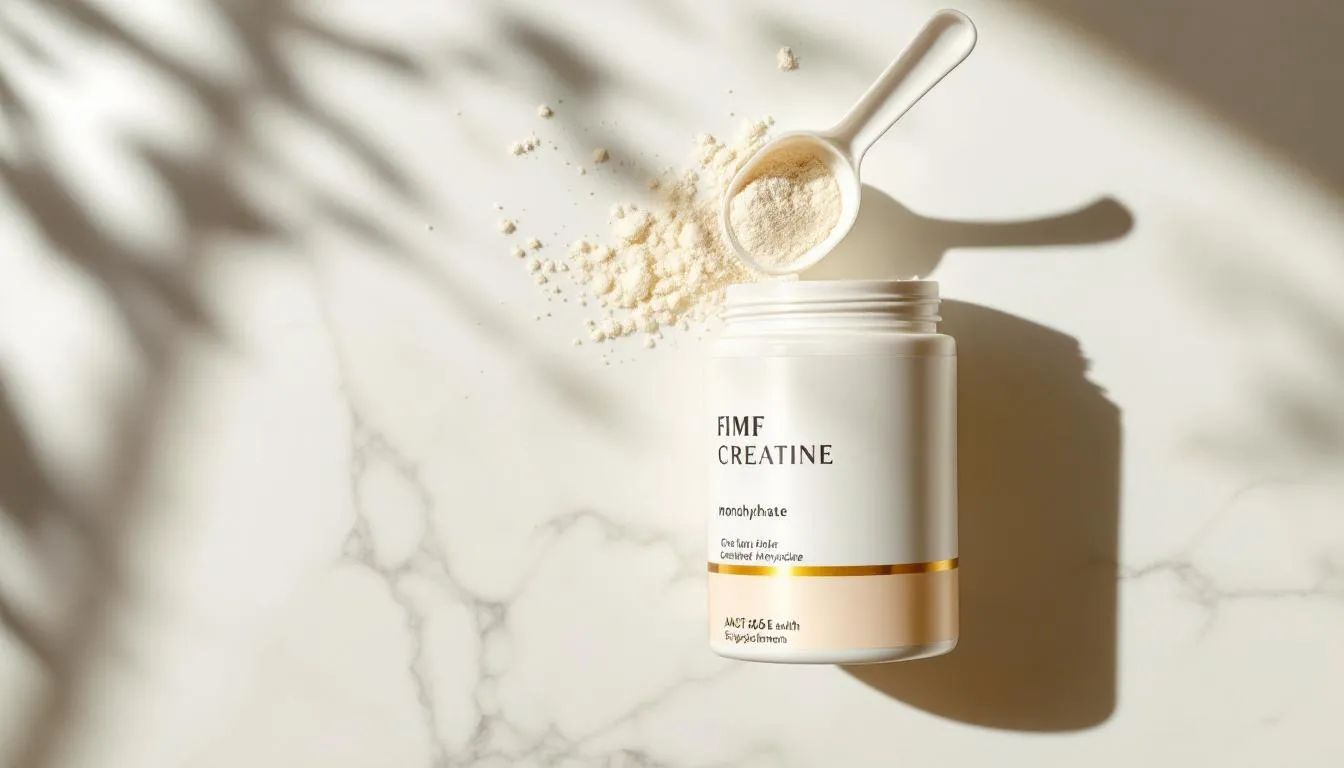
Their creatine product is called Creatine+. The "plus" refers to the added Réjen fulvic mineral complex, a proprietary blend of fulvic acid and over 70 trace minerals. More on that in a moment.
The product comes in two sizes: 30 servings ($29.99) and 90 servings, which brings the per-serving cost down. It's unflavored, which means it mixes into water, juice, coffee, or whatever you prefer without affecting taste. Stick packs are also available for travel.
The pitch is simple: premium Creapure creatine plus enhanced absorption support. No artificial colors, flavors, or fillers. No proprietary blends hiding underdosed ingredients. Just the compound itself, in a well-studied dose, from a trusted source.
That's a good pitch. Let's see if the product delivers.
Ingredients and quality {#ingredients}
Creapure creatine monohydrate (5g)
This is the most important thing in the container. Creapure is a trademarked form of creatine monohydrate manufactured by AlzChem in Trostberg, Germany. It's been around for decades and has become the benchmark against which other creatine products are measured.
Why does the source matter? Because not all creatine is created equal.
A 2022 analysis published in PMC examined both Creapure products and generic creatine monohydrate products on Amazon. The results were striking. Generic creatine products contained significantly higher levels of two unwanted byproducts: dicyandiamide (DCD) and dihydrotriazine (DHT). These exceeded the levels recommended by the European Food Safety Authority (EFSA). Creapure, by contrast, had non-detectable or trace amounts of both.
DHT-related compounds have suspected carcinogenic properties. That alone is a good reason to care about sourcing.
Creapure is made in a dedicated facility using a proprietary synthesis process, regularly tested by independent labs, and meets the standards required for NSF Certified for Sport and Informed Sport certification. It's the form used by elite athletes and clinical researchers precisely because of this consistency.
Just Ingredients uses it at 5g per serving, which is the well-established effective dose. No underdosing. No proprietary blend tricks to make it look like you're getting more than you are.
Réjen Fulvic Mineral Complex (100mg)
This is the "plus" in Creatine+.
Réjen is a proprietary blend of fulvic acid and over 70 trace minerals. Fulvic acid is a natural compound found in soil and rock, formed through the decomposition of organic matter. It's been researched for its potential to enhance nutrient transport into cells and support mitochondrial function.
The idea behind adding it to creatine is that fulvic acid may help carry creatine and other nutrients across cell membranes more efficiently. In theory, this could mean faster uptake and better utilization of each gram of creatine you take.
The honest take: the research on fulvic acid is promising but not conclusive. Most studies are preliminary. There's nothing harmful about 100mg of fulvic mineral complex, and the mechanisms are plausible. But don't buy this product specifically for the Réjen component. Buy it for the Creapure.
The Réjen is a nice addition if it works as advertised. If it doesn't, you've still got excellent creatine.
Third-party testing
Just Ingredients states they collect Certificates of Analysis (COAs) and heavy metal test results from each ingredient supplier, then also test each finished batch after manufacturing. This is solid protocol. It's not the same as NSF Certified for Sport or Informed Sport certification, which involve more rigorous independent oversight. But it's meaningfully better than many brands that do no testing at all.
If you're a competitive athlete subject to drug testing, look for NSF Certified for Sport. For everyone else, Just Ingredients' testing process is adequate and transparent.
The science of creatine {#science}

Creatine is one of the most studied compounds in sports science. Over 500 peer-reviewed studies have examined its effects. The conclusions are unusually consistent for a supplement. It works. The question is only what it works for.
How creatine works
Your muscles store creatine as phosphocreatine. When you need a fast burst of energy, whether that's lifting a heavy weight, sprinting, or even rapid cognitive processing, your body uses phosphocreatine to regenerate ATP (adenosine triphosphate). ATP is the currency of cellular energy. When you run out of it, performance drops.
Creatine supplementation increases the phosphocreatine stored in your muscles and brain. More stored phosphocreatine means more ATP available on demand. That's why you can lift heavier, recover faster between sets, and think more clearly under cognitive load.
Your body makes some creatine on its own from the amino acids arginine, glycine, and methionine. You also get some from meat and fish. But most people, even those with good diets, aren't fully saturating their creatine stores. Supplementation fills that gap.
Muscle and strength
The evidence here is overwhelming. A meta-analysis of over 100 studies found that creatine supplementation consistently produces meaningful gains in strength, power, and lean mass when combined with resistance training. The effect size is larger than any other legal supplement.
For older adults, this matters even more. After 40, you start losing 1-2% of muscle mass per year. This process, called sarcopenia, accelerates with age and is one of the strongest predictors of mortality, falls, and loss of independence. Creatine helps counter it. Research in adults over 65 shows that creatine combined with resistance training significantly outperforms exercise alone for preserving muscle mass and strength.
Cognitive function and brain health
This is where the research has gotten genuinely exciting in recent years.
The brain uses a lot of ATP. During tasks that require sustained attention, working memory, or rapid processing, phosphocreatine stores in the brain get depleted. Supplementing creatine has been shown to increase brain creatine levels and improve performance on cognitive tasks, particularly in sleep-deprived individuals and older adults.
A 2023 systematic review found that five out of six studies reported positive effects of creatine supplementation on cognition in older adults, particularly for memory and attention.
Research on Alzheimer's patients found that creatine supplementation produced an 11% increase in brain creatine levels and moderate improvements in working memory and executive function. This is early-stage research, but the mechanism is sound.
The connection to longevity is direct. Cognitive decline is one of the most feared aspects of aging. Anything that supports brain energy metabolism, protects neurons, and maintains cognitive performance as you age is worth paying attention to.
Longevity and cellular health
Beyond muscle and brain, creatine has several mechanisms relevant to longevity:
Creatine acts as a buffer for ATP. When mitochondria are under stress, having more phosphocreatine available reduces oxidative damage. This mitochondrial protection is relevant to how well your cells age.
In animal studies, creatine supplementation extended median lifespan in mice by approximately 9%. It also improved motor performance and protected against neuron loss. Human translation isn't guaranteed, but the mechanisms involved (mitochondrial support, neuroprotection, anti-inflammatory effects) are all relevant to healthy aging.
Creatine also supports lean muscle mass, which is increasingly recognized as a longevity biomarker in its own right. Muscle is metabolically active tissue. It improves insulin sensitivity, supports the immune system, and protects against the frailty that accelerates late-life decline.
<StatsGrid stats={[ { label: "Studies conducted", value: "500+", color: "amber" }, { label: "Muscle strength improvement", value: "5-15%", color: "green" }, { label: "Brain creatine increase", value: "up to 11%", color: "blue" }, { label: "Lifespan increase in mice", value: "~9%", color: "purple" } ]} />
You can explore your personal supplement needs using WinAging's supplement interaction checker or the biological age calculator to understand where creatine fits in your bigger picture.
Dosage and timing {#dosage}
There are two main approaches to creatine supplementation: loading and maintenance-only. Both work. The difference is how quickly you saturate your stores.
<NumberedSteps steps={[ { title: "Option 1: loading phase (faster results)", description: "Take 20-25g per day for 5-7 days, split into 4-5 doses throughout the day. This saturates muscle creatine stores quickly. After loading, drop to 3-5g daily to maintain those levels. Expect 1-3kg of water weight gain during loading as muscles draw in water along with creatine." }, { title: "Option 2: maintenance-only (gentler approach)", description: "Take 3-5g daily from the start without loading. You'll reach the same saturation level in roughly 3-4 weeks. Less bloating, steadier weight. Most people doing creatine for longevity (not athletic performance) prefer this route." }, { title: "Ongoing daily use", description: "Once saturated, 5g daily keeps your stores topped up. Just Ingredients Creatine+ is dosed at exactly 5g, so one scoop per day is all you need. Mix with 10oz of water or any beverage." } ]} />
Timing
The honest answer is that timing matters less than consistency. Taking creatine daily, at whatever time you'll actually remember, is the most important variable.
That said, if you're combining creatine with resistance training, some research suggests taking it after your workout with a carbohydrate source may slightly enhance uptake (insulin helps shuttle creatine into muscle cells). But the magnitude of this effect is small. Don't overthink it.
For the longevity use case (brain health, cellular support, muscle preservation), timing is irrelevant. Morning, evening, with food, without food. Just take it daily.
How long to take it
Creatine doesn't need to be cycled. There's no evidence that taking breaks improves outcomes or that continuous use causes tolerance. Most of the research supporting creatine's benefits involves ongoing daily supplementation.
If you're taking it for longevity and performance, think of it as a daily supplement you continue indefinitely, the same way you'd take vitamin D or magnesium.
Who should take it {#who}
Creatine is one of the safest and most broadly beneficial supplements available. But some people benefit more than others.
<ComparisonGrid leftTitle="Best candidates for creatine" rightTitle="Who might not need it" leftItems={[ "Adults 40+ looking to preserve muscle mass", "Anyone doing resistance training", "People concerned about cognitive decline", "Vegetarians and vegans (lower dietary creatine)", "Those with high stress, poor sleep, or demanding jobs", "Women in perimenopause or menopause (muscle loss accelerates)", "Athletes and active individuals of any age" ]} rightItems={[ "People with pre-existing kidney disease (talk to your doctor)", "Pregnant or breastfeeding women (limited safety data)", "Those already getting very high dietary creatine from meat/fish", "Anyone expecting creatine to replace resistance training entirely" ]} />
One group that's underserved in the creatine conversation: women. Most creatine research historically used male subjects. But the emerging evidence suggests women may actually respond better to creatine in some contexts, particularly for cognitive function and mood. Estrogen has a protective effect on muscle that decreases at menopause, making creatine more important, not less, for women as they age.
Vegetarians and vegans have lower baseline creatine stores because they don't consume meat or fish. Studies show they tend to see larger performance improvements from supplementation than meat-eaters, likely because they're starting from a lower baseline.
How it compares to other brands {#how-it-compares}
Let's be direct. The creatine monohydrate market is crowded, and many products are genuinely good. Here's how Just Ingredients Creatine+ sits relative to the competition.
<DataTable
headers={["Brand", "Creatine source", "Dose", "Price per serving", "Unique feature"]}
rows={[
["Just Ingredients Creatine+", "Creapure", "5g", "$1.00", "Réjen fulvic minerals"],
["Momentous Creatine", "Creapure", "5g", "$1.00-1.33", "NSF Certified for Sport"],
["Bare Performance Nutrition", "Creapure", "5g", "$0.80", "NSF Certified for Sport"],
["Thorne Creatine", "CreatineSure", "5g", "$0.83", "NSF Certified for Sport"],
["It's Just Creatine", "Generic (US-made)", "5g", "$0.30", "Budget, third-party tested"],
["Muscle Feast Creapure", "Creapure", "5g", "~$0.50", "Budget Creapure option"]
]}
/>
Where Just Ingredients wins
It uses Creapure. That matters. As discussed in the ingredients section, the sourcing and purity advantage of Creapure over generic creatine is meaningful, especially given the DHT contamination concerns in lower-quality products.
The brand is transparent. They publish their testing process, use real-food philosophy, and don't hide anything in proprietary blends. For people who care about clean supplements, Just Ingredients checks those boxes.
The Réjen mineral complex is a genuine differentiator. Whether it meaningfully improves creatine uptake is an open question, but it's a thoughtful addition based on plausible mechanisms.
Where it falls short
At $1.00 per serving, Just Ingredients is on the pricier end of the Creapure market. You can get the same Creapure creatine from Muscle Feast or similar brands for roughly half the price.
It doesn't carry NSF Certified for Sport or Informed Sport certification. For competitive athletes, that's a real consideration. For everyone else, it's minor.
The verdict
If you value clean sourcing, a brand you trust, and don't mind paying a slight premium, Just Ingredients Creatine+ is a genuinely good product. If you're purely optimizing for cost-per-gram of Creapure creatine, you can do better on price without sacrificing quality.
Side effects and safety {#side-effects}
Creatine is one of the most extensively studied supplements in existence. The safety profile is strong. But a few things are worth knowing.

Water retention and bloating
This is the most common complaint, and it's real. When you start creatine supplementation, your muscles draw water in along with the creatine. This can cause a 1-3kg increase in scale weight, particularly during a loading phase.
This isn't fat gain. It's intracellular water. Most people don't notice it in the mirror. But if you're sensitive to bloating or scale fluctuations, skip the loading phase and start at 3-5g daily. The weight gain is slower and usually less noticeable.
Taking 10g or more in a single dose can cause gastrointestinal discomfort in some people. Stick to 5g per dose and you'll likely be fine.
Creatinine levels and lab tests
If you get bloodwork done while taking creatine, flag it to your doctor. Creatine supplementation can temporarily elevate serum creatinine, which looks concerning on labs but isn't actually a problem. Your doctor should know you're supplementing so they can interpret results correctly.
Interactions
Creatine has no known serious drug interactions. If you're taking medications for diabetes, kidney disease, or diuretics, check with your doctor. For most people taking common supplements and medications, creatine is safe to add.
How to stack creatine for longevity {#stacking}

Creatine doesn't have to stand alone. It stacks well with several other longevity-relevant compounds, and in some cases the synergy is meaningful.
Creatine and glycine
Glycine is an amino acid your body uses to synthesize creatine endogenously. It also supports collagen production, sleep quality, and autophagy. Some longevity researchers consider glycine-NMN stacking one of the more evidence-backed approaches to cellular anti-aging.
Adding glycine to your stack supports the body's own creatine production while providing independent longevity benefits. The WinAging guide on glycine dosage for anti-aging covers the dosing and timing in detail.
Creatine and NMN/NR
NMN and NR are NAD+ precursors that support mitochondrial function, DNA repair, and cellular energy production. Creatine and NAD+ boosters work on overlapping pathways (both support cellular energy and mitochondrial health) but through different mechanisms.
Taking them together is generally considered safe and potentially synergistic. Both support ATP availability and mitochondrial efficiency. Many longevity-focused individuals stack the two routinely. Check out the WinAging comparison of NMN and NR for more context on choosing between them.
Creatine and taurine
Taurine supports cardiovascular function, mitochondrial health, and cellular hydration, and it plays a direct role in the same muscle cell metabolism that creatine supports. The combination is common in the longevity community. WinAging's taurine guide has the details.
Creatine and protein
Creatine's muscle-building benefits are magnified when combined with adequate protein. The mechanism involves leucine signaling (which triggers muscle protein synthesis) being more effective when ATP is available. If you're using creatine for muscle preservation as you age, making sure your protein intake is sufficient is at least as important as the creatine itself.
Building a personalized stack
Stacking longevity supplements isn't one-size-fits-all. The right compounds, doses, and timing depend on your goals, health status, age, and what else you're already taking. The WinAging supplement interaction checker can help you identify potential interactions and optimize your stack.
If you want a fully personalized longevity protocol built around your specific health profile, the WinAging AI protocol builder generates a detailed, evidence-based plan tailored to you.
FAQ {#faq}
<FAQSection faqs={[ { question: "Is Just Ingredients creatine worth the price?", answer: "It depends on your priorities. Just Ingredients Creatine+ uses Creapure, the gold standard of creatine monohydrate, at the research-backed dose of 5g. At $1.00 per serving, it's priced at the premium end. You can get Creapure creatine from other brands for $0.50-0.80 per serving. The premium goes toward the brand, the Réjen mineral complex, and Just Ingredients' testing process. If you value those things, it's worth it. If you're purely cost-optimizing, there are cheaper ways to get the same core ingredient." }, { question: "What does the Réjen fulvic mineral complex actually do?", answer: "Réjen is a proprietary blend of fulvic acid and 70+ trace minerals. Fulvic acid is thought to enhance nutrient transport across cell membranes, potentially improving creatine uptake and utilization. The research on fulvic acid is promising but still preliminary. At 100mg per serving, it's unlikely to cause any harm. Whether it meaningfully improves creatine absorption beyond what you'd get from Creapure alone is genuinely unclear. Think of it as a potential bonus, not a core reason to buy." }, { question: "Can women take Just Ingredients creatine?", answer: "Yes, and they probably should. Most creatine research used male subjects, but emerging evidence suggests women benefit equally or more in certain contexts, particularly cognitive function, mood, and muscle preservation during and after menopause. Women generally have lower baseline creatine stores than men, which may explain why some studies show larger relative improvements in women. The same 3-5g daily dose applies. Skip the loading phase if you're sensitive to bloating." }, { question: "When should I take Just Ingredients creatine?", answer: "Consistency matters more than timing. Take it at whatever time you'll actually remember every day. If you're doing resistance training, taking it post-workout with some carbohydrates may slightly enhance uptake, but the effect is small. For longevity benefits (brain health, muscle preservation, cellular energy), timing is essentially irrelevant. One scoop (5g) mixed with 10oz of any beverage, daily, is the protocol." }, { question: "Do I need to do a loading phase?", answer: "No. Loading (20-25g/day for 5-7 days) saturates your creatine stores faster, but you reach the same endpoint with 3-5g/day after 3-4 weeks. Most people taking creatine for longevity, not competitive sports performance, don't need to load. Skipping loading reduces the chance of bloating and water retention, and you still get the full benefit over a slightly longer timeline." }, { question: "How does Just Ingredients creatine compare to Momentous?", answer: "Both use Creapure at 5g per serving and are priced similarly. The key difference is certification: Momentous Creatine carries NSF Certified for Sport, which involves independent third-party verification of the finished product. Just Ingredients does internal batch testing and collects supplier COAs but doesn't carry that specific certification. For competitive athletes subject to drug testing, NSF Certified for Sport matters. For everyone else, both are high-quality options." }, { question: "Is creatine safe for long-term use?", answer: "Yes. Long-term studies, including trials lasting several years, have found no adverse effects on kidney function, liver function, or other health markers in healthy adults. Creatine doesn't need to be cycled. Continuous daily supplementation is how most longevity-focused users take it, and the research supports this approach. If you have pre-existing kidney disease, speak with your doctor before starting." }, { question: "Can I take creatine with NMN or other longevity supplements?", answer: "Yes. Creatine and NMN work through different but complementary pathways. Creatine increases phosphocreatine stores for rapid ATP regeneration. NMN boosts NAD+ for mitochondrial function and DNA repair. There are no known interactions between them, and some longevity researchers consider them a good pairing. Both support cellular energy, but at different levels of the pathway." } ]} />
Related guides {#related}
<RelatedGuides guides={[ { title: "Creatine monohydrate vs micronized: what's the difference?", href: "/blog/creatine-monohydrate-vs-micronized", description: "Understanding the different forms of creatine and which one is right for you." }, { title: "Glycine dosage for anti-aging: the complete guide", href: "/blog/glycine-dosage-for-anti-aging", description: "How glycine supports longevity and how to dose it effectively." }, { title: "NAD+ vs NMN: which should you take?", href: "/blog/nad-vs-nmn", description: "A clear breakdown of NAD+ precursors for cellular energy and longevity." }, { title: "Creatine gummies vs powder: which is worth it?", href: "/blog/creatine-gummies-vs-powder", description: "Convenience vs cost vs absorption: the full comparison." }, { title: "Just Ingredients berberine review", href: "/blog/just-ingredients-berberine", description: "Our honest take on Just Ingredients' berberine supplement." } ]} />
The bottom line
Creatine is one of the few supplements where the evidence genuinely justifies the hype. The research is deep, consistent, and keeps expanding into new territory: brain health, longevity, neurological protection. This isn't a supplement for gym-obsessed 25-year-olds. It's relevant for anyone who wants to maintain muscle, protect cognitive function, and support cellular energy as they age.
Just Ingredients Creatine+ is a good product. Creapure at 5g per serving is the right foundation. The Réjen fulvic mineral complex is a thoughtful addition that may enhance absorption. The brand is clean, transparent, and committed to quality testing.
Is it the best creatine on the market? That depends on what you optimize for. If price per gram of Creapure is your metric, you can do better elsewhere. If you value the Just Ingredients brand ecosystem, clean labeling, and the potential upside of the mineral complex, this is a smart buy.
At WinAging, we track the supplements that actually move the needle on longevity, and creatine consistently earns its place on that list. If you're not taking it yet, start. If you are, make sure you're using a quality source.
Want help building a complete longevity protocol around creatine and other well-researched compounds? The WinAging protocol builder creates a personalized stack based on your health profile, goals, and budget.