Glycine Powder Bulk: Complete Guide for Anti-Aging
Everything you need to know about buying glycine powder in bulk: dosage by goal, top brands, cost breakdown, and how to build a GlyNAC longevity stack at home.
Here's a problem nobody talks about. Glycine is one of the most evidence-backed longevity supplements on the market. Clinical trials show it reverses recognized hallmarks of aging in older humans. It's cheap, safe, and works through multiple pathways at once. But the typical capsule format makes it nearly impossible to take the doses that actually produce results.
Consider the math. The GlyNAC clinical trials that lit up the longevity world used 8 to 10 grams of glycine per day. Collagen synthesis research suggests 10 grams or more. Sleep improvement studies typically use 3 grams before bed. Standard glycine capsules contain 1,000 mg each. To hit 10 grams per day, you'd swallow 10 capsules daily, at a cost ranging from 50 cents to several dollars per day depending on the brand.
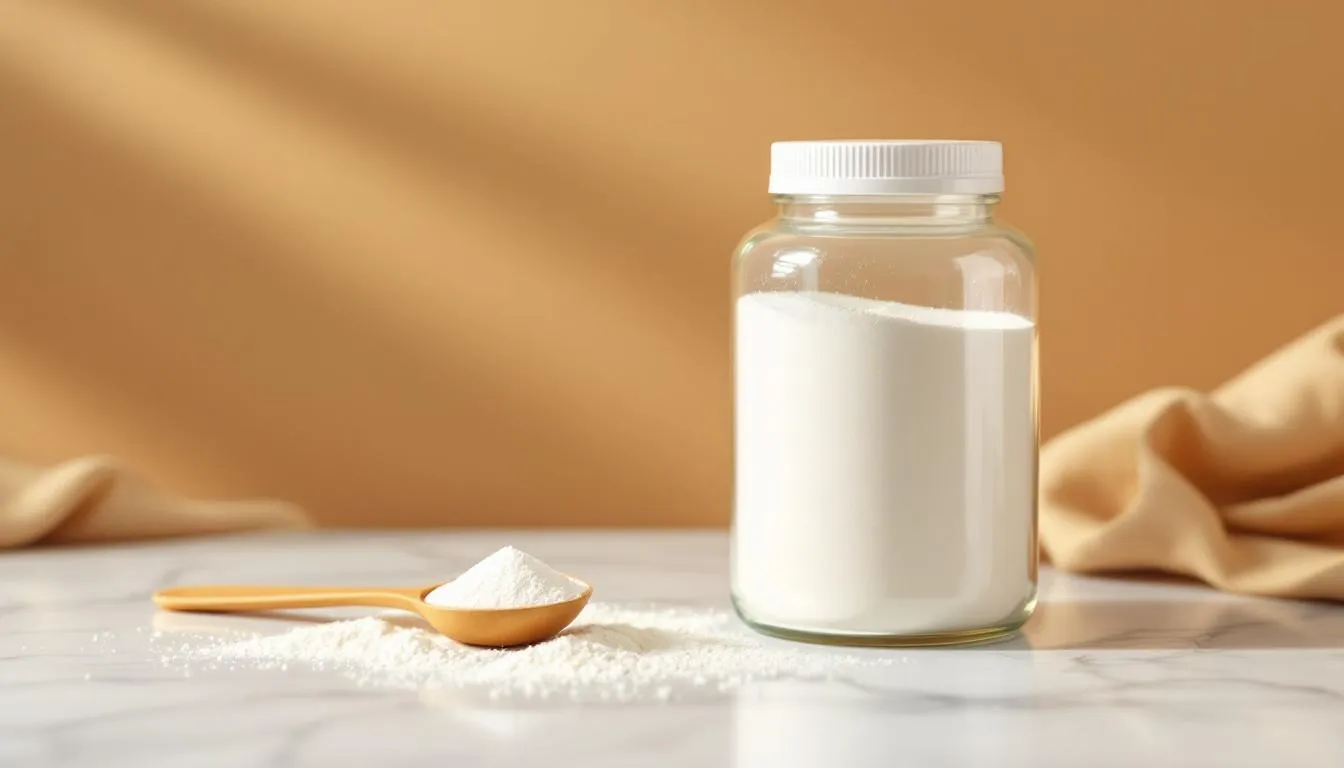
Bulk glycine powder solves all of this. One kilogram costs between $15 and $30 from reputable suppliers. A 3-gram serving costs roughly 5 to 9 cents. The powder mixes easily, tastes mildly sweet, and lets you dial in exactly the dose your protocol requires.
This guide covers what you need to know about buying glycine in bulk: why the compound matters for aging, how to dose it for specific goals, the best brands, a cost breakdown versus capsules, and how to stack it with other longevity compounds. If you've already read about glycine dosage for anti-aging, this picks up where that leaves off, with a focus on sourcing and practical use.
WinAging tracks the compounds that actually move the needle on longevity. Glycine is in that category. Let's look at how to use it well.
Why glycine deserves a spot in your longevity stack
Before getting into the powder-versus-capsule debate, it's worth grounding this in the science. Because glycine isn't just another amino acid. It sits at the intersection of several aging pathways simultaneously, which is rare.
The glutathione connection. Glutathione is your body's primary intracellular antioxidant. It protects mitochondria, neutralizes free radicals, and regenerates vitamins C and E. To synthesize glutathione, your body needs three amino acids: glycine, cysteine, and glutamate. Glutamate is rarely the limiting factor. Glycine and cysteine both become deficient as you age. A landmark 2011 study by Sekhar et al. showed that elderly subjects had significantly lower glutathione synthesis than young adults, and that the deficit was driven primarily by low glycine and cysteine, not by enzyme failure. Restoring the supply fixed the problem.
The collagen connection. Glycine makes up roughly one-third of all amino acid residues in collagen, following the repeating Gly-X-Y motif. Every third position must be glycine. The body turns over collagen constantly in skin, joints, tendons, and bone matrix. The daily glycine requirement for collagen maintenance alone is substantial. Far more than a typical Western diet provides. As collagen turnover continues into old age while glycine availability declines, the deficit compounds.
The methionine restriction connection. High methionine intake is associated with accelerated aging in animal models. Methionine restriction, without calorie restriction, extends lifespan in multiple species. Glycine appears to mimic some effects of methionine restriction by improving how the body processes and clears excess methionine. This is one reason researchers suspect glycine contributes to lifespan extension beyond its role in glutathione and collagen synthesis.
The sleep connection. Glycine acts as an inhibitory neurotransmitter in the brainstem and as an excitatory co-agonist at NMDA receptors, both of which matter for sleep quality and regulation. A 2012 study in Sleep and Biological Rhythms found that 3 grams of glycine taken before bed improved sleep quality, reduced daytime sleepiness, and shortened the time to reach slow-wave sleep. The effect wasn't sedation. It was metabolic, involving a drop in core body temperature that signals the body to transition to deeper sleep. For more on the sleep angle, see glycine supplement for sleep.
The glycine deficit problem. Your body synthesizes about 1.5 to 3 grams of glycine per day. A typical diet provides another 2 to 3 grams. But total daily metabolic demand for glycine is estimated at 10 grams or more. That gap between supply and demand is not trivial. And aging widens it. Plasma glycine levels in older adults run approximately 15% lower than in younger adults. It's a real, measurable shortfall with real metabolic consequences.
The bottom line: glycine is not a fringe biohacker compound. It's one of the most fundamental amino acids in the body, it becomes genuinely deficient with age, and restoring adequate supply produces measurable improvements across multiple longevity-relevant pathways. The only question is how to get enough of it consistently. That's where bulk powder comes in.
Why bulk powder is the right format for therapeutic glycine
Glycine works at doses most capsule users never reach.
Walk into any supplement store and you'll find glycine capsules dosed at 500 mg or 1,000 mg. These are fine if you just want to add a token amount. But the research on glycine's anti-aging effects used significantly higher doses. The GlyNAC trials used 8 to 10 grams of glycine per day. Sleep studies used 3 grams before bed as a standalone dose. Collagen synthesis protocols typically call for 10 grams. Serious glycine use means grams, not milligrams.
At 10 grams per day from 1,000 mg capsules, you're swallowing 10 capsules daily. At 500 mg capsules, that's 20. This isn't just inconvenient. It's expensive. High-quality glycine capsules from brands like Thorne or Pure Encapsulations run $0.50 to $1.00 per gram once you factor in the capsule premium. Ten grams per day means $5 to $10 daily just for glycine. That's $150 to $300 per month for a single amino acid.
Bulk powder changes the economics completely. One kilogram of glycine from BulkSupplements or NOW Foods typically costs $20 to $30. At 10 grams per day, 1 kg lasts 100 days. That's 20 to 30 cents per day at the 10-gram protocol level. Compare that to $5 to $10 per day from capsules, and the case for powder is obvious.
But cost isn't the only advantage.
Dosing flexibility. Powder lets you dial in exactly the amount your protocol calls for. Taking 3 grams before bed for sleep? Easy. Doing 8 grams for GlyNAC in the morning and another 5 grams later in the day? Powder handles that without swallowing a handful of capsules twice daily.
Taste profile. Glycine is one of the few amino acids with a genuinely pleasant taste. It's mildly sweet, similar to a diluted glucose solution, without bitterness. This is because glycine binds to sweet taste receptors. It dissolves easily in water, mixes well with juice or smoothies, and can even improve the taste of other supplements you're stacking it with. Try mixing it with a slightly bitter supplement like NAC and you'll notice the difference.
Absorption. Free-form glycine powder absorbs identically to capsule-form glycine. All glycine supplements contain the same free-form amino acid. There's no bioavailability advantage to paying more for one form over another, as ConsumerLab confirmed when reviewing multiple glycine products. The difference is cost and convenience.
No filler concern. Capsules contain gelatin or cellulose, flow agents, fillers, and other excipients. Pure glycine powder is just glycine. If you're minimizing additives in your supplement stack, this matters.
The one advantage capsules have is portability. If you travel frequently or need to take glycine at work, a small bottle of capsules beats carrying a bag of powder. For home-based protocols, though, powder wins on every metric that matters.
How much glycine powder to take
Dosage depends entirely on what you're trying to accomplish. There isn't one correct dose. There are several, each supported by different evidence.
Sleep quality: 3 grams before bed
This is the most studied dose for sleep. The Japanese studies showing improved sleep quality, reduced sleep latency, and less daytime fatigue all used 3 grams of glycine taken 30 to 60 minutes before sleep. The mechanism involves a drop in core body temperature, which occurs because glycine dilates peripheral blood vessels and increases heat dissipation. This signals the brain to shift toward sleep.
Three grams is roughly half a teaspoon of powder dissolved in water. Take it before bed, not mid-afternoon. Timing matters because the temperature drop effect is relatively short-lived, and you want it coinciding with your intended sleep window.
For a fuller breakdown of glycine's sleep effects and timing, see the best time to take glycine.
Collagen support: 5 to 10 grams daily
Collagen is roughly one-third glycine by mass. Researchers studying collagen synthesis in the context of joint health, skin aging, and connective tissue repair generally use 5 to 10 grams of glycine per day, sometimes in combination with vitamin C (which is required for the hydroxylation steps in collagen synthesis).
A 2025 study in npj Aging found that oral supplementation with a collagen amino acid composition that included glycine as a primary component reduced biological age by 1.4 years within 6 months. That's not a trivial finding. It's one reason the longevity community has gotten more serious about glycine beyond just the GlyNAC angle.
For collagen goals, spread your glycine dose across two or three servings during the day rather than taking it all at once. This supports more sustained amino acid availability for collagen synthesis.
GlyNAC protocol: 8 to 10 grams daily
This is the dose range used in the landmark clinical trials by Sekhar and Kumar at Baylor College of Medicine. The GlyNAC combination (glycine plus N-acetylcysteine) at these doses corrected glutathione deficiency, reduced oxidative stress, improved mitochondrial function, reduced chronic inflammation, and improved physical function in older adults over a 16-week intervention.
A 2023 randomized controlled trial published in Journals of Gerontology confirmed these findings in a larger sample. GlyNAC (and not placebo) supplementation in older adults improved or corrected multiple hallmarks of aging including glutathione deficiency, oxidative stress, mitochondrial dysfunction, and inflammation. The glycine dose in these trials was typically 8 to 10 grams per day, with NAC at a similar dose.
At bulk powder prices, running this protocol costs less than 25 cents per day for the glycine component.
General longevity maintenance: 5 to 7 grams daily
If you're not running a specific protocol and just want to close the known glycine deficit that comes with aging, 5 to 7 grams per day is a reasonable daily target. This covers the gap between your likely dietary intake plus endogenous synthesis and your estimated metabolic demand. It's not maximally therapeutic, but it provides meaningful coverage across the collagen, glutathione, and methionine-clearance pathways.
This is probably the right starting point for most people new to glycine supplementation. You can see how you feel at this level, then escalate toward 10 grams if you're running GlyNAC or targeting collagen more aggressively.
Higher doses: 15+ grams daily
Some researchers have tested much higher glycine doses in the context of methionine restriction mimicry. A 2019 study in Aging Cell found that 8% dietary glycine (roughly translating to 15+ grams per day in humans) extended lifespan in mice by approximately 4 to 6%. The mechanism appears to involve glycine diluting dietary methionine and activating methionine-restriction-like signaling pathways.
There isn't strong human evidence for these very high doses yet. Tolerability at 15+ grams per day hasn't been widely studied, and gastrointestinal effects (loose stools, nausea) become more likely at these levels in some people. If you're experimenting at higher doses, build up gradually and listen to your gut. Literally.
The GlyNAC protocol: building it with bulk powder
GlyNAC is worth understanding in more depth because it's the most evidence-backed glycine protocol for anti-aging. And building it yourself from bulk ingredients costs a fraction of what branded GlyNAC products charge.
The logic of GlyNAC is straightforward. Glutathione synthesis requires glycine and cysteine as limiting precursors. Both decline with age. N-acetylcysteine (NAC) is the most effective supplement form for delivering bioavailable cysteine. Glycine provides the other half. Together, they restore the raw material supply for glutathione production, which has downstream effects on mitochondrial function, oxidative stress, inflammation, and aging biology.
The Baylor trials used a 1:1 weight ratio of glycine to NAC. So if you're taking 8 grams of glycine, you'd take 8 grams of NAC. That's the dose range used in human trials, though some researchers have noted that you may get most of the benefit with lower NAC doses if glycine supply is well established.
Practical protocol:
- Morning: 4 to 5 grams glycine powder mixed in water + 4 to 5 grams NAC powder or capsules
- Evening: 4 to 5 grams glycine powder before dinner or bed
- Total daily glycine: 8 to 10 grams
NAC powder is also available in bulk, though it has a notably unpleasant sulfur odor that most people find easier to manage in capsule form. If you're buying NAC in bulk powder, mix it quickly and chase it with something flavorful. Alternatively, use NAC capsules for that component while keeping glycine in powder form.
The GlyNAC combination also pairs well with taurine, another amino acid that declines with age and supports mitochondrial function, cardiovascular health, and metabolic regulation. Running all three creates a comprehensive amino acid longevity stack that's still affordable at bulk powder prices.
Check any combinations you're considering with the supplement interaction checker to ensure your stack is compatible.
When and how to take glycine powder
Timing depends on your goals, but a few general principles apply.
For sleep: Take 3 grams dissolved in water 30 to 60 minutes before your target bedtime. Don't take it too early. The thermoregulatory effect that promotes sleep is relatively short-lived, so you want it working when you're actually trying to fall asleep.
For collagen and GlyNAC: Spreading doses across the day works better than taking everything at once. Amino acid absorption is rapid, but continuous availability supports ongoing synthesis more effectively than a single large bolus. A morning dose and an evening dose is the pattern used in most trials.
With food or without? Glycine is well-tolerated on an empty stomach, unlike some amino acids that cause nausea when taken without food. But at very high doses (10+ grams), some people tolerate it better with a small meal to slow absorption slightly. At 3 to 7 grams, you probably won't notice a difference either way.
How to mix it. Glycine dissolves completely in water at room temperature. One level teaspoon holds approximately 3 grams (though this varies slightly by grind size, so use a scale if precision matters). It's mildly sweet and has no bitterness, making it one of the easiest amino acid supplements to take. You can mix it into:
- Cold water or sparkling water
- Juice or a smoothie
- Coffee or tea (heat doesn't degrade it)
- Collagen powder drinks (it complements collagen amino acid profiles well)
One practical note: finely milled glycine powder dissolves faster than coarser granulated forms. If you notice it settling at the bottom of your glass, stir just before drinking or buy from a brand that uses finer milling.
Pre-bed stacking for sleep. Glycine stacks well with magnesium glycinate (which contains glycine as the chelated form) and L-theanine for sleep. This combination is gentle, non-habit-forming, and doesn't leave you groggy the next morning, unlike melatonin at higher doses. For detailed sleep timing guidance, see glycine supplement for sleep.

Best bulk glycine powder brands
Not all glycine powders are equal. The differences are subtle but worth understanding, especially if you're taking 5 to 10 grams per day every day.
BulkSupplements.com is the most popular choice for pure bulk glycine. They sell glycine in quantities from 100 grams to 25 kilograms, with pricing that drops significantly per gram at higher volumes. Their glycine is unflavored, non-GMO, and comes with a certificate of analysis (CoA) confirming purity. The product consistently tests at over 99% purity. At 1 kg, expect to pay roughly $20 to $25. At 5 kg, the price per gram drops substantially further. BulkSupplements is a smart choice for people committed to long-term glycine use.
NOW Foods glycine powder is the other top option. NOW has been in the supplement business since 1968, is GMP-certified, and third-party tests their products regularly. Their glycine powder is available in 1-pound (454g) and larger sizes. The per-gram price is slightly higher than BulkSupplements, but NOW's quality control record is exceptionally consistent. For people who prefer a household brand name with a long track record, NOW is the go-to.
NutraBio glycine powder is a premium option with a strong emphasis on purity and transparency. NutraBio publishes full lab testing results for every batch, operates its own FDA-inspected manufacturing facility in New Jersey, and uses no fillers, excipients, or proprietary blends. Their glycine powder is more expensive per gram than BulkSupplements or NOW, but if you want maximum verified purity, NutraBio is worth the premium.
Swanson glycine powder is a budget-friendly alternative. Swanson has solid GMP certification and their glycine comes in at lower price points than most, though with somewhat less third-party testing transparency than the other options. Fine for most users, especially those starting out.
PureBulk is another bulk-focused supplier with competitive pricing, CoA documentation, and a range of sizes. Similar quality tier to BulkSupplements.
What to look for when buying bulk glycine:
- Certificate of analysis from a third-party lab (not just in-house testing)
- GMP-certified manufacturing facility
- Purity of 99% or higher (free-form glycine, no fillers)
- No added flavors, sweeteners, or anti-caking agents (unnecessary in quality glycine)
- Country of origin transparency (most comes from China or the EU; quality varies by supplier)
ConsumerLab tested multiple glycine supplements and found that all products contained the amount of glycine stated on the label with no significant contamination issues. The key differentiator between brands comes down to manufacturing quality control and third-party verification, not the amino acid itself.
Cost breakdown: bulk powder versus capsules
Let's run the numbers at different dose levels, comparing powder to capsules.
At 3 grams per day (sleep protocol):
- Capsules (Thorne 500mg, ~$0.50/gram): $1.50/day, $45/month
- BulkSupplements powder ($0.022/gram at 1kg): $0.07/day, $2/month
- Savings with powder: 97%
At 8 grams per day (GlyNAC protocol):
- Capsules (Thorne): $4.00/day, $120/month
- BulkSupplements powder: $0.18/day, $5.50/month
- Savings with powder: 95%
At 10 grams per day (collagen/full GlyNAC dose):
- Capsules (mid-tier brands): $3.00 to $6.00/day, $90 to $180/month
- BulkSupplements powder: $0.22/day, $6.70/month
- Savings with powder: 93 to 96%
The cost difference is not incremental. It's the difference between a supplement protocol that's financially sustainable long-term and one that slowly gets deprioritized because it feels extravagant. Glycine's anti-aging effects require consistent long-term supplementation, not a 30-day experiment. Powder makes that feasible.
You can use the supplement stack cost calculator to estimate your full monthly spend across your entire longevity protocol.
How glycine powder fits your longevity stack
Glycine is one of the rare longevity supplements that layers well with almost everything in a serious stack.
With NAC for GlyNAC. This is the primary pairing. See the GlyNAC section above. The combination addresses glutathione decline more effectively than either compound alone.
With collagen powder. Glycine is abundant in collagen supplements, but the glycine content in typical collagen products is often insufficient to fully support collagen synthesis when aging has created a functional deficit. Adding standalone glycine powder to collagen drinks ensures you're not limited by supply.
With creatine. Your body uses glycine and arginine to synthesize creatine endogenously. If you're supplementing exogenous creatine (which you probably should be, the muscle and cognitive evidence is strong), you free up some of the glycine your body would otherwise use for creatine synthesis, redirecting it toward glutathione and collagen pathways. See how your creatine needs stack up with the creatine calculator.
With taurine. Taurine and glycine are both inhibitory amino acids with longevity relevance. They work through different pathways, so they're complementary rather than redundant. Taurine supports mitochondrial function, cardiovascular health, and taurine transporters in aging tissues. Glycine handles the glutathione and collagen angles. Running both is a sensible amino acid longevity strategy. Read more in glycine and taurine.
With berberine or metformin. These mTOR inhibitors and glucose regulators are increasingly common in longevity stacks. Glycine doesn't interfere with their mechanisms and may complement the metabolic benefits. Glycine improves insulin sensitivity in some research contexts, which overlaps with berberine's primary effects.
With NMN or NR. No known negative interactions. Glycine and NAD+ precursors operate on different pathways (amino acid metabolism and one-carbon cycling versus the salvage and de novo NAD+ synthesis pathways). They can be taken at the same time without issue.
Use the supplement interaction checker to verify your specific stack before committing to a full protocol.

Not sure how glycine fits into your personal longevity picture? The WinAging protocol builder takes your age, health goals, and existing supplements to design a personalized stack based on 30+ data points. Glycine often shows up as a foundational piece.
Collagen, skin, and the glycine angle most people miss
Here's a section worth sitting with. Most people think about glycine in the context of GlyNAC or sleep. The collagen angle gets less attention, but it's arguably just as compelling for visible anti-aging.
Your skin's dermis is primarily collagen. Healthy collagen gives skin its firmness, elasticity, and structure. As collagen synthesis declines with age (partly due to reduced glycine availability, partly due to hormonal changes), skin loses density and develops the texture changes associated with visible aging.
Glycine's role here isn't just as a collagen precursor. It also helps regulate the procollagen cycle, reduces the formation of advanced glycation end products (AGEs) that cross-link and stiffen collagen fibers, and supports the vitamin C-dependent hydroxylation reactions required for stable triple-helix collagen structure.
The 2025 npj Aging study mentioned earlier found that a collagen amino acid composition with glycine as a key component reduced biological age markers by 1.4 years within 6 months. That's a measurable biological age reduction from a supplement, which puts this in a different category than most skin-aging claims.
At 10 grams per day, bulk glycine powder costs less than $7 per month. For context, a single anti-aging skincare serum often costs that much per day. You can track your biological age changes using the biological age calculator.
Frequently asked questions
Is glycine powder the same as glycine capsules?
Yes. The glycine molecule is identical regardless of whether it's in powder or capsule form. There's no difference in bioavailability or efficacy between free-form glycine powder and glycine in a capsule. The only practical differences are cost (powder is significantly cheaper), convenience (capsules are more portable), and dosing flexibility (powder lets you adjust doses without swallowing multiple capsules).
Can you take glycine powder every day long-term?
Yes. Glycine is a non-essential amino acid that your body produces and uses continuously. The GlyNAC clinical trials ran for 16 to 24 weeks without safety concerns. Glycine is found naturally in meat, bone broth, and collagen-containing foods. Long-term daily supplementation at doses up to 15 grams per day has not produced serious adverse effects in research settings. It's one of the most safety-studied amino acids in human clinical research.
Does glycine powder need to be refrigerated?
No. Store it in a cool, dry place away from direct sunlight and moisture. A sealed container in a kitchen cabinet or pantry works fine. Glycine is a stable amino acid and doesn't degrade at room temperature. If you're buying in large quantities (1 kg or more), just make sure the container is airtight to prevent moisture absorption, which can cause clumping.
What does glycine powder taste like?
Mildly sweet. Genuinely sweet. Not artificial sweetener sweet, but closer to a light glucose syrup or slightly sweet water. This is because glycine binds to the sweet taste receptors on your tongue. It has no bitterness and no unpleasant amino acid aftertaste. Most people find it one of the most tolerable supplements to take in powder form.
Can I take glycine powder with food?
Yes. Unlike some amino acids, glycine doesn't cause nausea on an empty stomach. You can take it with or without food. At very high doses (10+ grams), taking it with a small meal may help GI tolerance, but at the 3 to 7 gram range, food timing doesn't matter much. For sleep use specifically, taking it before bed without food works well.
How long before you notice effects from glycine?
Sleep improvements can appear within the first few nights of use. For the deeper anti-aging effects (improved glutathione, collagen synthesis, mitochondrial function), the clinical trials saw measurable changes at 8 to 16 weeks of consistent supplementation. Don't expect overnight transformation on the longevity front. Expect meaningful change over months of consistent use.
Can glycine powder help with joint pain?
Possibly. Glycine is a primary building block of collagen in cartilage and connective tissue. Studies on collagen hydrolysate supplementation (which is rich in glycine) show modest improvements in joint comfort in older adults and athletes. Whether standalone glycine at therapeutic doses produces similar effects isn't directly studied, but the mechanistic rationale is solid. See glycine dosage for anti-aging for more on this.
Is glycine powder safe to stack with other supplements?
Generally, yes. Glycine has no known negative interactions with common longevity supplements including NAC, NMN, NR, berberine, creatine, taurine, or vitamin D3. Always verify your specific combination with the supplement interaction checker to be thorough.
Related guides
- Glycine dosage for anti-aging: how much to take
- Glycine supplement for sleep
- Glycine and taurine: the amino acid longevity stack
- Best time to take glycine
- Supplement interaction checker
Sources
- GlyNAC RCT in older adults, Journals of Gerontology (2023) - PMC
- Glycine and aging: evidence and mechanisms, ScienceDirect (2023)
- Glycine supplementation extends lifespan in mice, Aging Cell (2019)
Glycine is one of the few longevity supplements where the gap between what the research shows and what most people are actually doing is enormous. The evidence for 8 to 10 grams per day is compelling. The cost at bulk powder prices is essentially nothing. And the practical barrier, once you have a jar of powder and know how to use it, is almost zero.
Start with 3 grams before bed if sleep is your primary goal. Scale to 5 to 7 grams daily for general longevity maintenance. Run the full GlyNAC protocol at 8 to 10 grams if you're serious about the anti-aging evidence. And do it with bulk powder. Not capsules.
Explore WinAging's free tools to track your stack or build a personalized protocol with the AI protocol builder.