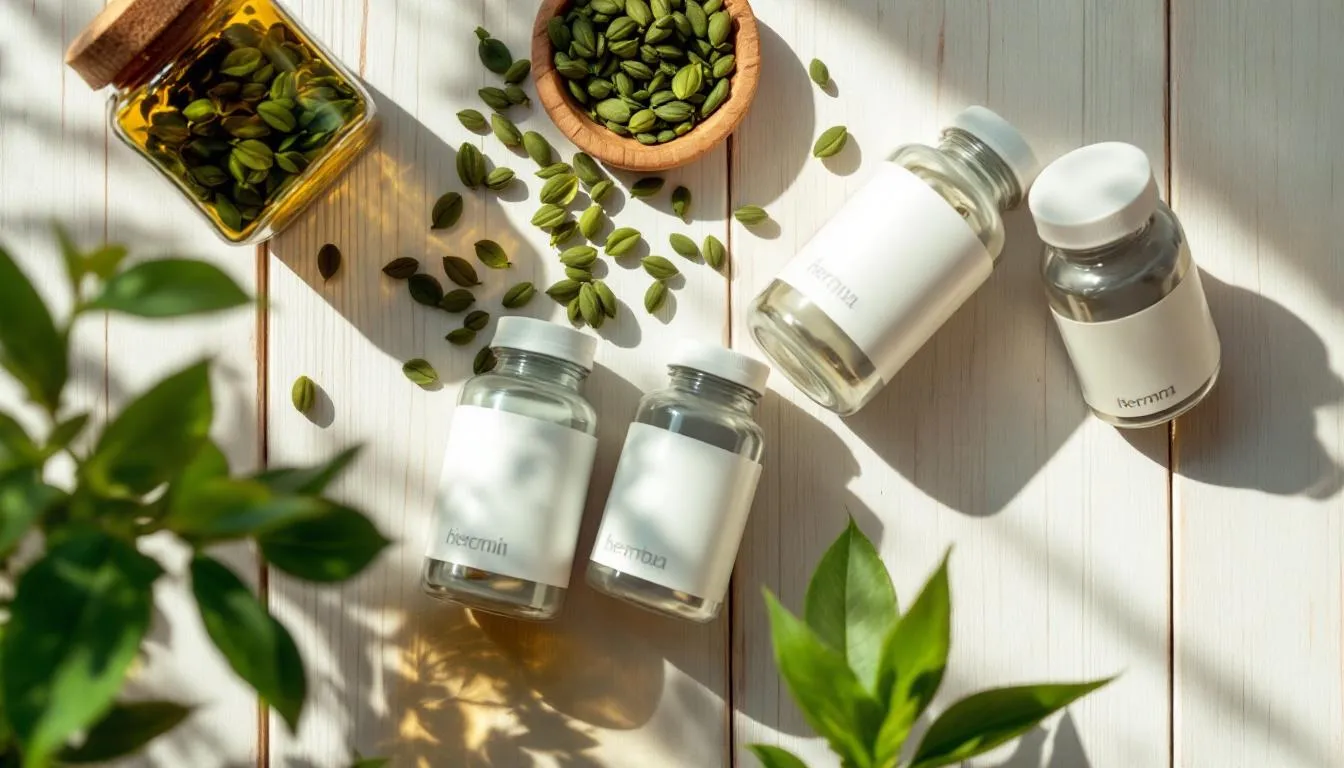
Berberine 5x: is dihydroberberine actually better?
Berberine 5x (dihydroberberine) absorbs up to 5x better than standard berberine. Here's what the research really shows, the right dose, and whether it's worth it.
import { QuickAnswerBox, TableOfContents, TipBox, InfoBox, FAQSection, RelatedGuides, ArticleCTA, DataTable, ComparisonGrid } from '@/components/articles'
<ArticleBreadcrumb items={[{ label: "Blog", href: "/blog" }, { label: "Berberine 5x: is dihydroberberine actually better?" }]} />
<QuickAnswerBox question="Is berberine 5x (dihydroberberine) better than regular berberine?" answer="Dihydroberberine (DHB) absorbs 5x better than standard berberine HCL, meaning a 100-200mg dose delivers equivalent or higher blood levels than 500mg of regular berberine. The evidence for better absorption is solid. Evidence for better clinical outcomes is promising but still emerging. For people who struggle with berberine's GI side effects, DHB is a genuine upgrade." stats={[ { value: "5x", label: "Better absorption vs HCL" }, { value: "100-200mg", label: "Effective DHB dose" }, { value: "500-1500mg", label: "Equivalent berberine HCL dose" }, { value: "2-4x", label: "Higher plasma levels in trials" }, ]} />
<TableOfContents items={[ { id: "what-is-berberine-5x", label: "What is berberine 5x?" }, { id: "how-it-works", label: "How dihydroberberine works" }, { id: "research", label: "What the research actually shows" }, { id: "benefits", label: "Benefits for metabolic health and longevity" }, { id: "dosage", label: "Dosage guide" }, { id: "side-effects", label: "Side effects and safety" }, { id: "who-should-use", label: "Who should use berberine 5x" }, { id: "best-brands", label: "Best dihydroberberine supplements" }, { id: "stacking", label: "How to stack it" }, { id: "faq", label: "Frequently asked questions" }, ]} />
Standard berberine is one of the most-researched longevity compounds on the planet. But there's a dirty secret: your gut absorbs barely any of it.
The human body metabolizes berberine poorly. When you swallow a 500mg capsule, most of it gets converted, degraded, or kicked back out of your intestinal cells before it reaches circulation. You're essentially taking a large dose to get a small therapeutic effect. And that large dose? It's what causes the bloating, cramps, and digestive chaos that stops so many people from staying consistent with berberine.
Berberine 5x, or dihydroberberine (DHB), solves this. It's a reduced form of berberine that your gut absorbs dramatically better, requires a fraction of the dose, and causes far fewer stomach problems. Whether it actually produces better health outcomes is a more nuanced question. But the absorption story is real and well-documented.
Here's everything you need to know about berberine 5x, what the science says, how much to take, and whether it's worth the price premium over standard berberine HCL.

What is berberine 5x? {#what-is-berberine-5x}
"Berberine 5x" isn't a trademarked product from a single company. It's a category term referring to dihydroberberine (DHB), a metabolite of berberine that has roughly 5x greater bioavailability than standard berberine hydrochloride.
You'll see it marketed under several names. "Super berberine" is common. GlucoVantage is the most well-known patented form, manufactured by NNB Nutrition. XYMOGEN Berberine ES-5 uses the same compound. Dozens of brands now offer DHB supplements, often labeling them as "5x berberine" or "enhanced berberine."
The naming gets confusing because berberine phytosome supplements, like berberine phytosome, also claim 5x better absorption. These are different formulations. Berberine phytosome uses phospholipid complexation to improve absorption. Dihydroberberine uses a structurally modified form of the molecule itself. Both strategies work, but through entirely different mechanisms.
When someone searches "berberine 5x" today, they're typically looking for information about dihydroberberine, the reduced-form molecule. That's what this guide covers.
A brief history
Dihydroberberine isn't a new invention. It's a natural metabolite. Your gut bacteria actually convert some regular berberine into dihydroberberine as part of normal metabolism. This conversion is part of why berberine has any bioavailability at all.
The insight behind DHB supplements is simple: skip the conversion step. Take the already-reduced form, let your intestinal cells absorb it directly, and then let your body convert it back to berberine inside your tissues. You end up with more berberine in your blood from a smaller oral dose.
WinAging covers the full spectrum of metabolic compounds, and berberine in all its forms is one of the most consistently impressive for longevity-adjacent outcomes. Understanding which form to use matters more than most people realize.
How dihydroberberine works {#how-it-works}
Understanding the mechanism helps you make sense of why DHB behaves differently from standard berberine.
The absorption problem with regular berberine
Regular berberine HCL faces two absorption barriers in your gut. First, it's a positively charged molecule at physiological pH, making passive diffusion through intestinal membranes slow and inefficient. Second, intestinal cells express P-glycoprotein (P-gp), an efflux transporter that actively pumps berberine back out into the gut lumen after it gets absorbed. The cell takes berberine in, then immediately kicks it out.
The result: oral bioavailability of berberine HCL is estimated at under 5% in most studies. You swallow 500mg. Your blood might see the equivalent of 25mg.
How DHB bypasses these barriers
Dihydroberberine is a reduced form of berberine, meaning two hydrogen atoms have been added to its molecular structure. This seemingly small change has big consequences. DHB is more lipophilic (fat-soluble) than berberine, allowing it to cross intestinal membranes much more easily through passive diffusion. It's also a much poorer substrate for P-glycoprotein, so the efflux pump barely touches it.
Once DHB crosses the intestinal wall and enters systemic circulation, your body's enzymes oxidize it back into berberine. You've essentially used a molecular disguise to get berberine through a border it normally can't cross.
The result: roughly 5x more berberine ends up in your bloodstream from an equivalent dose.
What berberine does once it's there
Whether you take regular berberine or DHB, the active compound doing the work in your tissues is berberine itself. The mechanisms are identical:
AMPK activation. Berberine activates AMP-activated protein kinase, the master metabolic switch your cells use to respond to low energy. When AMPK turns on, glucose uptake increases, fatty acid oxidation increases, and insulin sensitivity improves. This is the same pathway metformin activates, which is why berberine is sometimes called "nature's metformin."
mTOR inhibition. Berberine inhibits mTORC1, the growth-promoting kinase that accelerates cellular aging. mTOR inhibition promotes autophagy, the cellular recycling process associated with longevity. This is the same pathway targeted by rapamycin, the most well-studied longevity drug. Rapamycin works more potently on this pathway, but berberine's mTOR-inhibiting effects are real and meaningful.
Gut microbiome modulation. Berberine reshapes the gut microbiome in ways that improve metabolic function, including increasing short-chain fatty acid production and reducing pathogenic bacteria. This microbiome effect may be part of why berberine's clinical results sometimes exceed what its AMPK activation alone would predict.
Cellular senescence reduction. Emerging research suggests berberine reduces the accumulation of senescent cells, the "zombie cells" that drive much of the aging process. This effect appears related to both AMPK activation and mTOR inhibition working together.
Use the WinAging supplement interaction checker to verify how berberine 5x stacks with your current compounds before adding it.
What the research actually shows {#research}
The evidence base for DHB specifically is smaller than for berberine HCL, but the key studies are well-designed and the findings are meaningful.
The pharmacokinetics study (the most important one)
A 2022 randomized crossover trial published in Nutrients (PMC8746601) directly compared dihydroberberine and regular berberine in healthy men. Participants received either 500mg berberine, 100mg DHB, or 200mg DHB in separate sessions.
The results on absorption were striking. Both DHB doses produced plasma berberine concentrations significantly higher than 500mg of standard berberine. The area under the curve (a measure of total drug exposure) was 2-4x greater with DHB despite the dramatically lower dose.
The catch: despite higher blood berberine levels, there were no statistically significant differences in blood glucose or insulin between groups during the study. The researchers noted the trial was a small pilot (n=12) and not powered to detect glycemic differences. This doesn't mean DHB doesn't lower blood sugar. It means a 12-person crossover study wasn't designed to prove that.
<DataTable headers={["Compound", "Dose tested", "Peak plasma berberine", "GI side effects"]} rows={[ ["Berberine HCL", "500mg", "Low baseline", "Common at therapeutic doses"], ["Dihydroberberine", "100mg", "Higher than 500mg HCL", "Minimal"], ["Dihydroberberine", "200mg", "Highest in study", "Minimal"], ["Berberine phytosome", "550mg", "2-5x vs HCL", "Moderate"], ]} />
Animal and in vitro evidence
Animal studies have consistently shown DHB outperforming berberine HCL on metabolic outcomes at lower doses. In rodent models of insulin resistance, DHB reduces blood glucose and HbA1c more effectively per milligram than berberine HCL. It also shows stronger effects on adipose tissue and fat metabolism.
Whether these translate linearly to humans isn't confirmed, but the mechanistic basis is sound. Better absorption should produce better effects. That's not a stretch.
Where the evidence is still thin
Long-term human RCTs on DHB specifically don't exist yet. Most of berberine's robust clinical evidence, the large Chinese trials on diabetes management, cardiovascular effects, and cholesterol, used standard berberine HCL at doses of 1,000-1,500mg daily. We're extrapolating that those benefits carry over to DHB based on pharmacokinetics. The extrapolation is reasonable. But it's still an extrapolation.

The metabolic benefits of berberine depend on sustained blood levels. Better absorption from DHB means more consistent effects throughout the day.
Benefits for metabolic health and longevity {#benefits}
The benefits of berberine 5x mirror those of regular berberine, just with better reliability and fewer side effects. Here's what the evidence supports.
Blood sugar regulation
This is berberine's flagship benefit and the most well-documented. AMPK activation in liver, muscle, and fat cells increases insulin-independent glucose uptake. Multiple meta-analyses have shown berberine reduces fasting blood glucose, post-meal glucose spikes, and HbA1c in people with type 2 diabetes and prediabetes. The effects are clinically meaningful, comparable in some analyses to metformin.
With DHB, you achieve equivalent or higher plasma concentrations at lower doses. If you're managing blood sugar or reversing prediabetes, that matters. Track your biomarkers. Use the biological age calculator to see where your metabolic health currently stands.
Weight and body composition
Berberine affects weight through several pathways: improved insulin sensitivity reduces fat storage, AMPK activation increases fatty acid oxidation, and microbiome changes reduce energy extraction from food. Clinical studies show modest but consistent weight loss of 3-5 lbs over 8-12 weeks in people with metabolic dysfunction.
DHB's higher absorption means more consistent AMPK activation throughout the day, which may translate to better fat metabolism effects compared to the same nominal dose of standard berberine.
Cardiovascular health
Berberine lowers LDL cholesterol, triglycerides, and blood pressure through multiple mechanisms including PCSK9 inhibition (the same target as some expensive cholesterol drugs). The cardiovascular evidence is among the strongest in berberine's research portfolio. If you're stacking for heart health, berberine and alpha lipoic acid is a well-supported combination.
Anti-aging and cellular senescence
This is where berberine 5x gets interesting from a longevity perspective. Research published in the journal Healthspan describes dihydroberberine specifically as a "promising agent in metabolic regulation and cellular senescence reduction." By activating AMPK and inhibiting mTOR simultaneously, berberine creates conditions that slow senescent cell accumulation.
Senescent cells, sometimes called "zombie cells," are cells that have stopped dividing but refuse to die. They secrete inflammatory signals that damage neighboring tissues and drive the aging process. Compounds that reduce senescent cell burden, known as senolytics and senomorphics, are one of the most exciting areas of longevity research. Berberine appears to have senomorphic properties, meaning it modulates the behavior of senescent cells even if it doesn't directly eliminate them.
For people building a longevity stack, this mechanism complements senolytics like fisetin and autophagy promoters. The WinAging AI protocol builder can help you design a complete stack that incorporates berberine 5x alongside other anti-aging compounds based on your specific goals and biomarkers.
Gut health
Regular berberine HCL at high doses can disrupt the gut microbiome because not all of it gets absorbed. The unabsorbed berberine reaching the colon has antimicrobial properties that can cause dysbiosis in some people. DHB's higher absorption means less berberine reaching the colon, potentially better gut tolerance and less disruption to beneficial bacteria.
Dosage guide {#dosage}
Getting the dose right for DHB is important precisely because it's not the same as berberine HCL dosing. Many people make the mistake of taking the same milligram amounts they'd use for standard berberine. Don't do that.
Standard DHB dosage
100-200mg of dihydroberberine is the evidence-based range. Most protocols use 100mg twice daily (morning and before dinner) or 200mg once daily. The pharmacokinetics study used 100mg and 200mg single doses and both outperformed 500mg berberine HCL.
Start at 100mg once daily for the first week. Your gut tolerates DHB well, but starting low lets you gauge any response before increasing.
How DHB dose compares to berberine HCL
<DataTable headers={["Goal", "Berberine HCL dose", "DHB equivalent", "Timing"]} rows={[ ["Blood sugar support", "500mg 2-3x daily", "100-150mg 2x daily", "With meals"], ["Metabolic optimization", "500mg 3x daily", "150-200mg 2x daily", "With meals"], ["Longevity/AMPK activation", "500mg 2x daily", "100mg 2x daily", "Any time"], ["Weight management", "500mg 3x daily", "150-200mg 2x daily", "Before meals"], ]} />
Half-life considerations
One important difference between DHB and regular berberine: DHB has a shorter half-life after rapid absorption. This means the peak plasma concentration is higher, but it doesn't stay elevated as long. For blood sugar management, timing doses with meals makes sense to capture the glucose peak. For longevity purposes where you want sustained AMPK activation, spreading doses throughout the day works better than a single large dose.
Some manufacturers offer sustained-release (SR) DHB formulations that address the half-life issue. If you're using DHB primarily for metabolic health, SR versions are worth considering.
Side effects and safety {#side-effects}
Dihydroberberine's safety profile is cleaner than regular berberine's, primarily because you need a much smaller dose to achieve similar effects.
GI side effects
The most common complaint with regular berberine is gastrointestinal: bloating, cramping, diarrhea, and nausea. These effects are dose-dependent and occur because high doses of poorly-absorbed berberine HCL reach the colon and disturb microbial populations. At 1,000-1,500mg daily of berberine HCL, a significant percentage of users experience GI issues. Some people can't stay consistent with berberine at all because of this.
DHB causes dramatically fewer GI side effects. At 100-200mg daily, most people tolerate it very well. The small dose and high absorption mean minimal unabsorbed compound reaching the colon.
Drug interactions
Berberine inhibits multiple cytochrome P450 enzymes, particularly CYP3A4 and CYP2D6. These enzymes metabolize a large number of medications. If you're taking prescription medications, check interactions with your doctor before adding any form of berberine.
The main classes to be cautious with: blood sugar medications (berberine adds to their effect, potentially causing hypoglycemia), blood thinners, cyclosporine, and certain antibiotics. Use the supplement interaction checker as a starting point, but confirm prescription interactions with your healthcare provider.
Pregnancy and breastfeeding
Berberine is contraindicated in pregnancy. It crosses the placenta and has potential effects on fetal development. DHB carries the same contraindication.
Long-term cycling
Some practitioners recommend cycling berberine to prevent tolerance and maintain gut microbiome diversity. A common approach: 8 weeks on, 4 weeks off. The rationale isn't proven in strong RCTs, but it's a reasonable precaution given berberine's antimicrobial properties. With DHB specifically, the reduced colonic exposure makes this less of a concern, but cycling is still a sensible default.
Who should use berberine 5x {#who-should-use}
DHB isn't automatically the right choice for everyone. Here's how to think about who benefits most.
Best candidates for DHB
People who tried berberine HCL and had GI problems. This is the clearest case. If berberine's gut side effects have kept you from staying consistent, DHB solves that problem. The dramatically lower dose means dramatically less GI disruption.
People with metabolic syndrome or prediabetes wanting maximum berberine blood levels from a smaller dose. Better absorption means more consistent metabolic effects throughout the day.
Budget-conscious longevity optimizers who want the fewest capsules for the most effect. A single 200mg DHB capsule delivers more circulating berberine than 1,000mg of standard HCL. Fewer doses per day is an underrated compliance advantage.
Anyone already taking berberine phytosome who wants to compare the two enhanced-absorption approaches. Both work, but through different mechanisms with slightly different profiles.
When regular berberine HCL might still make sense
If you tolerate regular berberine fine and are happy with results, there's no compelling reason to switch. The clinical evidence base is larger for HCL.
If cost matters and you're comparing gram-for-gram. DHB costs more per milligram than standard berberine HCL. Because you need much less of it, the total cost per effective dose usually comes out similar or in DHB's favor. But if you're buying regular berberine in bulk and it works well for you, it's hard to argue you're leaving a lot on the table.
If you want the exact protocol used in major clinical trials. The large studies on berberine for diabetes, cholesterol, and cardiovascular health used HCL. DHB's efficacy is inferred through pharmacokinetics, not direct large-scale RCTs. For some people, that distinction matters.
Best dihydroberberine supplements {#best-brands}
The DHB market has grown fast, but quality varies. Here are the brands worth considering.
Double Wood Dihydroberberine (GlucoVantage, 100mg) is the most widely recognized entry-level option. Uses the patented GlucoVantage form, manufactured in the USA, third-party tested for purity and heavy metals. 100mg per capsule makes dosing flexible.
XYMOGEN Berberine ES-5 uses dihydroberberine with a clinician-grade quality standard. Often recommended by integrative medicine practitioners. More expensive but rigorous quality control. Compare to their standard berberine line: the Integrative Therapeutics berberine guide has context on the clinical-grade supplement category.
Vitauthority Berberine+ combines dihydroberberine with additional bioavailability enhancers. A strong option for people who want an all-in-one metabolic formula rather than standalone DHB.
Endurance Products Dihydroberberine SR (150mg) is the sustained-release option for those who want longer-lasting plasma concentrations rather than a sharp peak-and-drop absorption curve. More appropriate for blood sugar management throughout the day.
What to look for on labels:
- Dihydroberberine or GlucoVantage listed as the active form
- Third-party testing certificate (USP, NSF, or similar)
- No unnecessary fillers
- Clear milligram amount per capsule
Avoid products that list "berberine 5x" without specifying whether it's dihydroberberine, berberine phytosome, or just marketing language for regular HCL. Transparency on the form matters.
How to stack it {#stacking}
Berberine 5x works well as part of a broader metabolic and longevity stack. Here are the combinations that make sense.
For blood sugar and insulin sensitivity
DHB + inositol is a strong combination. Inositol improves insulin signaling through a complementary pathway and has particularly good evidence in the context of PCOS and hormonal metabolic dysfunction. See our guide on berberine and inositol for the full breakdown. The DHB-inositol combination achieves the berberine mechanism plus the inositol second-messenger pathway without the GI issues that sometimes occur with high-dose berberine HCL.
DHB + glycine supports blood sugar through glycine's role in glutathione synthesis and liver function. Glycine also improves sleep quality and has its own mTOR-modulating properties. Our glycine and taurine guide covers these complementary amino acids in depth.
For longevity and anti-aging
DHB + spermidine creates dual autophagy support through different mechanisms. Spermidine induces autophagy through epigenetic pathways (histone acetylation) while berberine promotes autophagy through mTOR inhibition. These mechanisms are additive. Check the spermidine rich foods guide for dietary sources alongside supplementation.
DHB + taurine is a useful metabolic stack. Taurine improves mitochondrial function and insulin sensitivity through mechanisms that complement berberine's AMPK activation. The combination is gentle, well-tolerated, and covers multiple metabolic pathways. See taurine for sleep for taurine's broader benefits.
DHB + NMN or NR makes conceptual sense. NMN/NR boosts NAD+ levels, which feeds into AMPK signaling (AMPK is NAD+-dependent). Berberine's AMPK activation and NAD+ precursors' AMPK enhancement are synergistic. The why i stopped taking NMN post is worth reading to understand when NAD+ precursors help and when they don't.
Combinations to avoid or approach carefully
DHB + metformin: Both activate AMPK. The combination isn't dangerous in healthy people, but if you're on metformin for blood sugar management, adding DHB means stacking two compounds with overlapping mechanisms. Risk of hypoglycemia goes up. Talk to your doctor before combining.
DHB + multiple CYP3A4 inhibitors: Berberine already inhibits CYP3A4. Stacking with grapefruit extract, certain herbal extracts (goldenseal, piperine in high doses), and some drugs creates more CYP3A4 inhibition than needed and can unpredictably increase levels of other compounds in your stack. Use the supplement interaction checker before building complex stacks.
Not sure how to put all of this together for your specific goals? WinAging's AI protocol builder takes your age, biomarkers, and health goals and builds a personalized longevity stack incorporating compounds like berberine 5x, NAD+ precursors, and senolytics in the right combinations and doses.
<FAQSection faqs={[ { question: "Is berberine 5x the same as dihydroberberine?", answer: "Yes. 'Berberine 5x' is a marketing term referring to dihydroberberine (DHB), a structurally modified form of berberine with approximately 5x greater bioavailability than standard berberine HCL. GlucoVantage is the most widely used patented form of DHB." }, { question: "How much dihydroberberine should I take daily?", answer: "Most evidence supports 100-200mg of dihydroberberine daily, split into one or two doses. This delivers equivalent or higher plasma berberine concentrations than 500-1000mg of standard berberine HCL. Start at 100mg once daily and increase based on your goals and response." }, { question: "Can I take berberine 5x instead of metformin?", answer: "Berberine has been compared to metformin in several studies with broadly similar blood sugar effects. However, metformin is a prescription medication with a well-established safety record for managing type 2 diabetes. Don't replace prescribed medication with berberine without discussing it with your doctor first. For preventive metabolic support in non-diabetic individuals, berberine 5x is reasonable." }, { question: "Is dihydroberberine better than berberine phytosome?", answer: "Both achieve enhanced absorption through different mechanisms. Berberine phytosome uses phospholipid complexation, while dihydroberberine uses a structurally modified molecule. There's no head-to-head trial comparing the two. Both outperform standard berberine HCL on absorption. Dihydroberberine tends to be more research-documented on pharmacokinetics; phytosome has more brand recognition. Either is a legitimate upgrade over standard HCL." }, { question: "Does berberine 5x cause the same GI side effects as regular berberine?", answer: "No. GI side effects with regular berberine (bloating, cramps, diarrhea) are primarily dose-dependent and occur because poorly absorbed berberine reaches the colon. DHB's much higher absorption means a smaller dose achieves the same effect, with significantly less unabsorbed compound reaching the colon. Most people tolerate DHB much better than standard berberine HCL." }, { question: "How long does berberine 5x take to work?", answer: "For blood sugar effects, you can see changes within 1-2 weeks. For body composition and metabolic markers like HbA1c and lipid panels, most studies measure outcomes at 8-12 weeks. For longevity-related benefits like cellular senescence reduction, these are chronic effects that develop over months of consistent use." }, { question: "Can I stack berberine 5x with inositol?", answer: "Yes, and it's a popular combination. Berberine activates AMPK to improve insulin sensitivity, while inositol improves insulin signal transduction at the cellular receptor level. These mechanisms complement each other. The combination works well for metabolic syndrome, PCOS, and blood sugar management. See our full guide on berberine and inositol for dosing details." }, { question: "Is berberine 5x safe for long-term use?", answer: "Berberine has been used in traditional Chinese medicine for centuries and is generally well-tolerated. Long-term RCTs on DHB specifically are limited. Most practitioners recommend cycling berberine (8 weeks on, 4 weeks off) as a precaution. If you have liver or kidney disease, consult a doctor before long-term use. Avoid during pregnancy." }, ]} />
<RelatedGuides guides={[ { title: "Berberine and inositol: the complete guide", href: "/blog/berberine-and-inositol" }, { title: "Berberine phytosome supplements: enhanced absorption explained", href: "/blog/berberine-phytosome-supplements" }, { title: "Berberine with milk thistle: does combining them help?", href: "/blog/berberine-with-milk-thistle" }, { title: "Best berberine supplement: how to choose the right form", href: "/blog/best-berberine-supplement" }, { title: "Supplement interaction checker", href: "/tools/supplement-interaction-checker" }, ]} />
Better absorption isn't just a marketing claim with berberine 5x. The pharmacokinetics data is real. A 100-200mg DHB dose genuinely delivers more berberine into your bloodstream than a 500mg capsule of standard HCL. If GI issues have been your barrier to consistent berberine use, switching to DHB removes that barrier. If you're optimizing seriously, the difference in peak plasma concentrations between DHB and standard berberine is meaningful enough to justify the modest price premium.
What matters more than which form you choose: consistency. Berberine's metabolic and longevity benefits accumulate over months of regular use. Pick the form you'll actually take every day.
Explore our supplement tools to track your stack or build a complete personalized protocol with the WinAging AI protocol builder.