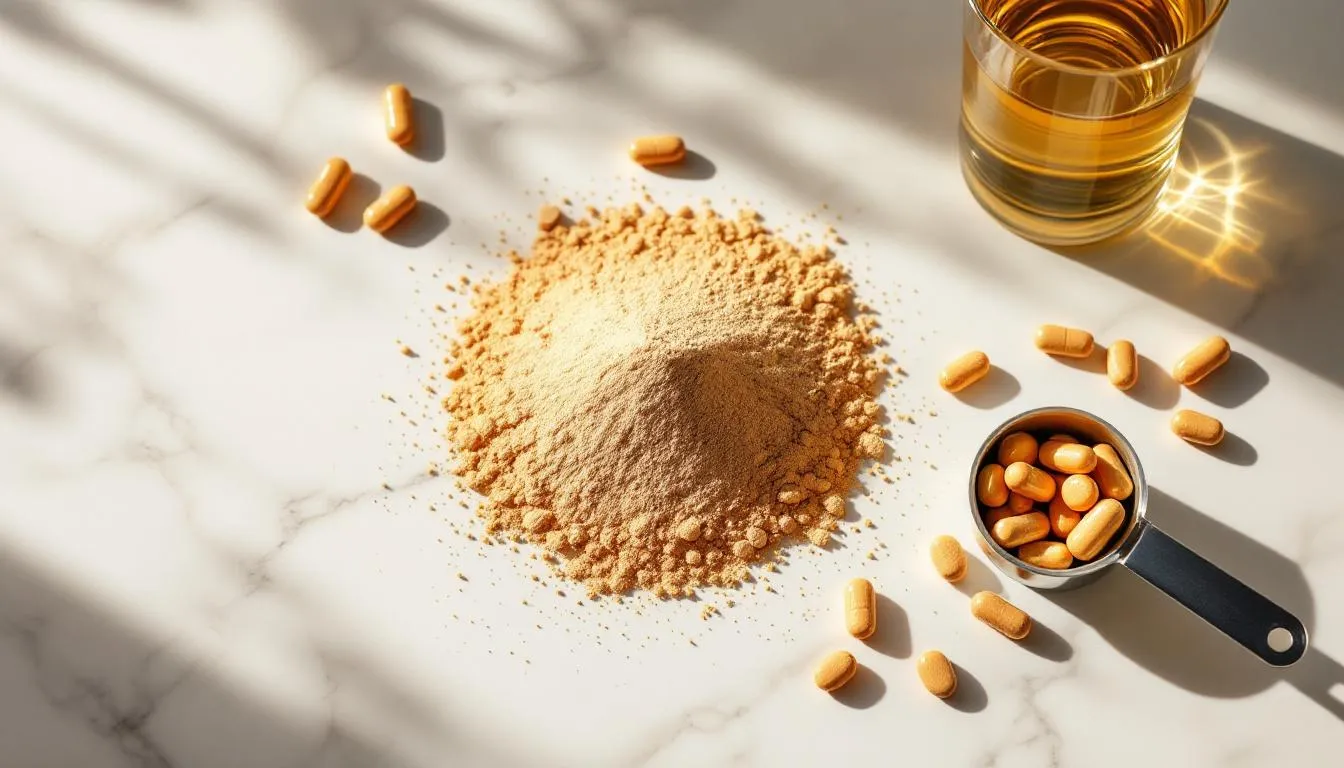
Arrival Creatine review: is it worth it for women?
An honest review of Arrival Creatine Monohydrate for women. We break down the ingredients, science, dosage, and who should actually buy it.

import { QuickAnswerBox, TipBox, WarningBox, FAQSection, RelatedGuides, ArticleCTA, ComparisonGrid } from '@/components/articles'
Women have 70-80% lower creatine stores than men. That's not a minor gap. It's a massive disadvantage that most women don't even know they're working against.
Creatine has been one of the most researched supplements in sports science for decades. But virtually all that research was done on men. Women were an afterthought. Now that's changing, and a brand called Arrival is betting on it.
Arrival is a women-owned supplement company that built a creatine product specifically with women in mind. They've kept the formula simple: pure creatine monohydrate, organic blueberry powder, nothing else. No artificial sweeteners, no proprietary blends, no unnecessary additives.
But is it actually worth buying? Or is the "designed for women" angle just smart marketing wrapped around a commodity product you could find for half the price?
This review covers what Arrival Creatine actually contains, what the science says about creatine for women specifically, who it's best suited for, and whether the premium price is justified. WinAging focuses on longevity compounds backed by real research, so you'll get the honest take here.
<QuickAnswerBox title="The bottom line on Arrival Creatine" answer="Arrival Creatine is a clean, third-party tested creatine monohydrate with organic blueberry powder. The formula is solid. The brand mission is genuine. At $44.99, it's pricier than bulk creatine but you're paying for clean sourcing, glass packaging, and a brand that's actually done the work of understanding women's physiology. Worth it if you want a premium, values-aligned option. Skip it if you're on a budget and just need creatine." stats={[ { value: "5g", label: "Daily dose" }, { value: "$44.99", label: "One-time price" }, { value: "58+", label: "Customer reviews" }, { value: "3rd party", label: "Tested" } ]} />

What is Arrival Creatine?
Arrival is a women-owned supplement brand founded on a simple observation: creatine is one of the most evidence-backed supplements on the planet, but almost nobody was marketing it to women. More than that, nobody was thinking about how women's creatine needs might differ from men's.
The product itself is called Arrival Creatine Monohydrate. It comes in an eco-friendly glass jar, uses organic blueberry powder for a subtle natural flavor, and is manufactured to be vegan-friendly, gluten-free, and free from GMOs, sugar, and preservatives.
It's a focused product. No frills. That's actually a feature, not a flaw.
The formula
The ingredient list is short by design:
- Creatine Monohydrate: The active ingredient. Pure, unflavored creatine monohydrate is the gold standard form. No need for creatine HCl, creatine ethyl ester, or any of the proprietary variants that tend to cost more and perform the same or worse.
- Organic Blueberry Powder: Added for a mild, natural flavor without sugar or artificial sweeteners. Blueberries are also rich in anthocyanins, compounds with antioxidant and anti-inflammatory properties. This isn't just a flavoring agent. It actually adds something.
That's it. Two ingredients. No fillers, no artificial colors, no "blends" that obscure dosing.
The daily dose is 5g. That's right in line with what research consistently recommends as the maintenance dose for adults.
Certifications and quality markers
Arrival Creatine is third-party tested. For supplements, this matters a lot. The industry is unregulated enough that "what's on the label" and "what's in the jar" don't always match without independent verification.
Key quality markers:
- Third-party tested for purity
- Vegan-friendly
- Gluten-free
- No GMOs
- No added sugar
- No preservatives
- Packaged in glass (not plastic, which can leach compounds over time)
The glass packaging is a small detail but a meaningful one if you care about what you're actually consuming. Plastic containers can degrade, especially with powder supplements stored in warm environments.
The science behind creatine for women
Here's where things get genuinely interesting.
Most people know creatine helps with gym performance. What fewer people know is that women may stand to benefit from creatine supplementation even more than men, for reasons that go beyond the gym.
 Creatine has been shown to meaningfully improve strength output and muscle recovery in women
Why women have lower creatine stores
Women naturally have lower intramuscular creatine levels than men. Research suggests this gap is somewhere between 70-80% lower. Several factors drive this:
- Lower muscle mass: Creatine is stored primarily in skeletal muscle. Women have less total muscle mass, so they store less.
- Dietary intake: Creatine is found almost exclusively in animal muscle tissue. Women are more likely to eat less meat or follow vegetarian/vegan diets.
- Synthesis rates: The body can produce some creatine on its own from glycine, arginine, and methionine. But dietary intake and storage still tend to be lower in women.
What this means practically: the gap between baseline creatine levels and "optimized" creatine levels is often larger in women. Supplementation has more room to make a difference.
Strength and muscle benefits
The strength research on creatine for women is solid. Not as deep as the men's literature, but growing fast.
A 12-week study on postmenopausal women found that 5g/day of creatine supplementation combined with resistance training produced significant increases in both muscle mass and upper and lower body strength compared to placebo. The creatine group gained more even though everyone was doing the same training program.
A systematic review published in the journal Nutrients found that creatine supplementation improves muscular strength and exercise performance in pre-menopausal and post-menopausal women. The effects were present with or without resistance training, though they were more pronounced with training.
WinAging's supplement interaction checker can help you verify how creatine stacks with other compounds in your routine.
Cognitive benefits, especially for perimenopausal women
This is the part that surprises most people.
Brain tissue contains and uses creatine heavily. The frontal lobe, which controls mood, cognition, memory, and executive function, is particularly creatine-dependent. Women naturally have lower brain creatine levels than men. During perimenopause and menopause, this gap can widen significantly.
A randomized controlled trial published in 2025 examined creatine supplementation in perimenopausal and menopausal women. The study found that creatine improved reaction time and increased frontal lobe creatine levels. The researchers also found improvements in mood measures, specifically reduced severity of mood swings. This is the kind of finding that doesn't make it to mainstream wellness content, but it's genuinely significant.
Research from the University of Colorado Anschutz Medical Campus has also explored creatine for women's health across the lifespan, noting that creatine supplementation shows promise for cognitive support, fatigue reduction, and even mental health applications in women, particularly at hormonal transition points.
Menstrual cycle effects
One study found that creatine supplementation helped reduce fatigue during the early follicular and luteal phases of the menstrual cycle. Women in the creatine group reported better energy and lower perceived fatigue at phases where energy typically dips.
This makes physiological sense. Hormonal fluctuations across the menstrual cycle affect energy metabolism. Creatine provides an additional phosphate donor for ATP regeneration, which is essentially your body's immediate energy currency.
Bone health in postmenopausal women
Bone density loss is one of the most serious health risks for postmenopausal women. A 12-month trial found that women who supplemented with creatine while doing resistance training lost only 1.2% of femoral neck bone density, compared to nearly 4% in the placebo group. That's a threefold difference in bone preservation over just one year.
Creatine alone won't stop bone loss. But combined with resistance training, the data suggests it's a meaningful protective factor. If you're in your late 40s or older and you're not yet lifting and supplementing, this data should move the needle.
 Creatine monohydrate: the most-studied form and still the gold standard
How to use Arrival Creatine
Dosage
Arrival recommends 5g per day. This aligns with the research. There's no need to go higher. A 2021 review in the Journal of the International Society of Sports Nutrition found that 3-5g/day is sufficient for maintenance in most people.
Do you need a loading phase?
The traditional creatine loading protocol (20g/day for 5-7 days) saturates muscle creatine stores faster. If you want to feel effects sooner, you can load. If you're patient, consistent 5g/day gets you to the same saturation point within 3-4 weeks.
For most women using creatine for general health, strength, and cognition, a loading phase isn't necessary. Start with 5g/day and give it a month.
Timing
Creatine timing matters less than consistency. The research doesn't strongly support one specific window. Some studies show a slight edge to taking creatine post-workout, when muscles are primed for uptake. Others find no significant difference.
The practical advice: take it whenever you'll take it consistently. Morning coffee, pre-workout, post-workout, with dinner. Pick a time that sticks.
Mixing
Arrival dissolves better than a lot of creatine products according to customer feedback. Multiple reviewers specifically noted it mixes easily without the chalky, sandy texture common with lower-quality creatine. The blueberry powder gives it a very mild flavor, so it works in water, smoothies, or anything else.
Arrival Creatine pricing and value
Here's where we need to be honest.
Arrival Creatine costs $44.99 for a one-time purchase. A monthly subscription drops it to $38.24.
Bulk creatine monohydrate from established brands like Creapure-sourced products typically runs $20-30 for the same amount of servings.
So Arrival is a premium option. The question is whether the premium is justified.
What you're paying for:
- Third-party testing and purity verification
- Organic blueberry flavoring (no artificial sweeteners)
- Glass jar packaging (better for environment and long-term storage)
- A women-focused brand that's doing the work to educate and serve their specific audience
- Free shipping
What you're not paying for:
- Any magic creatine formulation (creatine monohydrate is creatine monohydrate)
- A meaningfully faster or superior product
If you just want creatine and budget matters, bulk creatine monohydrate is a totally valid choice. If you want a clean, premium option from a brand that's actually done the work, Arrival is solid.
Subscription options
- One-time: $44.99
- Monthly subscription: $38.24/month (15% savings)
- Every 3 months: $99.99 (a bigger upfront cost but the best per-serving value)
For most people, the monthly subscription makes the most sense. Creatine works best with consistent daily use, so you'll be reordering regularly anyway.
 Creatine supports not just gym performance but energy and recovery for everyday active life
Pros and cons
<ComparisonGrid good={[ "Clean two-ingredient formula", "Third-party tested for purity", "5g dose matches research consensus", "Organic blueberry flavor, no artificial sweeteners", "Glass jar packaging", "Vegan, gluten-free, GMO-free", "Women-owned brand with genuine mission", "Free shipping" ]} bad={[ "More expensive than bulk creatine options", "Only one flavor available", "Relatively newer brand with smaller review base", "No Creapure certification mentioned" ]} />
Who should buy Arrival Creatine?
Best for:
Women getting started with creatine. If you've been curious about creatine but found most supplement brands alienating (because they're almost entirely men flexing), Arrival is genuinely built for you. The product, the branding, the education, all of it is oriented toward women's health goals.
Women in perimenopause or menopause. Given the emerging research on creatine's cognitive and bone health benefits during hormonal transitions, this demographic arguably has the most to gain from supplementing consistently.
Women focused on longevity. Creatine is increasingly appearing in longevity circles not just as a performance supplement but as a neuroprotective and musculoskeletal support compound. If you're building a longevity stack, creatine belongs in it. WinAging's AI protocol builder can help you design a personalized supplement stack that includes creatine alongside other evidence-backed longevity compounds.
Vegetarians and vegans. Dietary creatine comes from animal muscle tissue. If you don't eat meat, your baseline creatine levels are almost certainly lower. Supplementing fills a real nutritional gap.
Maybe not ideal for:
Budget-focused buyers. If cost is the primary concern, bulk unflavored creatine monohydrate from a reputable source works just as well. The creatine molecule is the same.
Men. This isn't a universal creatine supplement. Arrival is specifically positioned for women. Men can and do take creatine monohydrate, but this isn't what they should reach for.
How Arrival compares to other creatine brands
There are a lot of creatine products on the market. Here's how Arrival fits in:
Arrival vs Momentous Creatine: Momentous is NSF Certified for Sport, which is a higher-tier certification than general third-party testing. It's more expensive per serving. Better choice for competitive athletes who need NSF certification. For general health and longevity purposes, Arrival is fine.
Arrival vs bulk creatine monohydrate (e.g., Bulk Supplements): Bulk monohydrate wins on price by a significant margin. If you're comfortable with an unflavored powder and just want the molecule, go bulk. Arrival wins on experience, packaging, and clean sourcing.
Arrival vs Bloom Creatine: Bloom has a massive social following and markets to women, but their creatine formula includes several additional ingredients. More isn't always better. Arrival's two-ingredient approach is cleaner.
Arrival vs creatine gummies: Creatine gummies vs powder is worth reading if you're considering gummies. Short version: powder still wins on dose accuracy and cost, though gummies have improved.
The bottom line on comparisons: if clean sourcing and women-focused branding matter to you, Arrival competes well. If you're optimizing purely for cost-effectiveness, bulk monohydrate wins.
 Organic blueberry powder adds natural flavor and antioxidants without any artificial sweeteners
What customers are saying
With 58+ reviews on their site, the feedback patterns are consistent:
Common positive themes: Easy mixing, no chalky texture, no stomach discomfort, noticeable energy and strength improvements, love the glass packaging and clean ingredients.
Common critiques: Price point is high. Some wish there were more flavor options.
One long-term customer reported taking it for a year and experiencing better gym recovery, more energy, and improved mental clarity. Another specifically praised how well it dissolves compared to other brands they'd tried.
The mental clarity and energy comments show up repeatedly, which tracks with the cognitive research on creatine and brain energy metabolism.
Building a complete longevity stack
Creatine is one piece of the puzzle. An effective longevity supplement stack typically includes creatine alongside a few other well-researched compounds.
If you're thinking about what else belongs in your stack, the WinAging protocol builder takes your age, goals, health history, and experience level to generate a personalized recommendation in minutes. Creatine almost always makes the list. But what goes alongside it depends heavily on your individual situation.
For broad longevity support, some of the compounds that pair naturally with creatine include:
- Glycine: Supports collagen synthesis, sleep quality, and methylation. Glycine dosage for anti-aging covers the research in detail.
- Taurine: An amino acid with emerging longevity data showing benefits for muscle, heart, and brain. Taurine for sleep covers one of its more practical applications.
- NMN: Supports NAD+ levels, which decline with age. Why I stopped taking NMN gives an honest take on the common concerns.
You can check potential interactions between any of these compounds using WinAging's supplement interaction checker before stacking them together.
<FAQSection faqs={[ { question: "Is Arrival Creatine only for women?", answer: "Yes, Arrival is specifically designed and marketed for women. The product works the same way creatine works for anyone, but the brand, education, and positioning are built around women's physiology and health goals. Men should look at other creatine options." }, { question: "Does creatine cause water retention in women?", answer: "Creatine does cause some intracellular water retention, meaning water is drawn into muscle cells, not under the skin. Most women don't notice significant bloating at a 5g maintenance dose. The water retention is actually a feature: it's part of how creatine helps muscles perform better and recover faster. Starting with 3g/day and working up to 5g can reduce any initial adjustment effects." }, { question: "Can you take Arrival Creatine during your period?", answer: "Yes, and research suggests it may actually help. Studies have found creatine supplementation can reduce fatigue during the follicular and luteal phases of the menstrual cycle, which are phases where energy tends to dip for many women. There's no reason to pause creatine during your period." }, { question: "Is creatine safe for perimenopausal women?", answer: "Yes. Clinical trials specifically in perimenopausal and menopausal women have found creatine supplementation to be well-tolerated with no significant adverse effects. A 2025 randomized controlled trial found creatine improved cognitive performance and mood in this population. It's one of the better-studied supplements for women's health specifically." }, { question: "How long does it take to see results from Arrival Creatine?", answer: "With a loading phase (20g/day for 5-7 days), you can saturate muscle creatine stores within a week and may notice differences in strength and energy quickly. Without loading, consistent 5g/day use typically takes 3-4 weeks to reach full saturation. Most people notice measurable performance differences within 4-8 weeks. Cognitive effects may take slightly longer to become apparent." }, { question: "Is creatine monohydrate better than creatine HCl?", answer: "For most purposes, creatine monohydrate is still the gold standard. It has the most research behind it, the best safety profile, and typically costs less. Creatine HCl is more water-soluble, which may help if you experience GI discomfort with monohydrate, but the performance and health benefits are comparable." }, { question: "Can you take Arrival Creatine while pregnant?", answer: "This is a question for your healthcare provider. There is emerging research suggesting creatine may have benefits during pregnancy and for fetal development, but pregnant women should always consult their doctor before starting any new supplement." } ]} />
<RelatedGuides guides={[ { title: "Creatine gummies vs powder: which wins?", href: "/blog/creatine-gummies-vs-powder" }, { title: "Creatine monohydrate vs micronized: the difference explained", href: "/blog/creatine-monohydrate-vs-micronized" }, { title: "Glycine dosage for anti-aging", href: "/blog/glycine-dosage-for-anti-aging" }, { title: "Taurine for sleep: does it actually work?", href: "/blog/taurine-for-sleep" }, { title: "Supplement interaction checker", href: "/tools/supplement-interaction-checker" } ]} />
Sources
- Creatine Supplementation in Women's Health: A Lifespan Perspective - PMC
- Creatine in women's health: bridging the gap from menstruation through pregnancy to menopause - Tandfonline
- CONCRET-MENOPA: Creatine in perimenopausal and menopausal women - PubMed
Creatine is genuinely one of the most well-researched, cost-effective, broadly beneficial supplements in existence. And women have been underserved by the category for too long. Arrival is doing something real by changing that narrative.
If you want a clean, premium creatine option that's actually built with women's health in mind, it's worth the price. If you want to figure out how creatine fits into a broader longevity protocol, WinAging's free tools are a good place to start, and the AI protocol builder can design a full stack around your specific goals.